Webb Telescope Reveals Dying Star's Stunning Final Act
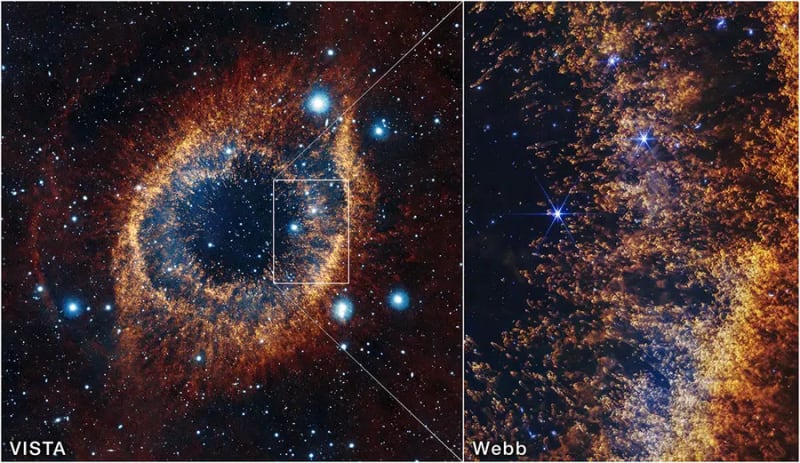
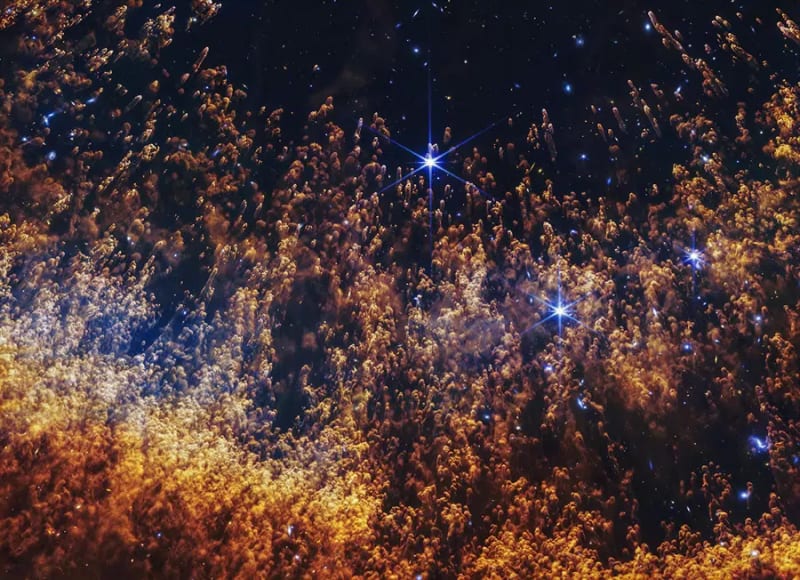
The James Webb Space Telescope captured breathtaking new images of the Helix Nebula, revealing how a dying star 650 light-years away is creating the building blocks for future worlds. The detailed infrared view shows thousands of comet-like structures and gas layers that could seed new planetary systems.
A dying star is putting on one of the universe's most beautiful shows, and we just got front-row seats.
The James Webb Space Telescope has captured stunning new images of the Helix Nebula, a cosmic structure 650 light-years away in the constellation Aquarius. What looks like a glowing eye in space is actually a Sun-like star shedding its outer layers in its final act.
Webb's infrared camera revealed thousands of never-before-seen details: comet-shaped knots of gas, shock waves from stellar winds, and glowing layers of material drifting outward. The colors tell a temperature story, from blazing blue-white gas near the star's core to cooler red zones where molecules are forming.
This isn't just a pretty picture. The nebula's layers contain carbon, oxygen, and nitrogen, the essential ingredients for planets and life itself. Scientists discovered protective pockets where complex molecules are beginning to form, supporting the theory that new solar systems often arise from stellar death.
The Ripple Effect
The Helix Nebula shows us that nothing in the universe goes to waste. The star's outer shells will drift through space for tens of thousands of years, enriching the galaxy with elements that could become part of future planets, atmospheres, and perhaps even life.
Webb's view surpasses what Hubble and Spitzer telescopes revealed over decades. Its superior resolution lets astronomers map exactly how stars recycle their materials, helping us understand what will happen when our own Sun reaches this phase billions of years from now.
By comparing Webb's data with older observations, scientists can now model how dust grains form and how planetary systems emerge from stellar remnants. Each layer of the nebula tells part of the story connecting dying stars to emerging worlds.
The images also revealed that the nebula's inner regions are far more chaotic and active than anyone realized. Fast-moving hot winds crash into cooler material, sculpting the structure and creating conditions for molecular formation.
This cosmic recycling program has been running for billions of years across the Milky Way. The oxygen you breathe and the carbon in your body came from ancient stars like this one, making the Helix Nebula a reminder that we're all made of stardust.
The James Webb Space Telescope continues transforming our view of the universe, one stunning image at a time.
More Images

Based on reporting by Google: James Webb telescope
This story was written by BrightWire based on verified news reports.
Spread the positivity!
Share this good news with someone who needs it