Webb Telescope Solves Mystery of Giant Planet Formation
NASA's James Webb Space Telescope just confirmed how the universe's heaviest planets are born, settling a long debate among astronomers. The discovery shows that even planets 15 times bigger than Jupiter form the same way Earth did.
Scientists just watched a planetary giant reveal its childhood story, and the answer rewrites what we thought was possible.
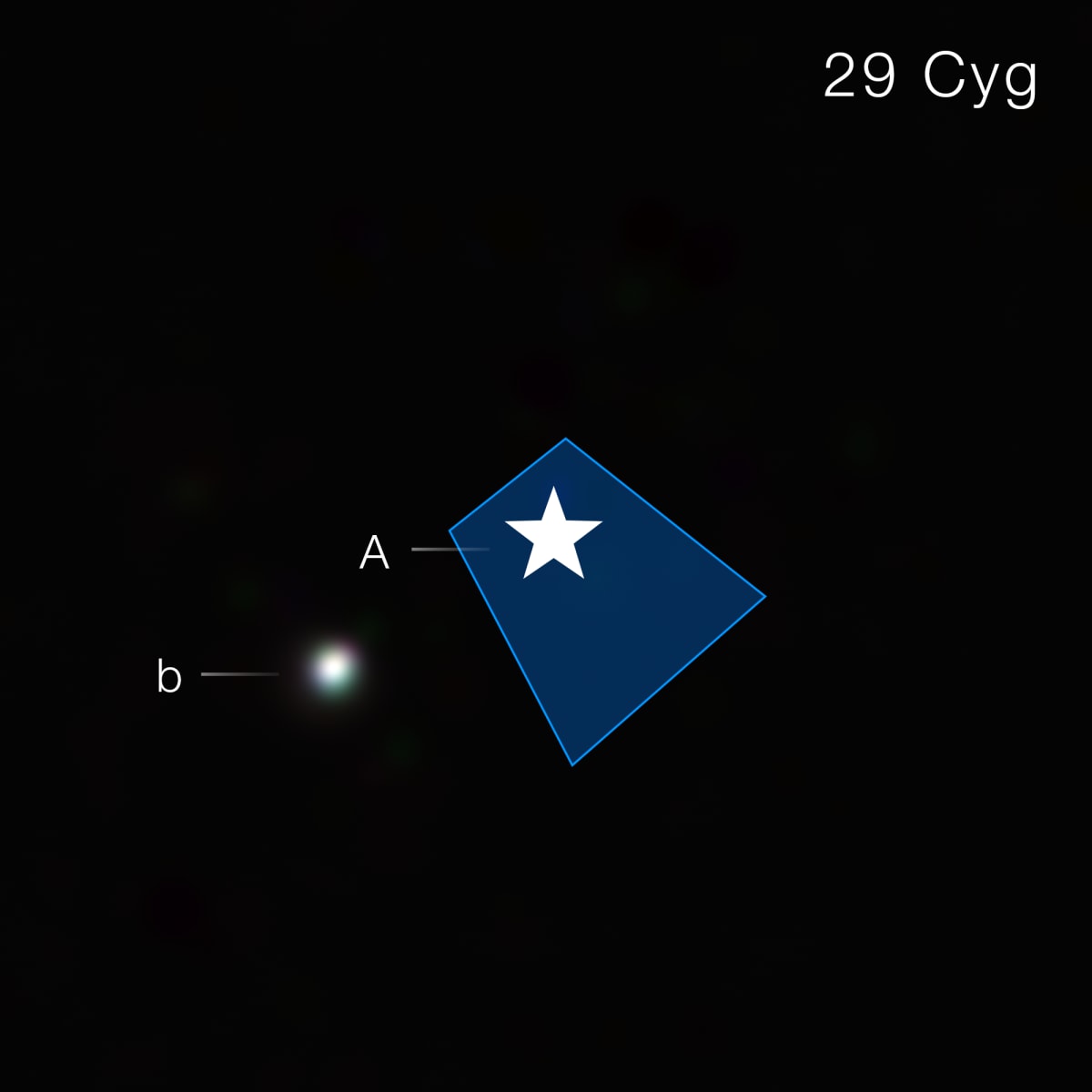
Using NASA's James Webb Space Telescope, astronomers studied 29 Cygni b, a massive planet weighing 15 times more than Jupiter. This cosmic heavyweight sits on the edge of what scientists thought could form through normal planet-building processes.
The team discovered something remarkable. Despite its enormous size, 29 Cygni b formed exactly like Earth did: tiny bits of rock and ice clumping together, growing bigger and bigger over millions of years.
Lead researcher William Balmer from Johns Hopkins University targeted this planet because it could have formed two different ways. Giant planets might form like stars do, when huge gas clouds collapse under their own weight. Or they might grow the slow way, piece by piece in the dusty disk around young stars.
The Webb telescope found the smoking gun in the planet's atmosphere. By measuring carbon dioxide and carbon monoxide, scientists discovered 29 Cygni b contains heavy elements equal to 150 Earths worth of material. That's only possible if the planet gobbled up massive amounts of rock and ice from its birth disk.
The planet orbits its sun-like star at about the same distance Uranus circles our sun, 1.5 billion miles away. It still glows hot from its formation, reaching temperatures up to 1,900 degrees Fahrenheit.
To seal the case, astronomers used ground telescopes to check if the planet's orbit aligned with its star's spin. It matched perfectly, exactly what you'd expect from a planet that grew up in an orderly disk rather than forming from chaotic gas collapse.
Why This Inspires
This discovery pushes the boundaries of what's possible in planet formation. It shows that nature's patient, bottom-up building process can create worlds far more massive than we imagined.
The finding helps solve mysteries about planetary systems across the galaxy. Many giant planets orbit billions of miles from their stars, in regions where disks should be too thin for planets to form the traditional way. Now scientists have proof that accretion can work even at these extreme scales.
Webb studied three other heavyweight planets in this program, giving astronomers a clearer picture of where to draw the line between planet formation and star formation. Each observation brings us closer to understanding how our own solar system came to be.
The research represents exactly what the $10 billion telescope was built to do: answer questions that seemed impossible just a few years ago. By directly imaging distant planets and analyzing their atmospheres, Webb is rewriting astronomy textbooks in real time.
Understanding how giant planets form helps scientists predict what kinds of worlds exist around other stars, bringing us closer to finding planets that might harbor life.
More Images

Based on reporting by Google: James Webb telescope
This story was written by BrightWire based on verified news reports.
Spread the positivity!
Share this good news with someone who needs it