Webb Telescope Solves Mystery of Missing Red Stars
NASA's Webb telescope just proved why aging stars seem to vanish before they explode. The answer hiding in 40 million year old light could rewrite what we know about dying stars.
Scientists just watched a star's final performance replayed after 40 million years, and it's changing everything we thought we knew about how massive stars die.
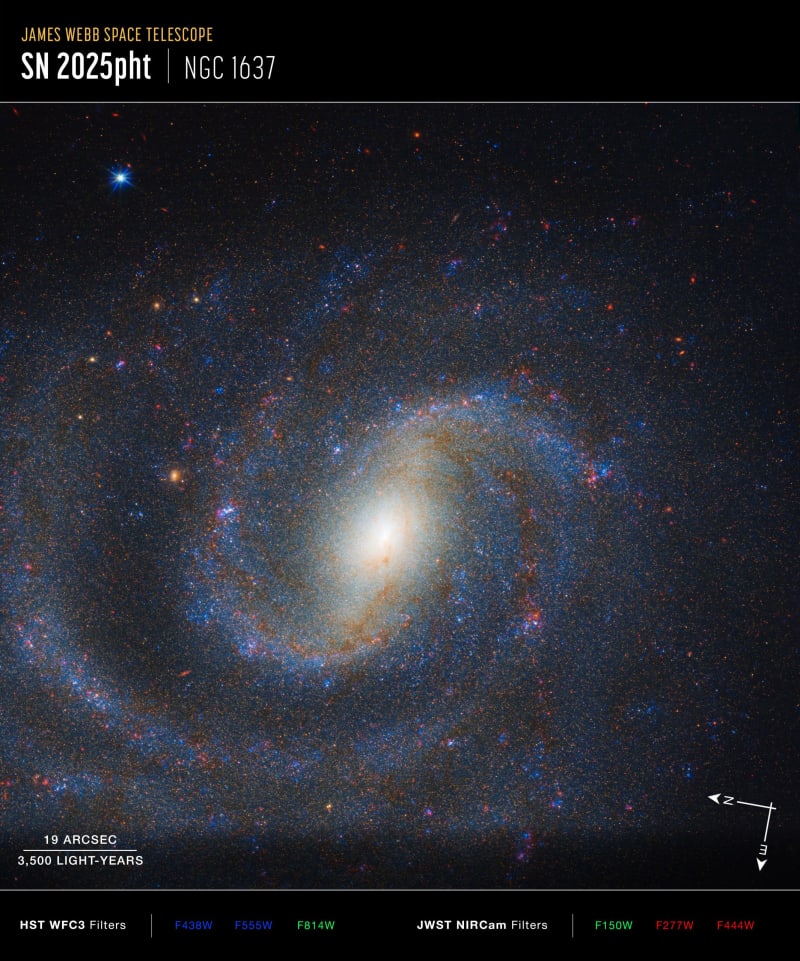
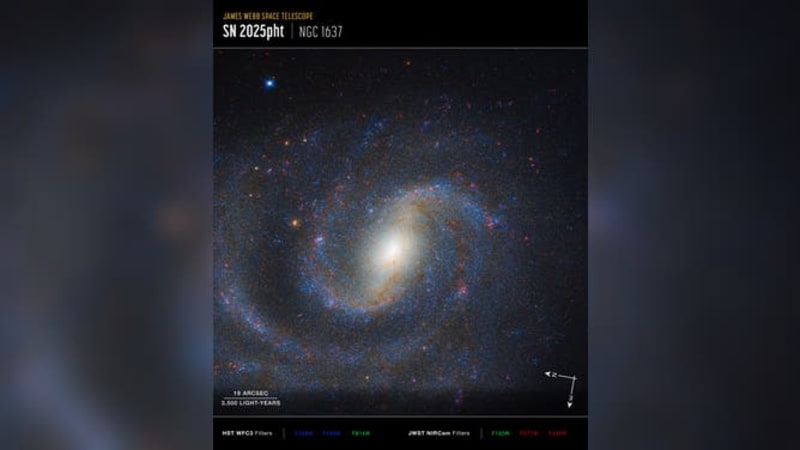
A team from Northwestern University caught something remarkable on June 29, 2025, when light from an ancient supernova explosion finally reached Earth. The star had exploded over 40 million years ago in a nearby galaxy, and its light had been traveling through space ever since.
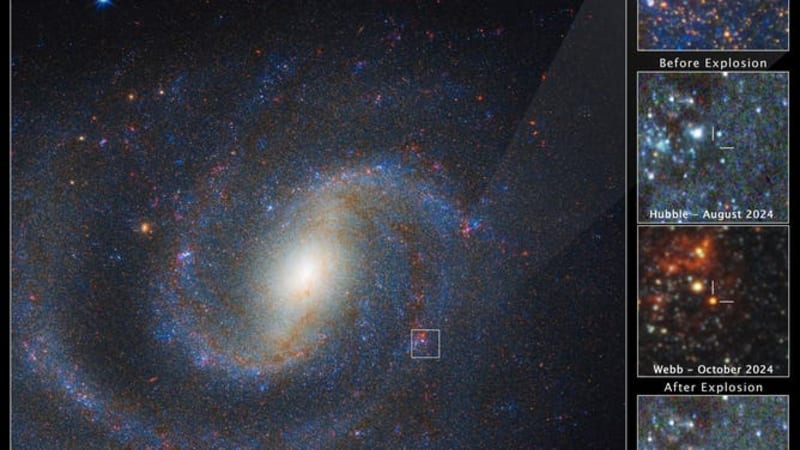
But here's where it gets exciting. The researchers did something clever. They compared brand new images from the Webb telescope with old photos from Hubble to see what the star looked like before it exploded.
What they found shocked them. The star was wrapped in so much dust that it glowed deep red, making it look far dimmer than anyone expected. Lead researcher Charlie Kilpatrick called it "the reddest, most dusty red supergiant that we've seen explode as a supernova."
For years, astronomers have been puzzled by a cosmic mystery. Massive red supergiant stars seemed to disappear from their surveys before exploding. Scientists couldn't figure out where these giant stars were hiding.
This discovery might finally solve that puzzle. These aging stars aren't missing at all. They're just wearing dusty cloaks that hide their light, making them nearly invisible to our telescopes until they explode.
"I've been arguing in favor of that interpretation, but even I didn't expect to see it as extreme as it was," Kilpatrick said. Graduate student Aswin Suresh, who helped make the discovery, explained that the dust surrounding these dying stars dims their brightness dramatically.
Why This Inspires
This breakthrough shows the power of patience and teamwork in science. The Webb telescope launched in 2021, but scientists had to wait years for the right moment when a star would explode in a galaxy Webb had already photographed.
By combining decades of observations from both Hubble and Webb, astronomers are finally understanding how the universe's most massive stars spend their final days. Each discovery like this brings us closer to understanding our cosmic origins.
The finding proves that the biggest stars don't always go out with the brightest shine. Sometimes they quietly gather dust around themselves, waiting for their spectacular finale in the darkness.
More Images
Based on reporting by Google: James Webb telescope
This story was written by BrightWire based on verified news reports.
Spread the positivity!
Share this good news with someone who needs it