Western Australia Had Its Own Koala Species Until 30,000 Years Ago
Scientists confirmed that a second koala species once lived exclusively in Western Australia, disappearing around 30,000 years ago when the climate dried. The discovery rewrites what we know about one of Australia's most beloved animals.
Australia was home to not one but two koala species, and we're only just learning about the western cousin that vanished 30,000 years ago.
For over a century, researchers collected koala fossils from Western Australian caves, some dating back 137,000 years. They suspected these remains might be different from modern koalas, but didn't have enough evidence to confirm it.
That changed when the family of late cave explorer Lindsay Hatcher donated his collection to the Western Australian Museum. Among the fossils was a remarkably preserved skull that caught researcher Kenny Travouillon's attention.
"Upon examination of that skull, we noticed differences with modern koalas," says Travouillon. The team dove into their entire fossil collection to investigate further.
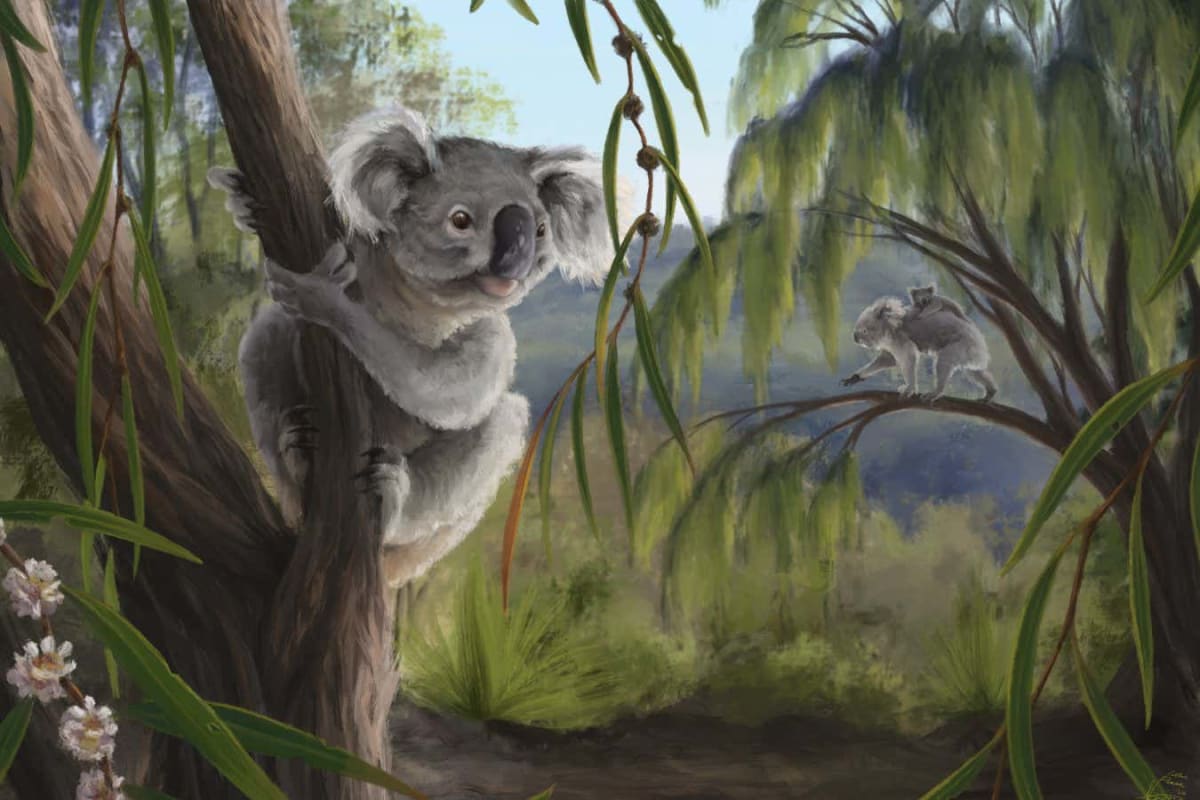
The newly named species, Phascolarctos sulcomaxilliaris, looked similar to today's koalas at first glance. But closer inspection revealed fascinating differences in how these animals lived and ate.
Western koalas had shorter heads and less developed chewing muscles than their eastern cousins. They made up for this with larger teeth and a more efficient jaw structure for breaking down leaves.
A large groove on the cheek suggests they had a bigger muscle for either grabbing leaves with a larger lip or inflating their nostrils to smell leaves from greater distances. Their skeletons were also less agile, meaning they spent less time jumping between trees.
These western koalas shared their habitat with an incredible array of now-extinct animals. Tasmanian devils, thylacines, giant echidnas, short-faced kangaroos, and massive marsupials roamed the same forests.
When Western Australia's climate dried around 30,000 years ago, the forests disappeared. P. sulcomaxilliaris vanished along with many of its neighbors, a transformation witnessed by Australia's First Peoples.
Why This Inspires
This discovery shows how much we still have to learn about our planet's past. Every new fossil tells a story about adaptation, survival, and the delicate balance between species and their environments.
Understanding how ancient koalas evolved differently on opposite sides of a continent helps us appreciate the diversity of life. It also reminds us why protecting today's remaining koala populations matters so much.
Tim Flannery from the Australian Museum calls the study a "convincing case" for recognizing these western koalas as unique. He hopes researchers can extract DNA from the fossils to learn even more about this lost species.
Australia's koala story just got twice as interesting.
More Images

Based on reporting by New Scientist
This story was written by BrightWire based on verified news reports.
Spread the positivity!
Share this good news with someone who needs it