Whales Help Unrelated Mother Give Birth in Ocean First
Scientists captured the first known footage of sperm whales helping a mother give birth, including whales who weren't even family. For six hours, the pod worked together to keep the newborn calf breathing at the surface.
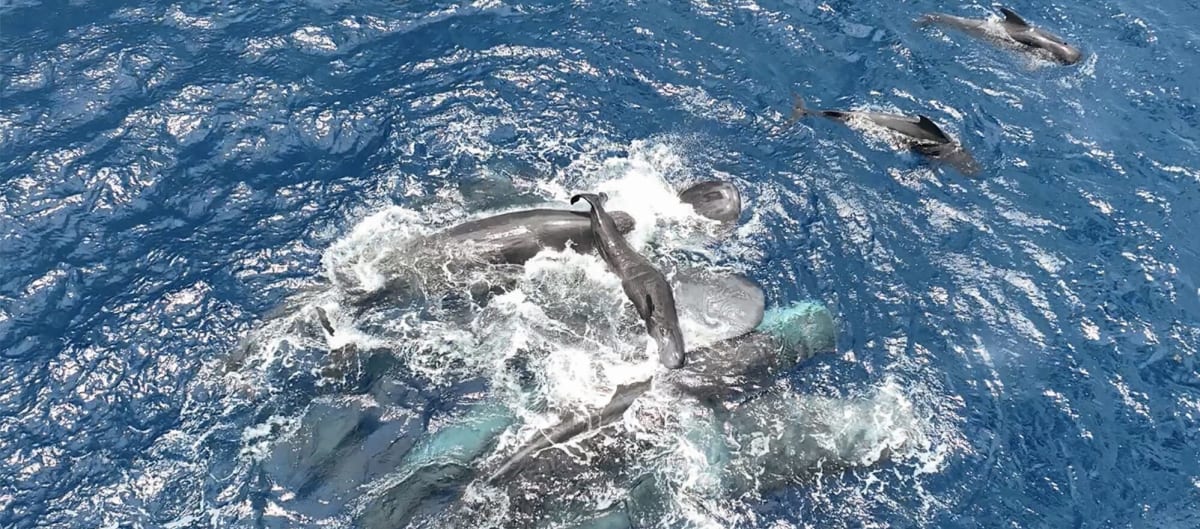
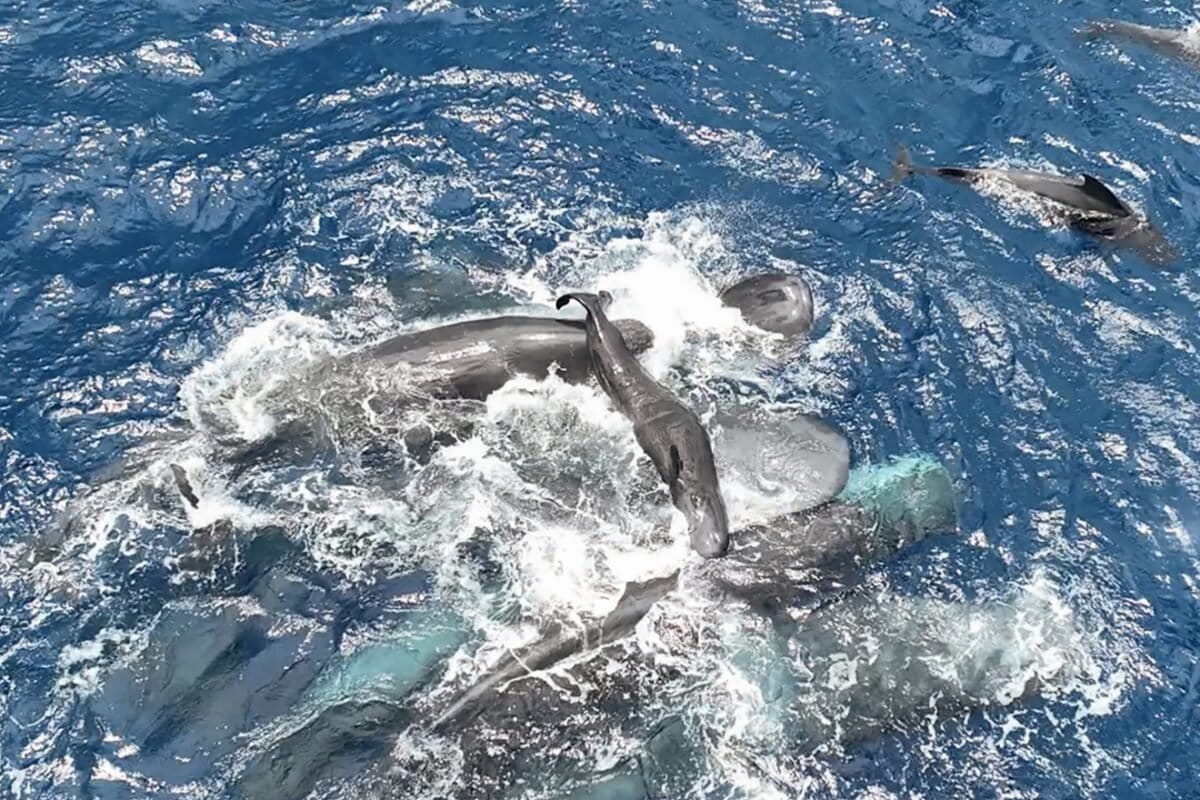
A mother sperm whale called Rounder had the ultimate support team when she gave birth in the Caribbean in July 2023: ten other whales who showed up to help deliver and care for her baby, even though some weren't related to her at all.
Researchers from the Cetacean Translation Initiative stumbled onto the scene while recording whale sounds. They noticed something strange: all 11 whales in the pod were gathering near the surface instead of diving thousands of feet deep to hunt squid like they normally do.
The whales were communicating so much it sounded like "being in a popcorn machine," said CETI president David Gruber. Whether Rounder called them together or they just knew, the pod was ready when labor began.
When the calf emerged tail first after 34 minutes, a circle of whales was waiting. They took turns lifting the newborn to the surface to breathe, which was critical because baby sperm whales are heavier than water and sink immediately.
For roughly six hours, the grandmother, aunts, and even unrelated female whales worked together to support the calf. The baby's older sister played a major role, while the only male present helped the least.
Scientists already knew sperm whales share babysitting duties while mothers hunt. But this is the first time anyone has witnessed marine mammals helping with the birth of a baby that isn't their own relative.
Why This Inspires
This extraordinary moment shows cooperation and compassion that stretches back millions of years. Researchers believe this kind of collaborative caregiving may be an ancient adaptation dating back 36 million years to when toothed whales first evolved.
The observation was only possible because CETI scientists have been studying this particular whale family for decades. Their long relationship meant the whales trusted them enough to allow cameras and drones during such an intimate moment.
After six hours of group support, mother and baby swam off together into the sunset, carrying on a tradition of radical collaboration that defines sperm whale society.
More Images



Based on reporting by Mongabay
This story was written by BrightWire based on verified news reports.
Spread the positivity!
Share this good news with someone who needs it