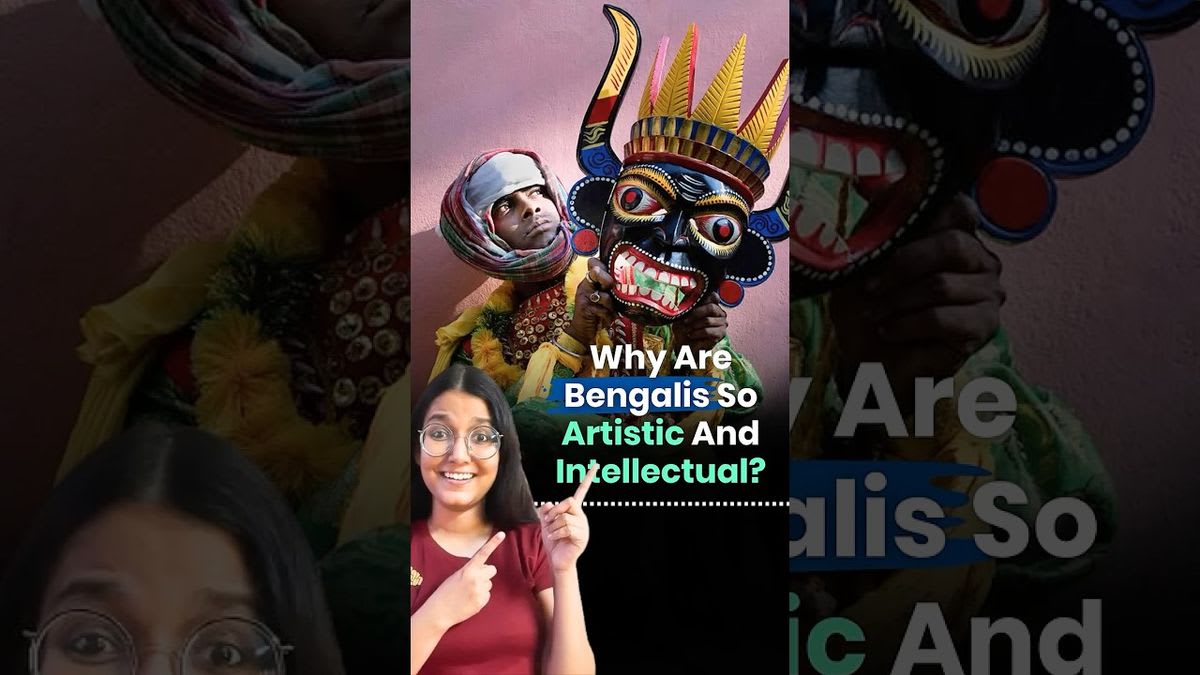
Why Bengal Became India's Creative Powerhouse
From the Hooghly River's banks to bustling Kolkata streets, Bengal turned art into a way of life, not just a skill. Centuries of history, the Bengal Renaissance, and everyday cultural rituals created generations who grow up breathing creativity.
📺 Watch the full story above
In Bengal, a child doesn't just learn art. They grow up surrounded by it, living it, breathing it as naturally as the humid air rolling off the Hooghly River.
The roots run deep, stretching back through centuries of cultural evolution that made creativity not something special, but something essential. The Bengal Renaissance of the 19th and early 20th centuries didn't just produce famous artists and writers. It wove artistic expression into the fabric of daily existence.
Walk through any Bengali neighborhood today and you'll see what makes this region different. Art doesn't wait for galleries or formal stages. It pulses through music sessions on rooftops, theater performances in community halls, elaborate food presentations at family dinners, and poetry recited during afternoon tea.
This immersion starts young. Children hear stories before they can read, watch elders debate literature over chai, and participate in festivals where everyone becomes a performer. Generation after generation grows up treating creative expression as normal as conversation.
The geography played its role too. The Hooghly River created trade routes that brought diverse cultural influences, while Bengal's lush landscape inspired countless poets and painters. But the real magic happened when communities decided that appreciating beauty mattered as much as making a living.
Why This Inspires
What Bengal proves is powerful: creativity isn't reserved for the naturally gifted. When a culture decides that art, music, literature, and storytelling belong to everyone, not just professionals, something remarkable happens. Ordinary people discover extraordinary abilities simply because they're given permission and encouragement to express themselves.
Bengali families don't ask if their children will engage with the arts. They ask which arts will speak to them. This shift in assumption, from "if" to "which," changes everything.
The question the culture poses isn't whether creativity is taught or inherited. Bengal's answer is simpler: creativity flourishes when it's welcomed, when it's woven into childhood memories, when it's treated as essential rather than optional.
In a world that often separates "practical" from "creative," Bengal offers a different model. Here, the artistic life isn't separate from everyday life. It is everyday life, proving that entire communities can choose beauty, expression, and storytelling as their inheritance.
More Images

%2Fenglish-betterindia%2Fmedia%2Fyoutube_thumbnails%2Fvi%2F238aeIY4QQo%2Fmaxresdefault.jpg)
%2Fenglish-betterindia%2Fmedia%2Fyoutube_thumbnails%2Fvi%2F6gfwQ1g_Ad8%2Fmaxresdefault.jpg)
%2Fenglish-betterindia%2Fmedia%2Fyoutube_thumbnails%2Fvi%2F2WlaiJFOY-0%2Fmaxresdefault.jpg)
Based on reporting by The Better India
This story was written by BrightWire based on verified news reports.
Spread the positivity!
Share this good news with someone who needs it