Why Curling Is the Olympics' Most Relaxing Sport to Watch
With the 2026 Winter Olympics approaching, one of the most misunderstood sports on ice offers viewers something rare: a chance to slow down and enjoy athletic grace without the stress. Curling combines strategy, elegance, and unexpected drama in a two-hour meditation you didn't know you needed.
One journalist's first encounter with Olympic curling started with pure confusion and ended with setting their DVR to record every single match.
It happened during the 2002 Salt Lake City Games. At first glance, the sport looked bewildering: players sliding 44-pound granite stones down ice while teammates frantically swept with brooms. The pace felt glacial, the rules inscrutable, the lingo bizarre.
But two hours into that first women's medal match, something clicked. The confusion transformed into fascination, then into full obsession.
Curling might be the perfect antidote to modern sports viewing. While basketball and hockey leave you amped up and reaching for energy drinks, curling invites you to pour a glass of wine and settle in. The game moves deliberately, with players discussing strategy between throws and offering quiet encouragement to teammates.
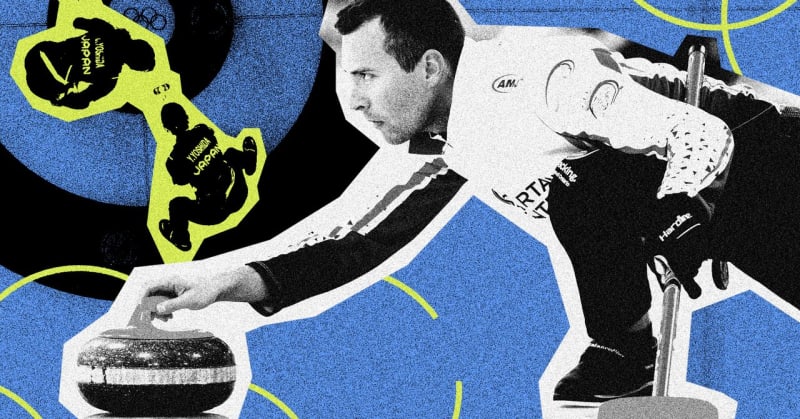
The basics resemble shuffleboard: get your game pieces closest to the target marker to score points. Four players per team take turns sliding stones down a 150-foot ice sheet toward the "house" (the target), while two teammates sweep the ice to control speed and direction. Each game lasts 10 rounds called "ends," with eight stones thrown per end.
Why This Inspires
The true beauty reveals itself in those long, contemplative stretches between throws. Strategy unfolds like a chess match on ice. What looks like a short throw becomes a defensive block, setting up the next stone to hide behind it. Bad shots become brilliant tactical moves.
The athletes themselves become surprisingly compelling characters over the course of a two-hour match. Without helmets or goggles obscuring their faces, viewers connect with their emotions in full detail. When a player screams in frustration at a bad release, you feel it too.
Don't mistake the measured pace for lack of athleticism. Curlers maintain impressive fitness, evident in their form-fitting uniforms and the physical demands of sweeping. The sport requires strength, balance, and endurance wrapped in grace.
Powerhouse teams hail from Arctic nations like Canada, Sweden, Norway, and Switzerland, though Asian countries including South Korea and China have made strong showings recently. The competitive landscape keeps matches unpredictable.
The sport's accessibility makes it even more appealing. Casual viewers can grasp the essential rules during a single game, picking up the colorful terminology along the way. The "skip" (team captain) calls out sweeping commands. Those smooth granite "rocks" make satisfying clunking sounds when they collide.
As the 2026 Winter Olympics approach, curling offers something increasingly rare in televised sports: permission to slow down. It's athletic competition that calms rather than agitates, combining precision, strategy, and surprising drama into one elegant package.
Turn on a match in the evening, dim the lights, and discover why this misunderstood sport creates such devoted fans from confused first-time viewers.
More Images




Based on reporting by Wired
This story was written by BrightWire based on verified news reports.
Spread the positivity!
Share this good news with someone who needs it