Wikipedia's AI Detection Guide Now Helps AI Sound Human
In a twist of irony, tech entrepreneur Siqi Chen turned Wikipedia's AI detection rulebook into a tool that helps ChatGPT write more like humans. The free plugin has already attracted over 1,600 supporters online.
A list meant to catch robotic writing is now teaching robots to sound more human.
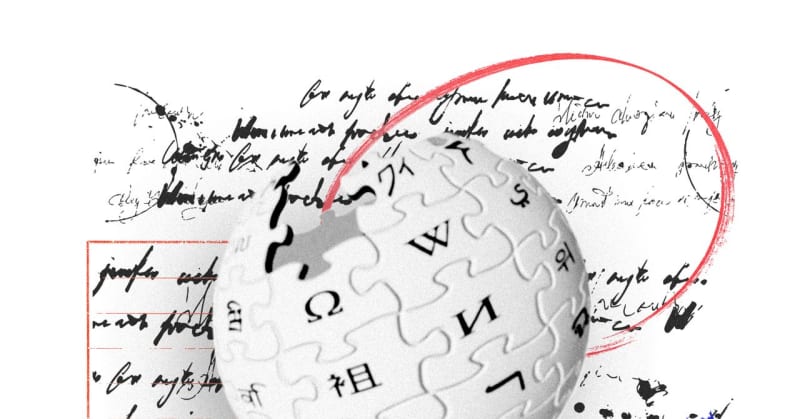
Tech entrepreneur Siqi Chen released a free tool called Humanizer that feeds AI chatbots the exact patterns they should avoid. His source? A detailed guide created by Wikipedia editors who've spent over a year hunting down AI-generated articles.
The Wikipedia group, called WikiProject AI Cleanup, has reviewed over 500 suspicious articles since 2023. They noticed chatbots love dramatic phrases like "marking a pivotal moment" and "stands as a testament to." AI writing sounds like a tourism brochure, describing towns as "nestled within" scenic regions and views as "breathtaking."
Chen's plugin works with Claude, an AI assistant made by Anthropic. It simply tells the AI to stop using those telltale patterns. When Wired tested it, the results sounded more casual and less robotic.
For example, the tool transforms inflated language into plain facts. Instead of "The institute was established in 1989, marking a pivotal moment," it outputs "The institute was established in 1989 to collect regional statistics." The difference feels subtle but more natural.
Why This Inspires
This story highlights how communities can adapt and evolve their approaches to new challenges. The Wikipedia editors aren't giving up because their detection methods got reversed. They're already recognizing that catching AI writing requires looking deeper than surface patterns.
The real breakthrough might not be in spotting specific phrases but in checking factual accuracy and substance. That's actually good news because it pushes everyone toward creating better, more truthful content.
Even AI detection experts admit their methods aren't perfect. Heavy users of AI can spot generated text about 90 percent of the time, but that 10 percent error rate means some genuine human writing gets flagged incorrectly.
The irony runs both ways too. Many professional writers naturally use some phrases that trigger AI detectors, simply because AI learned from reading their work in the first place. The line between human and machine writing gets blurrier every day.
Chen's tool won't improve factual accuracy, and it might actually hurt some technical writing tasks. The plugin tells AI to "have opinions" and "react to facts" rather than staying neutral, which doesn't help when you need precise documentation.
But the open source community response shows people want AI tools that sound more authentic. Over 1,600 people have already starred the project on GitHub, signaling strong interest in more natural AI communication.
The Wikipedia volunteers continue refining their detection methods, knowing that adaptability matters more than perfection.
More Images




Based on reporting by Wired
This story was written by BrightWire based on verified news reports.
Spread the positivity!
Share this good news with someone who needs it