Wild Horses Born in Kazakhstan After 200-Year Gap
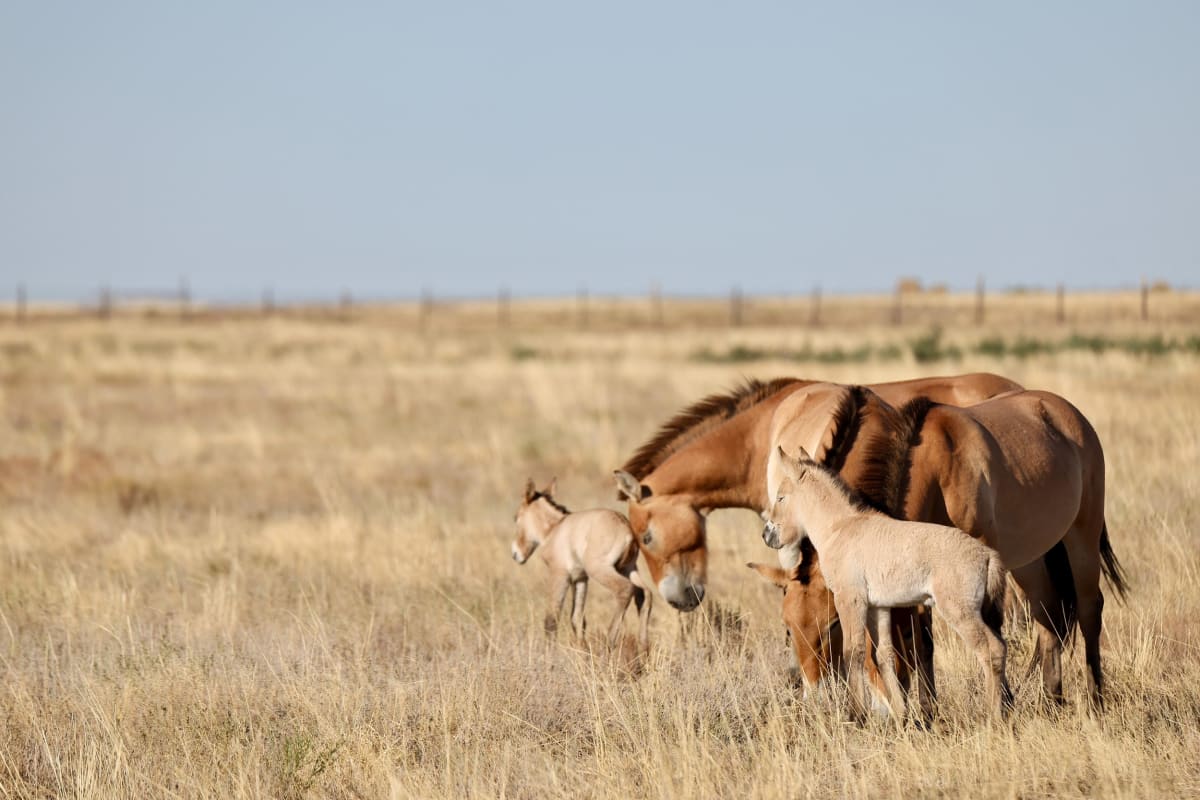
Two Przewalski's horse foals were born in Kazakhstan this August, marking the first wild horses born there in over two centuries. The births prove that rewilding efforts are working in the Central Asian grasslands.
After vanishing from Kazakhstan's grasslands more than 200 years ago, wild horses are being born there again.
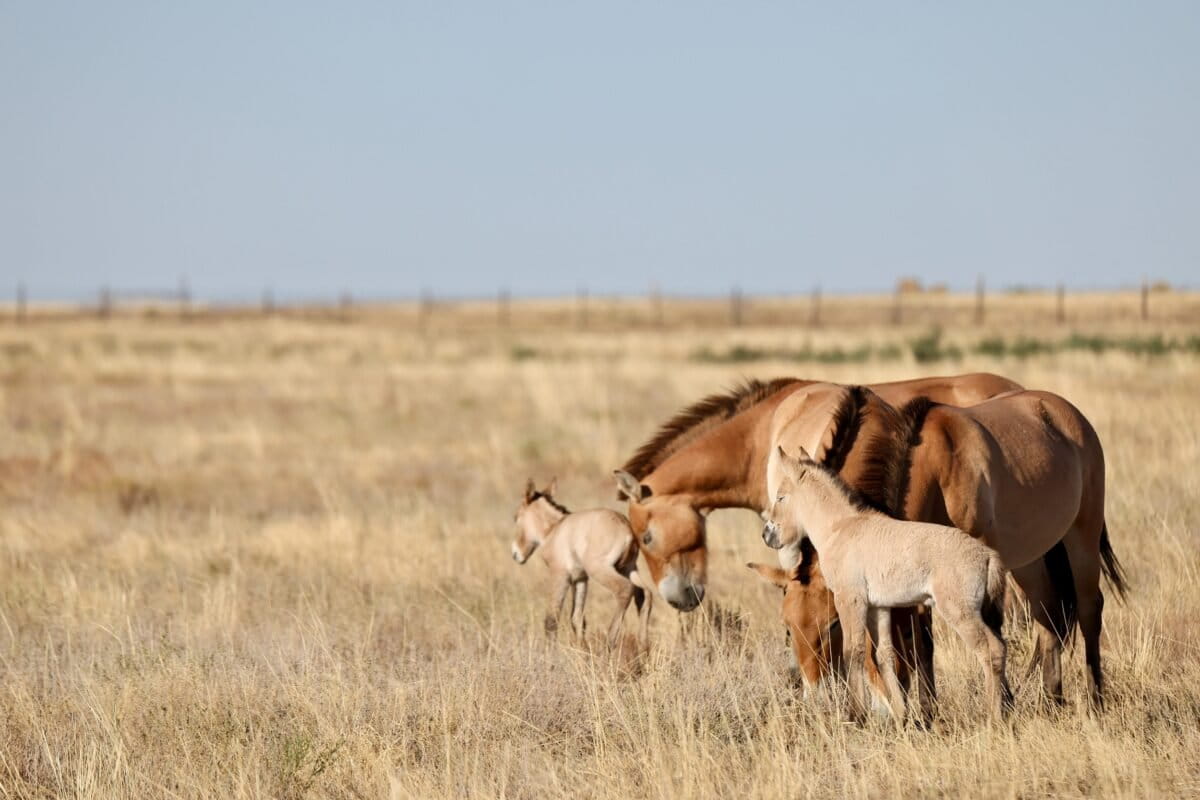
Two Przewalski's horse foals arrived at a reintroduction center in central Kazakhstan in late August. The first, born on August 22, came from a mare named Tessa, and the second followed on August 31 from a mare named Umbra.
Both males share the same father, a stallion named Zorro who has since died. Their births mark a turning point for one of the world's most endangered species.
"The birth of these two foals is important because it shows that the horses are adapting to this climate, to this territory," said Alyona Krivosheyeva, conservation director of the Association for the Conservation of Biodiversity of Kazakhstan. "This is the proof of success of what we do."
The foals were born inside a 140-acre enclosure at the Alibi Wild Ungulates Reintroduction Center. The facility sits within Kazakhstan's massive Altyn Dala State Nature Reserve, which spans nearly 3 million acres.
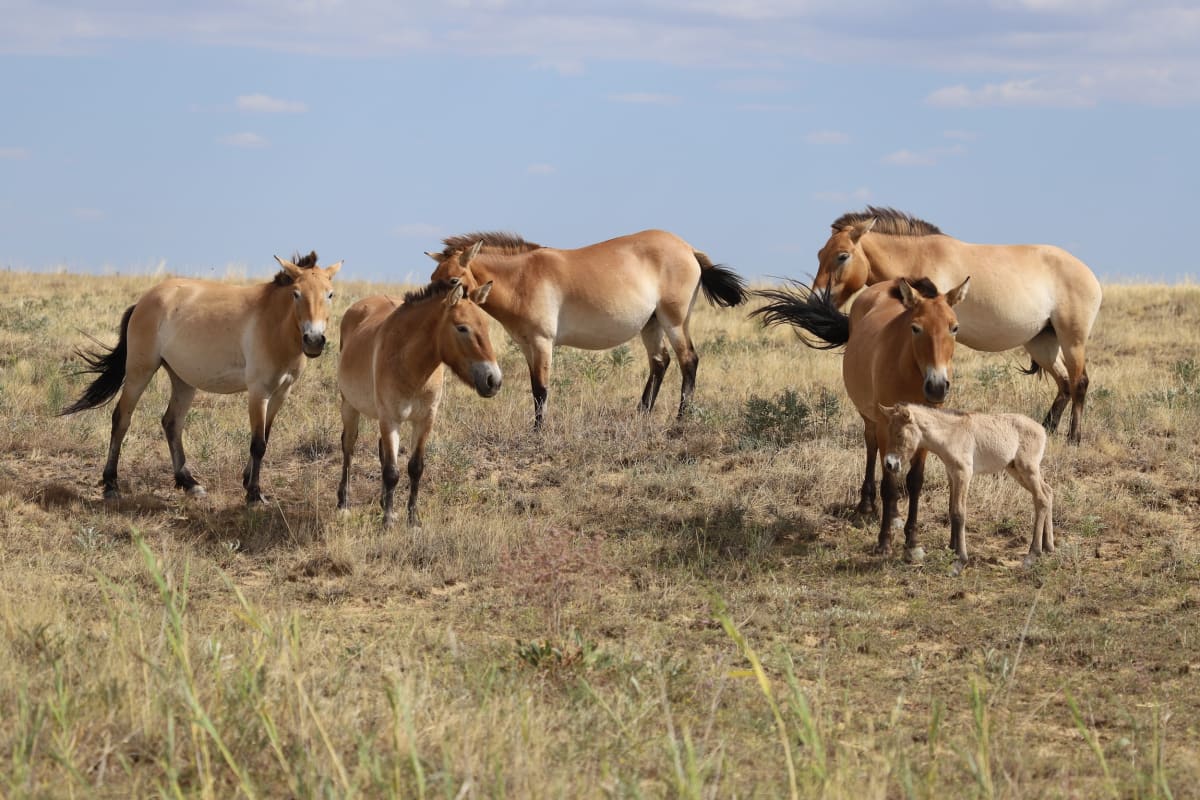
Przewalski's horse is the only living wild relative of the domestic horse. Known locally as kertagy, these stocky horses once roamed the steppe grasslands across Russia, Kazakhstan, Mongolia and northern China.
They disappeared from Kazakhstan between the mid-1700s and mid-1800s as the Russian Empire colonized the region. The horses lost access to water and winter pastures, faced intense hunting, and were crossbred with domestic horses until the wild population collapsed.
Captive breeding programs in zoos kept the species alive. The animals were actually listed as extinct in the wild until one adult was found in 1996, and the species has slowly recovered since then.
The Ripple Effect
These horses do more than just look magnificent. They act as ecosystem engineers across the grasslands.
The horses graze on dry vegetation, reducing wildfire risk across the steppe. Their hooves disturb the soil as they move, creating space for new plants to take root, and they disperse seeds across the landscape as they wander.
Over the last three years, 22 Przewalski's horses have been brought to Kazakhstan from Prague Zoo and Tierpark Berlin. Conservationists plan to bring a total of 40 horses to the country, the minimum needed to establish a self-sustaining wild population.
With two foals now thriving on Kazakh soil, the species is one generation closer to reclaiming its ancestral home.
More Images

Based on reporting by Mongabay
This story was written by BrightWire based on verified news reports.
Spread the positivity!
Share this good news with someone who needs it