Wild Kingdom: 5 Surprising Animal Behaviors That Rewrite Nature's Rules
Researchers uncover five extraordinary animal behaviors in 2025, revealing unprecedented levels of intelligence and complex interactions that challenge our understanding of nature.
Nature never fails to astonish us, revealing incredible insights into animal intelligence and behavior that challenge our most fundamental assumptions. In 2025, researchers uncovered five extraordinary moments that highlight just how complex and unpredictable the animal world can be.
In November 2024, scientists made a remarkable discovery in Brazil, documenting a never-before-seen "massive aggregation" of small bumblebee catfish (Rhyacoglanis paranensis) climbing waterfalls. These rare fish, about which little was previously known, were observed ascending the cascading waters, likely in an epic journey to spawn and continue their species.

Perhaps even more astounding was a camera trap video from Canada, where Indigenous Haíɫzaqv guardians captured a wolf exhibiting extraordinary problem-solving skills. The female wolf was seen swimming, gripping a submerged trap's rope in her mouth, pulling it ashore, and then methodically opening the container to access the herring bait inside. Researchers were stunned by this evidence of advanced cognitive reasoning, suggesting wolves possess far more complex understanding than previously believed.
In another groundbreaking observation, researchers documented a chilling biological strategy among certain ant species. Queens of L. orientalis and L. umbratus were found to infiltrate other ant colonies by manipulating communication through specialized odors. By spraying the resident queen with what researchers suspect is formic acid, these parasitic queens trick worker ants into attacking and killing their own mother, then accepting the intruding queen as their new leader.
The Peruvian Amazon offered yet another surprising revelation, with camera traps capturing an unusual interaction between an ocelot and a common opossum. Contrary to expected predator-prey dynamics, the two were observed walking together multiple times. Researchers hypothesize this could be a mutually beneficial relationship, with the opossum potentially benefiting from the ocelot's hunting skills, while the ocelot might use the opossum's strong scent as a form of camouflage.
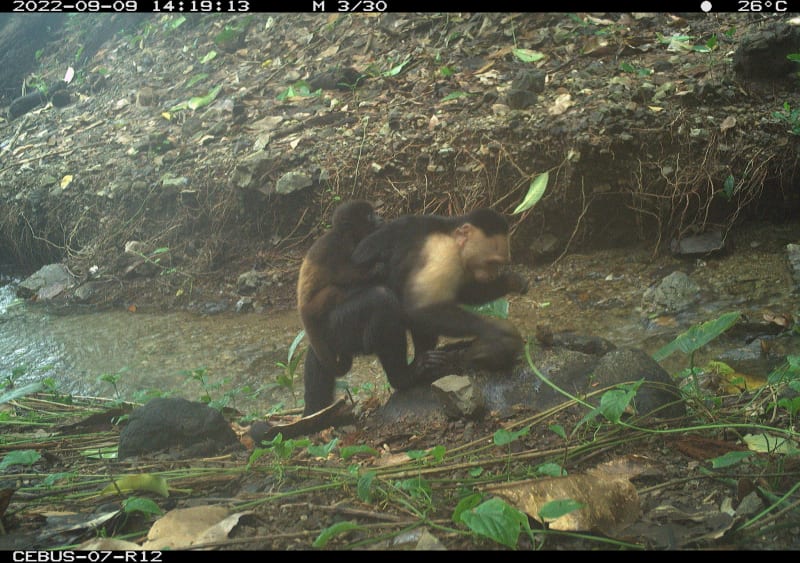
Perhaps most startling was the behavior observed on a remote Panamanian island, where young male capuchin monkeys were seen stealing howler monkey infants. This unprecedented action suggests that animal behavior isn't always driven by survival necessity, but can emerge from complex social dynamics and unexpected environmental conditions.
These observations remind us that the natural world is infinitely more nuanced and mysterious than we imagine. Each unexpected behavior offers a window into the remarkable adaptability and intelligence of animal species, challenging our understanding and inviting further exploration.
Based on reporting by Mongabay
This story was written by BrightWire based on verified news reports.
Spread the positivity! 🌟
Share this good news with someone who needs it
More Good News
 🚀 Innovation
NHS Sees Drop in Flu Cases as Cold Weather Poses New Health Challenges
 🚀 Innovation
January's Night Sky: Jupiter and Its Four Massive Moons Offer Spectacular Stargazing Show
 🚀 Innovation