Wind Turbine Gets 75,000 Reef Cubes for Marine Life
A wind turbine off England's coast now stands on 75,000 hollow concrete cubes that shelter starfish, crabs, and oysters instead of lifeless rocks. The pilot project proves clean energy infrastructure can create thriving ocean habitats while generating power.
Thirteen miles off the Sussex coast, a single wind turbine is doing double duty as both power source and underwater apartment complex for thousands of sea creatures.
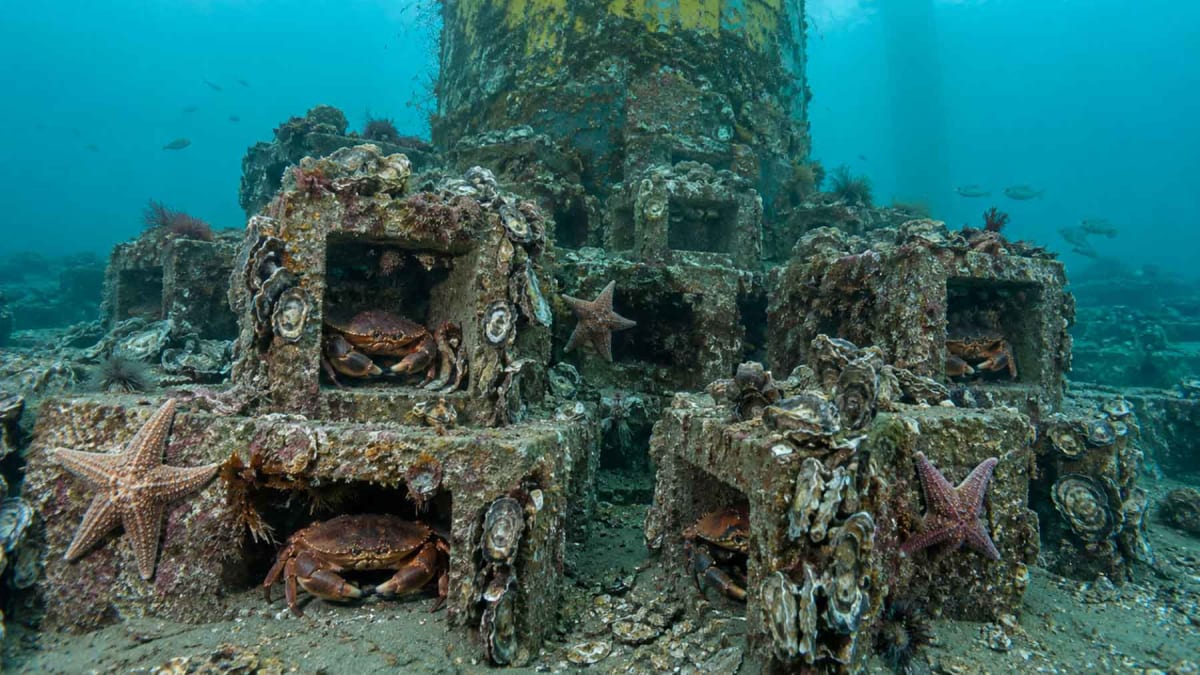
Developers at the Rampion 2 offshore wind project replaced the usual quarried rocks around one turbine foundation with roughly 75,000 specially designed concrete reef cubes. Each cube measures between 6 and 14 inches and features hollow centers with internal passageways.
The transformation happened quickly. Starfish, brown crabs, European seabass, and oysters moved into the maze-like structure, turning industrial infrastructure into a bustling artificial reef.
Traditional wind turbine foundations use plain rocks that offer minimal value to marine life. They hold the massive structures in place but create what's essentially an underwater desert around each turbine.
The reef cubes serve two purposes at once. They prevent seabed erosion from ocean currents while giving fish and invertebrates places to hide, hunt, and reproduce.
The UK desperately needs both marine protection and clean energy. The nation aims to reach 95% low-carbon electricity by 2030 and cut greenhouse gas emissions by 87% by 2042 compared to 1990 levels.
Offshore wind forms the backbone of this strategy. More than 16 gigawatts of capacity already spin off British coasts, with thousands more turbines planned.
But this growth raised concerns about disrupting ocean ecosystems. The Rampion pilot directly addresses those worries by proving turbines can support biodiversity instead of harming it.
The Ripple Effect
This single turbine experiment could reshape how the entire offshore wind industry builds its foundations. The Rich North Sea project connected experts across European waters to share data and scale the approach.
Monitoring will continue through 2030 to track how the artificial reef develops over time. Early results already show the cubes create stable habitats that attract diverse species.
If successful at scale, every new offshore wind farm could become a network of artificial reefs supporting marine life. Thousands of turbines across UK waters could mean millions of reef cubes creating habitat where none existed before.
The approach works with modular concrete units that are relatively simple to manufacture and deploy. This makes the technology practical for widespread adoption without dramatically increasing costs.
Other nations are watching closely. France, Japan, and Taiwan are testing similar nature-inclusive designs around their own offshore energy projects.
The UK shut down its last coal-fired power plant in 2024 after centuries of fossil fuel dependence. This reef cube pilot shows the green transition doesn't have to come at nature's expense.
Clean energy infrastructure can actually restore and enhance ocean ecosystems while powering millions of homes with renewable electricity.
Based on reporting by Google News - Wind Energy
This story was written by BrightWire based on verified news reports.
Spread the positivity!
Share this good news with someone who needs it