Wind Turbines Create Underwater Reefs in Dutch North Sea
Offshore wind turbines in the Netherlands are doing double duty: generating clean energy above the waves while creating thriving marine habitats below. Special "Reef Cubes" placed around turbine foundations are transforming once-barren seabeds into bustling ecosystems.
Wind turbines off the Dutch coast are quietly creating something remarkable beneath the surface: brand new ocean life where none existed before.
At the OranjeWind project in the North Sea, energy companies RWE and TotalEnergies installed special structures called Reef Cubes around offshore wind turbine foundations. These textured concrete blocks weren't just engineered to support the turbines. They were designed to invite nature back in.
For decades, this stretch of seabed remained flat and bare. Strong currents swept nutrients through quickly, leaving nothing for marine life to cling to or shelter in. Without surfaces or structures to break the flow, there was simply no reason for ocean creatures to stay.
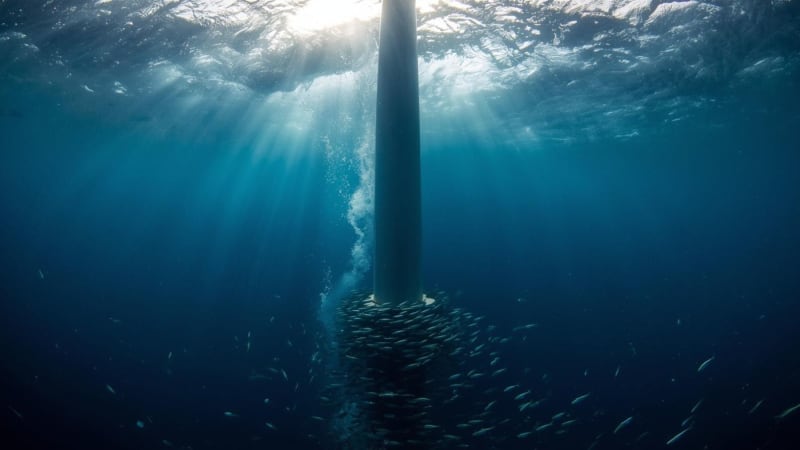
Then the Reef Cubes arrived. Their rough textures, hollow spaces, and openings slowed water movement and created calm pockets. Instead of the smooth, lifeless foundations that typically anchor offshore structures, these blocks offered something different: an invitation.
Nature responded fast. Small organisms arrived first, attaching themselves to the new surfaces. Shellfish followed, then fish seeking shelter in the gaps and crevices. Sediments began stabilizing around the structures, and water quality improved as filtering organisms took hold.
Scientists monitoring the sites with cameras and sensors are watching complexity build month by month. Where there was once silence, there's now movement. Early data shows species numbers climbing as the artificial reefs mature into functioning ecosystems.
The Ripple Effect
What started as a renewable energy project is now doing double environmental duty. Above the water, the turbines generate clean electricity that helps reduce carbon emissions. Below the surface, they're anchoring entire communities of marine life that hadn't existed there in living memory.
This approach challenges the old assumption that industrial infrastructure must remain separate from nature. Instead, it shows that human engineering can create starting points for natural recovery when designed thoughtfully.
The transformation isn't loud or instant. It unfolds gradually, measured in seasons rather than days. But the pattern holds: give nature structure, texture, and shelter, and it will find its way back.
Other offshore wind projects are watching closely. If turbine foundations can double as marine habitat restoration sites, the potential scale becomes enormous. The North Sea alone hosts hundreds of turbines, each one a possible anchor point for ocean life.
In Dutch waters, clean energy is proving it can do more than replace fossil fuels—it can help bring the ocean back to life at the same time.
Based on reporting by Google News - Wind Energy
This story was written by BrightWire based on verified news reports.
Spread the positivity!
Share this good news with someone who needs it