
Wolf Pup's Last Meal Reveals Woolly Rhino Mystery
A 14,400-year-old wolf pup mummy from Siberia held an incredible surprise in its stomach: DNA from an extinct woolly rhinoceros that reveals the species was thriving right before it vanished. This scientific breakthrough shows the massive ice age animal didn't slowly fade away but disappeared suddenly, giving scientists new clues about protecting endangered species today.
Scientists just sequenced the complete genome of an extinct woolly rhinoceros from one of the most unexpected places imaginable: the stomach of a naturally mummified wolf pup found frozen in Siberian permafrost.
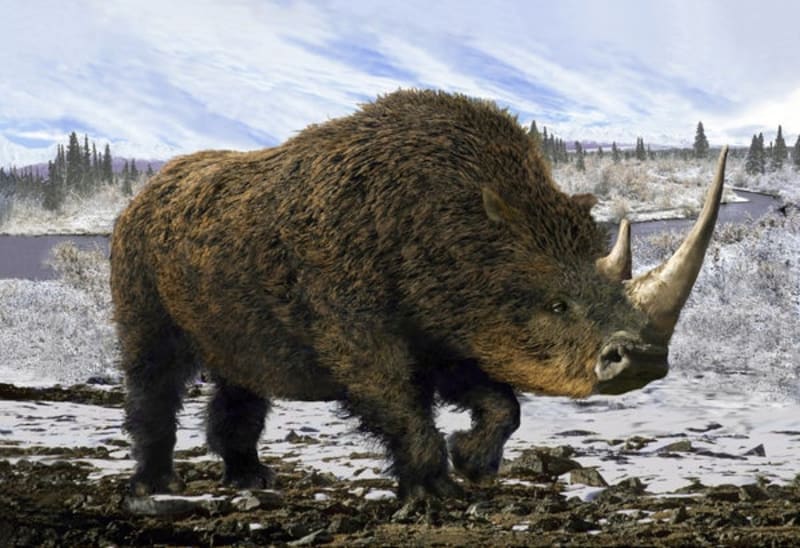
The young wolf ate a piece of woolly rhino tissue about 14,400 years ago, just before the species went extinct. When researchers analyzed the preserved meal, they discovered something astonishing about why these shaggy, two-horned giants disappeared from Earth.
The DNA showed a genetically healthy population with no signs of inbreeding or decline. The woolly rhinos were thriving across tens of thousands of years with stable numbers, according to study co-author J. Camilo Chacón-Duque from the Center for Palaeogenetics in Sweden.
This finding turns previous extinction theories upside down. If the population was strong and healthy, something sudden must have wiped them out fast.
The research team, publishing in Genome Biology and Evolution, points to a period of rapid warming that hit the Northern Hemisphere 14,700 years ago. The woolly rhinos had survived on the frigid Eurasian steppe for millennia, their long shaggy coats perfectly adapted to ice age conditions.
Why This Inspires
This accidental discovery shows how nature preserves mysteries in the most unexpected ways. A hungry wolf pup's last meal became a time capsule that traveled across 14,000 years to deliver an urgent message to modern scientists.
Understanding what killed the woolly rhinoceros helps researchers protect endangered species facing similar threats today. The study proves that even seemingly stable, healthy populations can vanish quickly when environmental conditions shift dramatically.
The permafrost acted as a natural freezer, keeping both the wolf pup and its stomach contents perfectly preserved. Scientists now have a rare snapshot of life at the exact moment when an entire species stood on the edge of extinction, unaware of what was coming.
While paleontologist Kamilla Pawłowska notes that DNA from multiple woolly rhinos across different regions will give a more complete picture, this single specimen offers powerful insights. Climate change happened before, and it happened fast enough to erase thriving species.
This discovery reminds us that preservation isn't just about helping struggling populations recover but also about protecting healthy ones before rapid change strikes.
More Images


Based on reporting by Google News - Researchers Find
This story was written by BrightWire based on verified news reports.
Spread the positivity! 🌟
Share this good news with someone who needs it

