Woman Builds 40-Person All-Female Workshop During Pandemic
When COVID-19 hit, Seema Chhaparia started stitching sacred garments from her home in Mathura, India. Three years later, she runs a thriving workshop employing 40 women who craft traditional deity clothing.
A home experiment during lockdown has blossomed into a workshop that's keeping both an ancient craft and 40 women employed in Mathura, India.
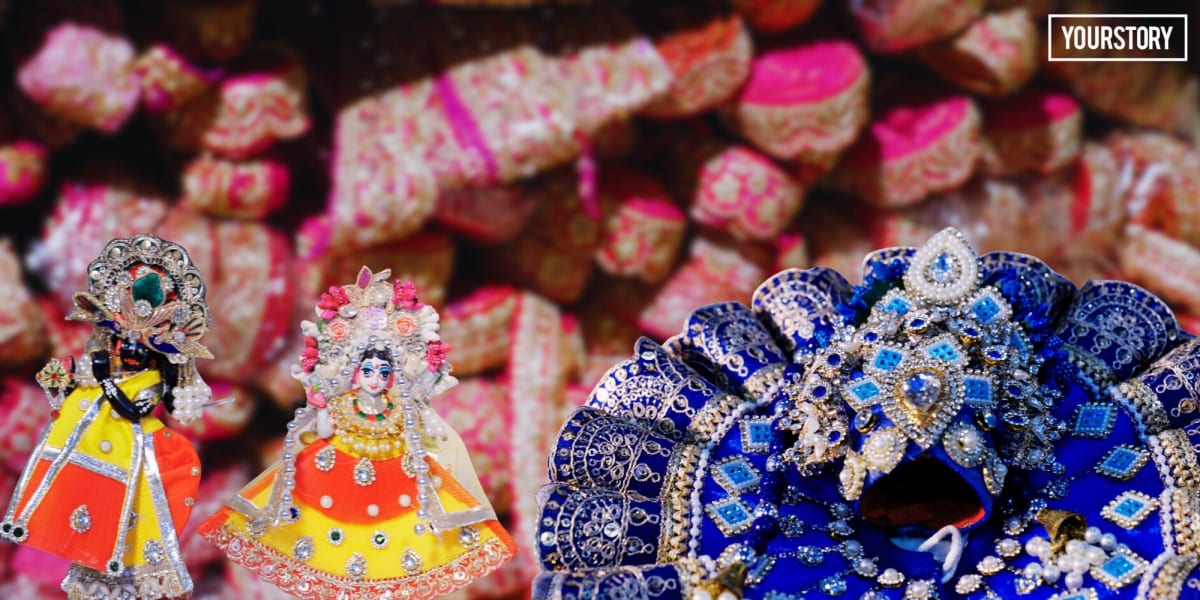
Seema Chhaparia began making Thakur Ji ki Poshak in 2020 when the pandemic left her searching for meaningful work from home. These handcrafted garments adorn Hindu deities in temples and homes across India, representing a devotional tradition centuries old.
With limited resources and no formal training, she started small. She shared her first pieces with family members, then gradually began posting them online and approaching local shops.
Temple markets were quiet during lockdowns, and shop owners hesitated to place orders. But Seema persisted, and small requests started trickling in.
Her breakthrough came in 2021 with an 18-piece wholesale order. That single order proved her business model could scale beyond individual sales to steady wholesale partnerships.
The garments themselves require intricate layering. Artisans cut buckram bases, add structural lining, layer colored fabrics and netting, then stitch everything together before adding decorative embellishments called bootis.
Seema organized her growing operation by dividing tasks among specialists. Some workers cut patterns while others handle stitching, finishing, or decoration, allowing consistent quality across larger batches.
The Ripple Effect
With a 1.4 million rupee loan (roughly $17,000), Seema purchased land and built a dedicated workspace. Today, NK Chhaparia Creations employs approximately 40 women, all working together to meet wholesale demand.
The enterprise supports more than just individual families. Mathura's government recognizes Thakur Ji ki Poshak under its One District One Product program, which promotes traditional crafts as economic drivers for entire regions.
Each completed garment connects modern entrepreneurship with spiritual heritage. The steady demand for devotional clothing, driven by festivals and daily worship practices, creates reliable income for dozens of households.
What started as one woman's pandemic project now helps preserve a traditional craft while proving that women-led businesses can thrive even in specialized, tradition-bound industries.
More Images

Based on reporting by YourStory India
This story was written by BrightWire based on verified news reports.
Spread the positivity!
Share this good news with someone who needs it