%2Ffile%2Fattachments%2Forphans%2F31_421416.jpg)
Women Beekeepers Are Reshaping South African Agriculture
Two South African women are building thriving beekeeping businesses while training dozens of other women to do the same. Their work is creating income, transferring knowledge, and proving that agricultural entrepreneurship can start with just a few hives.
When Lulu Letlape visited her first beekeeping operation in 2016, she felt an immediate connection that would change her life. The visit came during a difficult time—a serious autoimmune diagnosis had forced her to leave her corporate career and move to a farm in Pretoria.
What started as five hives has grown into Bongi Bees, now managing 100 hives with plans to reach 500 within three years. But Letlape's vision extends far beyond her own honey production.
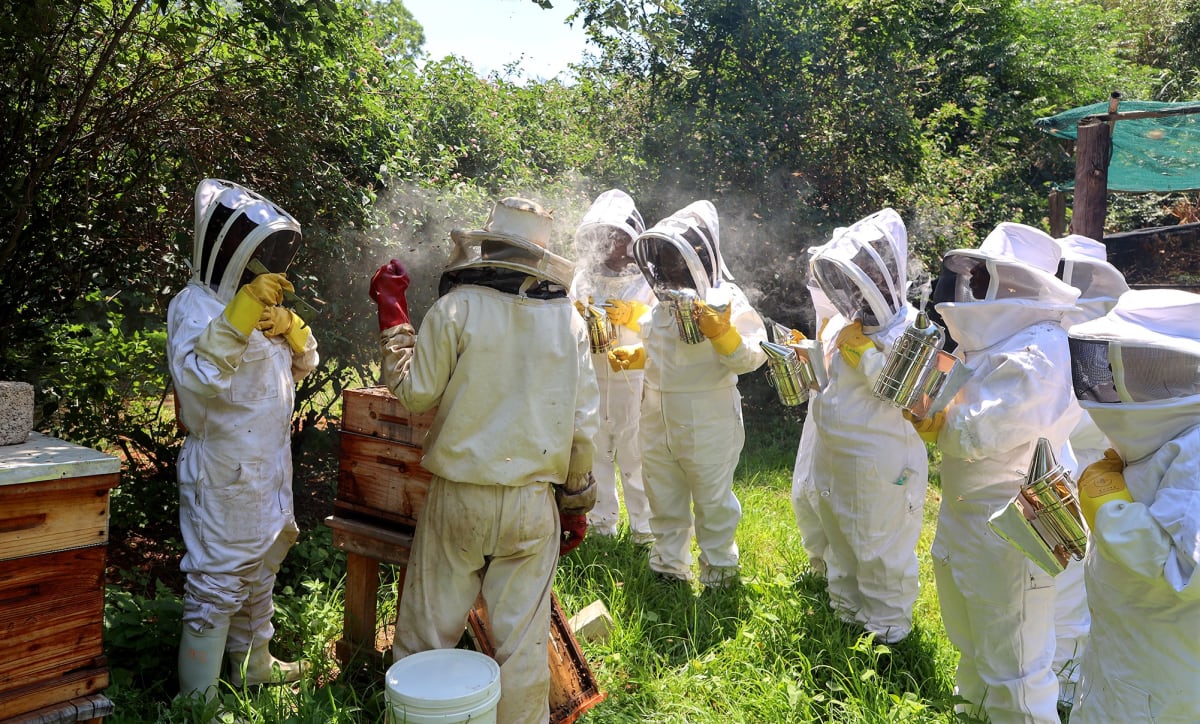
She's training women to become beekeepers themselves. Around 40 women in Gauteng and North West have completed her program, learning everything from bee biology to reading hive behavior to selecting the right sites.
The structure of the hive itself carries meaning for Letlape. "The bee kingdom is led by women," she says, noting that when trainees understand the queen bee sits at the center of everything, something shifts in how they see themselves.
After training, Letlape buys honey directly from her mentees, then handles the regulatory requirements, bottling, and packaging. This lets the women focus on production and earning income without navigating complex compliance burdens alone.
Dawn Noemdoe took a different path to beekeeping but shares the same commitment to lifting other women. As an agricultural journalist, she saw the barriers facing women in farming—limited access to land, water, and capital for inputs.
Beekeeping felt like the most accessible entry point, though it still took her a year to secure her first apiary. Today, HoneyatDawn operates three apiaries in Paarl and Wellington, which Noemdoe manages with help from her husband and one part-time employee.
Through her training initiative BeeGood Africa, funded initially by WWF and Nedbank GreenTrust, 15 beekeepers have learned the craft. Some have grown from managing a single hive to maintaining 20.
The Ripple Effect
The impact reaches beyond individual income. In rural and lower-income communities, beekeeping offers women a genuine path to financial independence without requiring large land holdings or major capital investment.
Both women are also addressing industry-wide challenges. Noemdoe worries about declining bee forage—the flowering plants bees need to thrive—which threatens hive health and long-term sustainability across South Africa.
Rather than guarding knowledge, both entrepreneurs believe in sharing it openly. "When knowledge is shared openly, it creates a more informed community that is better equipped to handle challenges and adapt to change," Noemdoe explains.
Their approach challenges traditional patterns in South African agriculture, where established players sometimes hoard expertise accumulated over decades. By contrast, these women see collective growth as the only sustainable path forward.
As South Africa marked World Bee Day on May 20, government officials emphasized that without bees, there is no agriculture. But these two entrepreneurs are proving there's another truth: when women support women in beekeeping, entire communities begin to thrive.
More Images

%2Ffile%2Fattachments%2Forphans%2F21_911473.jpg)
%2Ffile%2Fattachments%2Forphans%2F11_650725.jpg)
Based on reporting by Daily Maverick
This story was written by BrightWire based on verified news reports.
Spread the positivity!
Share this good news with someone who needs it


%2Ffile%2Fattachments%2Forphans%2FPhoto1_600060.jpeg)