Wood Storks Soar Off Endangered Species List After 40 Years
America's only native stork has made a remarkable comeback, doubling its population in four decades. The wood stork's delisting marks a major conservation victory for wetland restoration efforts.
After 40 years of dedicated conservation work, the wood stork is officially flying off the Endangered Species List.
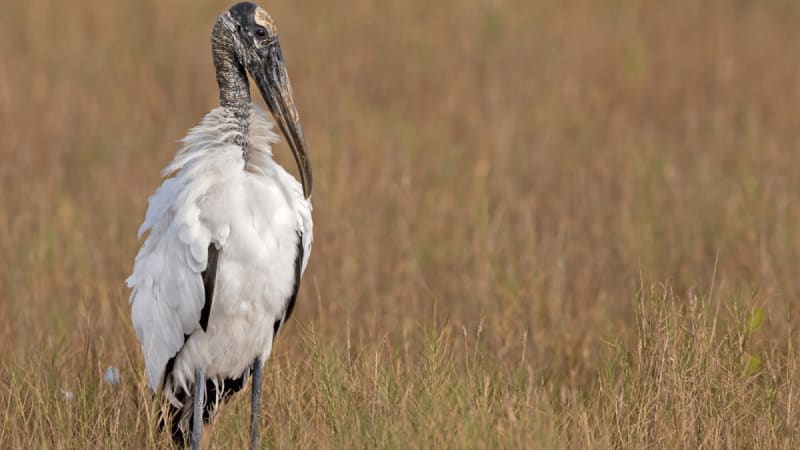
The majestic birds, standing up to 45 inches tall with impressive 65-inch wingspans, nearly vanished from American skies in 1984. Their population had plummeted by 75 percent, dropping from 20,000 nesting pairs to just 5,000 as wetlands across the Southeast disappeared.
Today, the U.S. Fish and Wildlife Service counts between 10,000 and 14,000 nesting pairs across roughly 100 colony sites. These striking white birds with dark wingtips now thrive along coastal plains from Mississippi to North Carolina.
The wood storks showed remarkable adaptability during their recovery. They learned to nest in places conservationists never expected: coastal salt marshes far north of their original range, flooded rice fields, and even suburban golf courses and retention ponds.
"Even when they're in odd habitats, it's still exhilarating to see these wild birds doing what they do in a natural marsh," says Dale Gawlik, endowed chair for conservation and biodiversity at Texas A&M University's Harte Research Institute. He sees their flexibility as crucial for survival as environments change rapidly.
The recovery wasn't just about the birds adapting. Decades of wetland restoration, habitat protection, and careful monitoring created the conditions for wood storks to flourish again.
The Bright Side
This delisting proves that endangered species protection works when we commit to it long term. The wood stork's journey from near extinction to thriving populations demonstrates what's possible when conservation efforts meet natural resilience.
The FWS has implemented a 10-year monitoring plan to ensure the recovery holds strong. Wildlife officials will track population numbers and nesting success to catch any warning signs early.
The official delisting takes effect March 9, 2026, marking one of the most successful endangered species recoveries in American history. From 5,000 pairs facing extinction to more than 10,000 pairs building colonies across six states, these adaptable birds remind us that nature can bounce back when given the chance.
More Images

Based on reporting by Google News - Endangered Species Recovery
This story was written by BrightWire based on verified news reports.
Spread the positivity!
Share this good news with someone who needs it