World Bank: Nature Can Shield Cities From Climate Disasters
A new World Bank report reveals how forests, wetlands, and coastlines can protect communities from climate disasters while creating jobs and cleaning air. Countries that integrate these natural solutions into policy are already seeing powerful results.
Imagine if the best defense against floods and storms wasn't a concrete wall, but a thriving forest or wetland that also cleans your air and creates jobs in your community.
That's the promise of a groundbreaking new World Bank report released this month. The guide shows how nature itself can act as infrastructure, protecting people and economies from increasingly dangerous climate disasters.
The research makes a compelling case: mangroves reduce storm surges, wetlands absorb floodwaters, and urban green spaces cool cities while managing runoff. Unlike traditional dams and seawalls, these natural systems deliver multiple benefits at once.
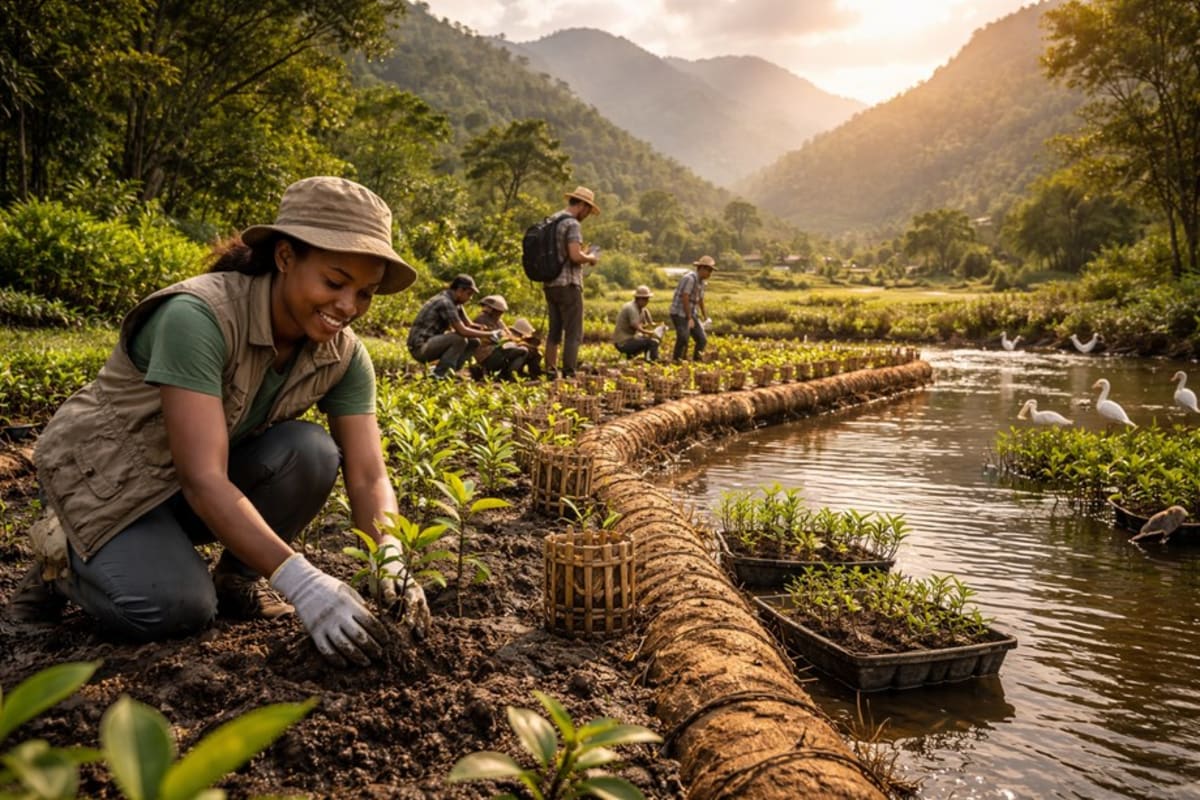
Countries like Mexico, Costa Rica, and Ethiopia are already proving the approach works. Coastal restoration projects, forest conservation programs, and climate-smart national strategies are protecting communities while boosting local economies.
But here's the challenge. Despite clear evidence, most governments still default to concrete-based solutions because policies, funding systems, and technical standards favor traditional engineering.
The report's key message is simple: strong policies are the missing link. When governments write nature-based solutions into laws, national strategies, and budgets, these projects can scale from small pilots to nationwide protection systems.
The strategy works across every sector. Disaster management teams restore ecosystems to reduce flood vulnerability. Water departments restore rivers and wetlands for better flood control. Cities use smarter land planning and protected green spaces to reduce risk while improving quality of life.
Agriculture and forestry benefit too. Sustainable practices like agroforestry protect soils and increase resilience for farmers facing unpredictable weather.
The World Bank recommends a practical three-step approach. First, remove barriers that prevent nature-based solutions. Then, create financial incentives like subsidies or tax breaks to encourage investment. Finally, require these solutions where they make the most sense.
The Ripple Effect
When governments treat ecosystems as essential infrastructure rather than just scenery to protect, the benefits multiply. Communities get disaster protection, cleaner air, and biodiversity conservation. Local workers gain new jobs in restoration and maintenance. Future generations inherit landscapes that can adapt and heal.
The shift is already happening in communities worldwide, but climate risks are rising faster than current responses. Traditional infrastructure alone won't be enough to protect the billions of people facing more frequent floods, storms, and droughts.
The real transformation isn't about choosing nature over engineering. It's about recognizing that nature is engineering, perfected over millions of years and ready to work alongside human innovation.
Countries that embrace this approach now are building something remarkable: resilient futures where protecting nature and protecting people are the same thing.
More Images

Based on reporting by Google News - Climate Solution
This story was written by BrightWire based on verified news reports.
Spread the positivity!
Share this good news with someone who needs it