World's Largest Acidic Geyser Roars Back to Life
After six years of silence, Yellowstone's Echinus Geyser has resumed its spectacular eruptions, delighting visitors with regular shows every few hours. Scientists are tracking this rare acidic wonder as it mirrors its last active period in 2017.
The world's largest acidic geyser is putting on a show again, and Yellowstone visitors couldn't be more thrilled.
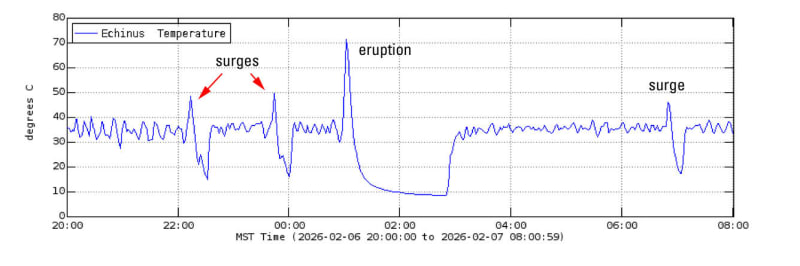
Echinus Geyser in Yellowstone's Norris Geyser Basin has awakened from a six-year slumber. After its last eruption in December 2020, the rare acidic geyser began showing signs of life in early February 2026, and by mid-February it was erupting regularly every two to five hours.
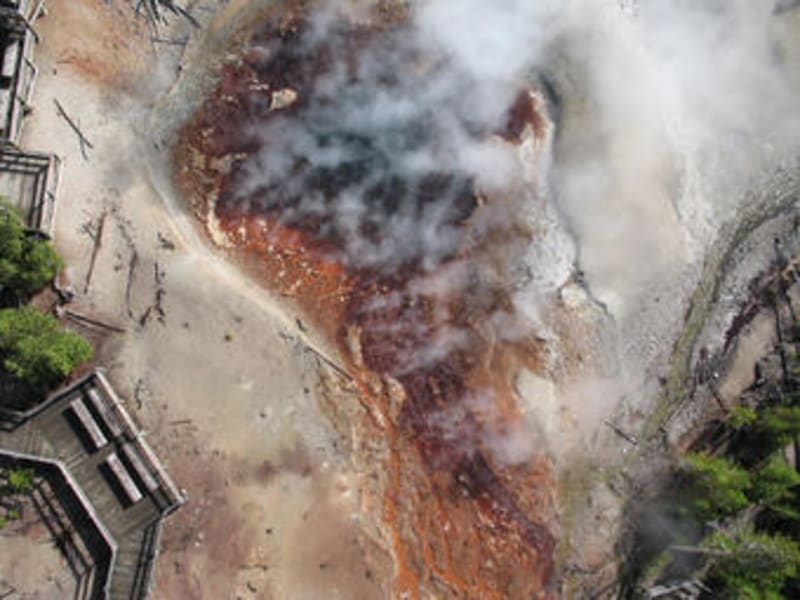
The geyser's name comes from 1878, when mineralogist Albert Charles Peale thought the spiny rocks around it looked like sea urchins. Today, those same red-rimmed formations frame eruptions that shoot 20 to 30 feet into the air, each lasting two to three minutes.
What makes Echinus special isn't just its size. Acidic geysers are incredibly rare because acidic water typically destroys the underground plumbing systems that make geysers work. Echinus survives because its acidity comes from mixing acidic gases with neutral water, creating a mild acid similar to orange juice that won't eat through rock.
The geyser has had quite a personality over the decades. It was mostly dormant before 1948, then became incredibly reliable in the 1970s with eruptions every 40 to 80 minutes. During its glory days in the 1980s and 1990s, some eruptions lasted over 90 minutes and reached 75 feet high, occasionally soaking delighted onlookers with warm water.
Park rangers would even post predictions so visitors could plan around eruptions. That's why the boardwalk around Echinus features multiple viewing platforms and benches, even though most 21st-century visitors have seen it sitting quiet.
By the early 2000s, eruptions became increasingly rare. Scientists installed a temperature monitoring system in 2010 to track any changes, which recorded just 15 sporadic eruptions between October 2010 and January 2011.
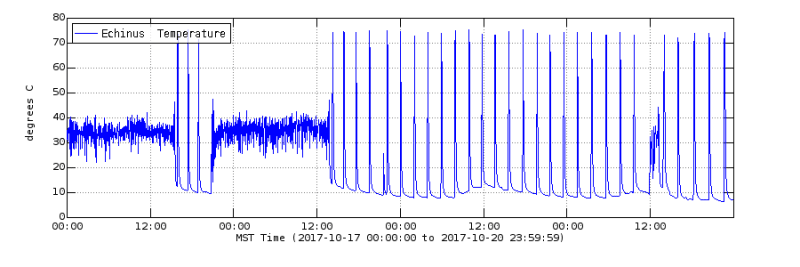
Then came 2017, when Echinus suddenly came alive again. From October 18 to November 10 that year, eruptions happened like clockwork every two to three hours before abruptly stopping.
The Bright Side
The current eruption pattern mirrors what happened in late 2017, giving scientists valuable data about how this unique thermal feature behaves. U.S. Geological Survey geophysicist Michael Poland notes that the temperature sensors are capturing detailed information about each surge and eruption.
For visitors, it's a rare chance to experience what generations of Yellowstone tourists enjoyed decades ago. The geyser's revival reminds us that even after years of quiet, nature's wonders can surprise us with spectacular comebacks.
Nobody knows how long this active period will last, making each eruption feel like a gift. Whether Echinus continues for weeks or months, it's offering a window into the dynamic geology that makes Yellowstone one of Earth's most fascinating places.
More Images

Based on reporting by Google News - Science
This story was written by BrightWire based on verified news reports.
Spread the positivity!
Share this good news with someone who needs it