World's Largest Battery Maker Starts Sodium-Ion Production
CATL just began mass producing sodium-ion batteries that work in extreme cold, a breakthrough that could make electric vehicles cheaper and more reliable. The new technology thrives in temperatures as low as -40°F, solving one of the biggest complaints about today's EVs.
📺 Watch the full story above
The world's biggest battery manufacturer just started producing a new type of battery that could change everything about electric vehicles in cold climates.
CATL, the Chinese company that makes more EV batteries than anyone else on Earth, announced this week it's now mass producing sodium-ion battery packs for commercial vehicles. These aren't your typical lithium batteries. They're made with sodium, which is abundant and cheap, and they laugh at freezing temperatures that make traditional EV batteries struggle.
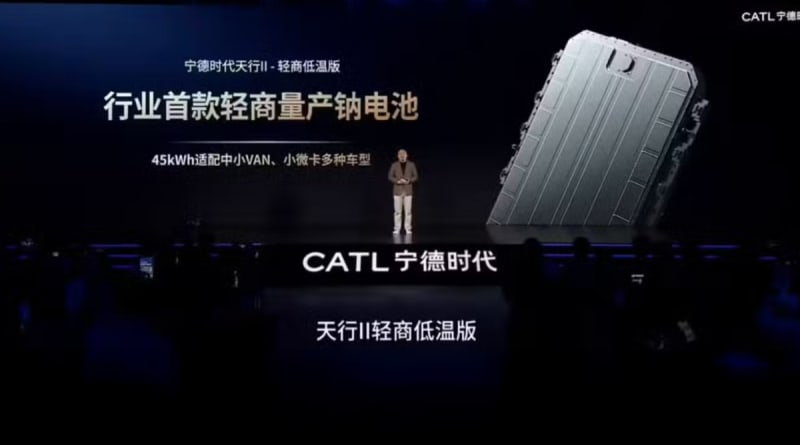
The new batteries keep 90% of their power even at negative 40 degrees Fahrenheit. That's colder than a Minnesota winter, and it means delivery drivers in Alaska won't watch their range disappear the moment temperatures drop. The first commercial batteries hold 45 kilowatt hours of energy, perfect for small delivery vans and work trucks that drive around town all day.
CATL calls the new platform Techtrans II, and it includes options for heavy trucks and buses too. Some versions can charge from 20% to 80% in just 30 minutes, even at negative 15 degrees. The sodium-ion version is built to last over 10,000 charge cycles, which means these batteries could outlive the vehicles they power.
The timing matters because lithium prices are acting up again. After falling steadily for years, lithium carbonate prices have jumped 160% from their lows, recently hitting over $22,000 per metric ton in China. Mining companies had cut production when prices dropped, and now they can't ramp up fast enough to meet demand.
Sodium offers a way out of that price rollercoaster. It's one of the most common elements on Earth, found in regular salt. CATL started marketing its first sodium-ion battery for passenger cars last April, with energy density reaching 175 watt-hours per kilogram. The commercial vehicle version announced this week matches that same density.
The Ripple Effect spreads beyond just cheaper batteries. Fleet operators who couldn't justify electric vehicles in cold regions now have a real option. Cities looking to electrify their delivery trucks and buses can move forward without worrying about winter performance. And as sodium-ion production scales up, the pressure on lithium supply chains eases, which could help keep all battery prices more stable.
CATL says 2026 will be the year sodium-ion batteries see large-scale adoption across passenger vehicles, commercial vehicles, and energy storage systems. They're even introducing swappable sodium battery packs in three sizes, so trucks can swap out depleted batteries in minutes instead of waiting to charge.
The electric vehicle revolution didn't spring up overnight, and it's far from finished evolving. Just like gas cars improved from manual cranks to push-button starts over decades, EVs are getting better in ways that solve real problems people face every day. This sodium breakthrough means cold weather just stopped being an excuse to avoid going electric.
More Images


Based on reporting by CleanTechnica
This story was written by BrightWire based on verified news reports.
Spread the positivity!
Share this good news with someone who needs it