World's Largest Camera Captures 500,000 Galaxies in One Shot
The Rubin Observatory in Chile just released the most detailed single image of deep space ever captured, revealing over half a million galaxies and 50,000 stars using a 3.2-billion-pixel camera. This cosmic snapshot offers scientists an unprecedented window into billions of years of universe history.
Astronomers just got their sharpest look yet at one of the most studied patches of the night sky, and the view is breathtaking.
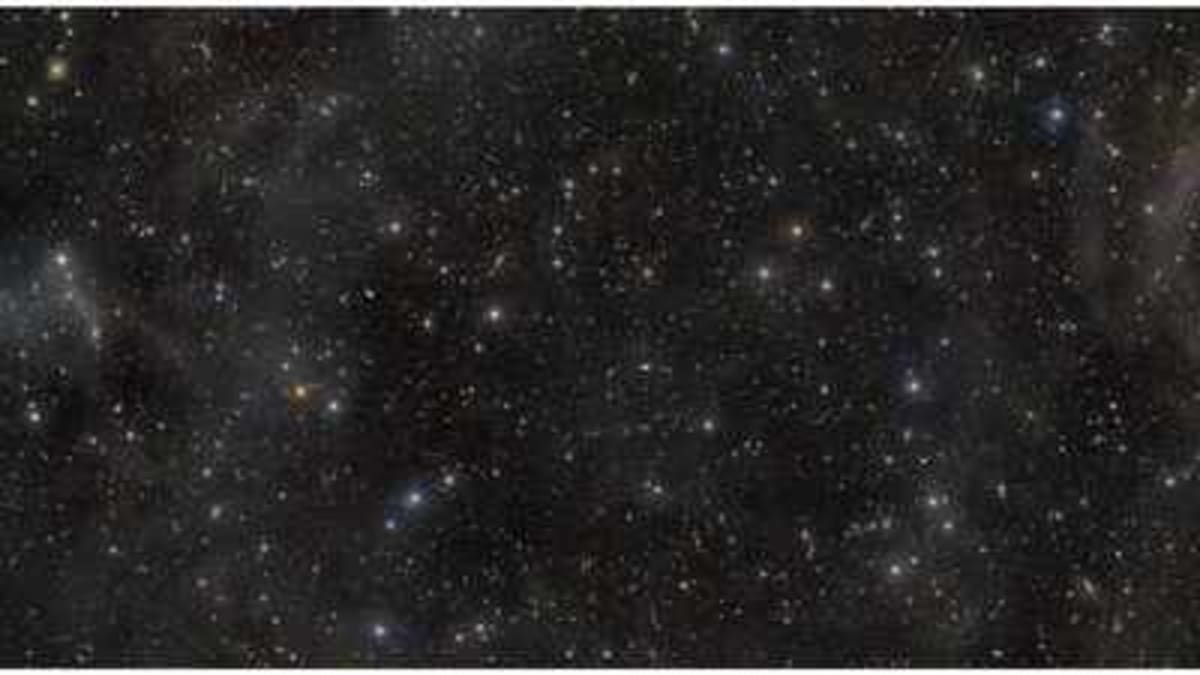
The Vera C. Rubin Observatory in Chile has released a stunning image containing more than 500,000 galaxies and over 50,000 stars. The photograph was captured using the largest digital camera ever built, a 3.2-billion-pixel marvel mounted on an 8.4-meter telescope.
Instead of a single snapshot, the team created this cosmic portrait by stacking hundreds of individual images on top of each other. Each layer added more faint, distant light until galaxies from the far reaches of the early universe became visible to our eyes.
The result is a single frame packed with spiral galaxies twirling their arms, smooth elliptical galaxies, and even galaxies caught mid-collision. Some of the light captured in this image has been traveling toward Earth for billions of years, offering us a window into the universe's ancient past.
The observatory focused on a region called the COSMOS field, a patch of sky that astronomers have been studying for more than two decades. This area sits away from the crowded plane of our own Milky Way, which means there's less interference from nearby stars and dust clouds blocking the view.
What makes this region so valuable is that it gives telescopes an unusually clean line of sight to enormous numbers of distant galaxies. Scientists can study galaxies at many different points in the universe's history, all within one continuous dataset.
This release marks just the beginning of Rubin's ten-year mission called the Legacy Survey of Space and Time. The observatory will photograph the same regions of sky again and again, building a dynamic record of how the universe changes over time.
Why This Inspires
This achievement represents more than just a technical milestone. It's a reminder that humanity continues to push the boundaries of what we can see and understand about our place in the cosmos.
By photographing the sky repeatedly over the coming years, scientists expect to uncover countless short-lived cosmic events like supernovae. Each discovery will add another piece to the puzzle of how our universe works and evolves.
The project, funded by the US National Science Foundation and Department of Energy, shows what's possible when we invest in tools that expand human knowledge. Future observations are expected to reveal even fainter galaxies and sharper details than what's visible today.
One image, half a million galaxies, and a universe of possibilities waiting to be explored.
More Images



Based on reporting by Google News - Science
This story was written by BrightWire based on verified news reports.
Spread the positivity!
Share this good news with someone who needs it