World's Largest Electric Ship Begins Harbor Trials
A 426-foot ferry just completed its first voyage powered entirely by batteries, marking a historic shift in maritime transportation. After years of development, Tasmania's Hull 096 is proving that massive ships can run whisper-quiet and emission-free.
📺 Watch the full story above
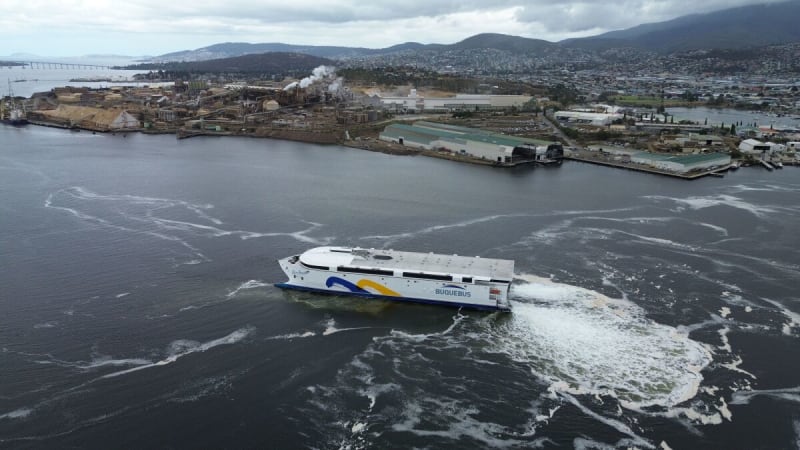
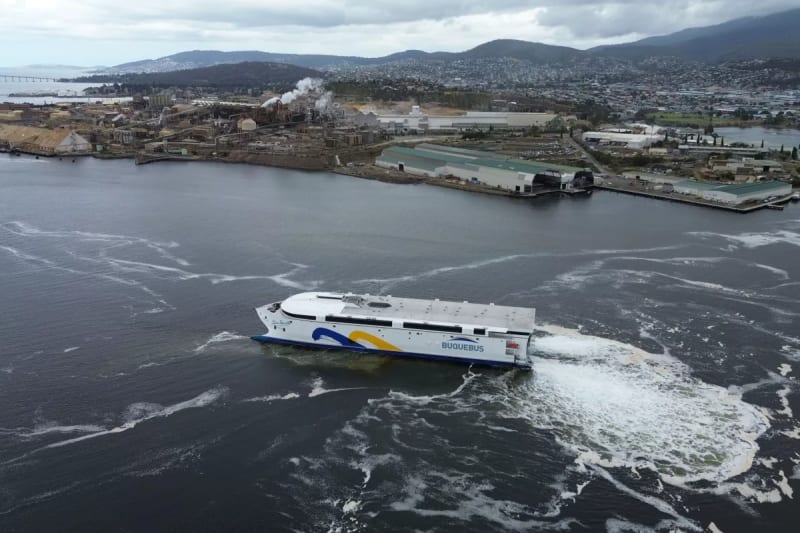
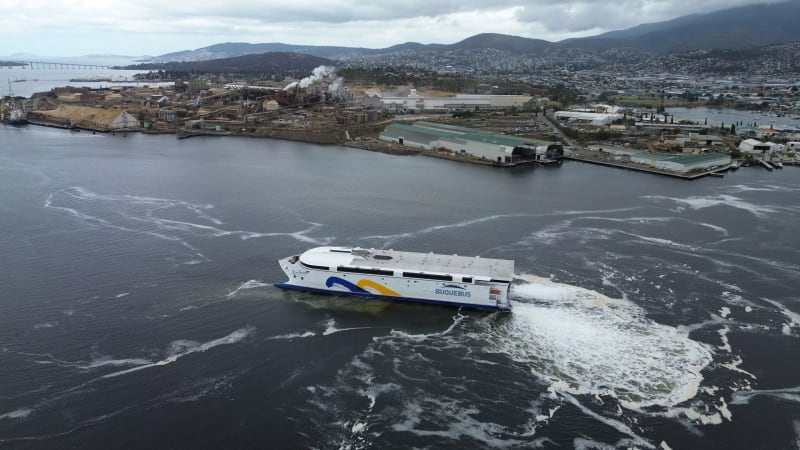
When the world's largest battery-electric ship eased away from the dock in Hobart, Tasmania earlier this month, something was missing: the rumble of diesel engines and the smell of exhaust. Instead, Hull 096 moved through the River Derwent with only the quiet churn of waterjets marking its historic maiden voyage.
Built by Incat Tasmania, the 426-foot ferry represents a remarkable pivot in maritime engineering. The vessel was originally designed to run on liquified natural gas, but as battery technology improved and costs dropped, builders made a bold decision in 2023 to go fully electric instead.
The gamble paid off spectacularly. Hull 096 now carries more than 250 tonnes of batteries delivering over 40 megawatt-hours of capacity, roughly four times larger than any previous maritime battery installation. That's enough power to move a vessel capable of carrying 2,100 passengers and 220 vehicles across the water.
This wasn't just a technical upgrade. Chairman Robert Clifford described the switch as an intentional leap forward, pushing beyond incremental improvements to show what large commercial vessels could become. For a shipbuilder, it meant venturing into largely uncharted territory with little precedent to guide them.
The December 2025 power-up test offered the first proof that years of complex integration had worked. Crews watched as eight electric waterjets roared to life, driven entirely by stored electricity. The January 2026 harbor trials took things further, testing how the ship handles real-world conditions like maneuvering, propulsion response, and system coordination.
The Ripple Effect
Hull 096's success could reshape the entire maritime industry. Ferries worldwide produce significant emissions, and this vessel proves that even massive commercial ships can operate cleanly and quietly. If the remaining sea trials go as planned before delivery to South American operator Buquebus, other shipbuilders will have a working blueprint for scaling up electric propulsion.
The implications extend beyond environmental benefits. Electric ships require less maintenance than diesel vessels, operate more quietly for passengers and marine life, and become more economical as battery technology continues improving. What seemed impossible just a few years ago is now cutting through Tasmanian waters under its own power.
Large-scale electric shipping has moved from theory to reality, one quiet revolution at a time.
More Images

Based on reporting by New Atlas
This story was written by BrightWire based on verified news reports.
Spread the positivity!
Share this good news with someone who needs it