World's Largest Glass Maker Brings Solar Sunroofs to Market
The company that makes glass for one in three cars worldwide just announced it can now mass-produce sunroofs that generate electricity from the sun. While they won't replace charging stations, these solar roofs could keep your car's battery topped up while you're away.
Your parked car might soon be quietly charging itself, thanks to a breakthrough from the world's biggest automotive glass manufacturer.
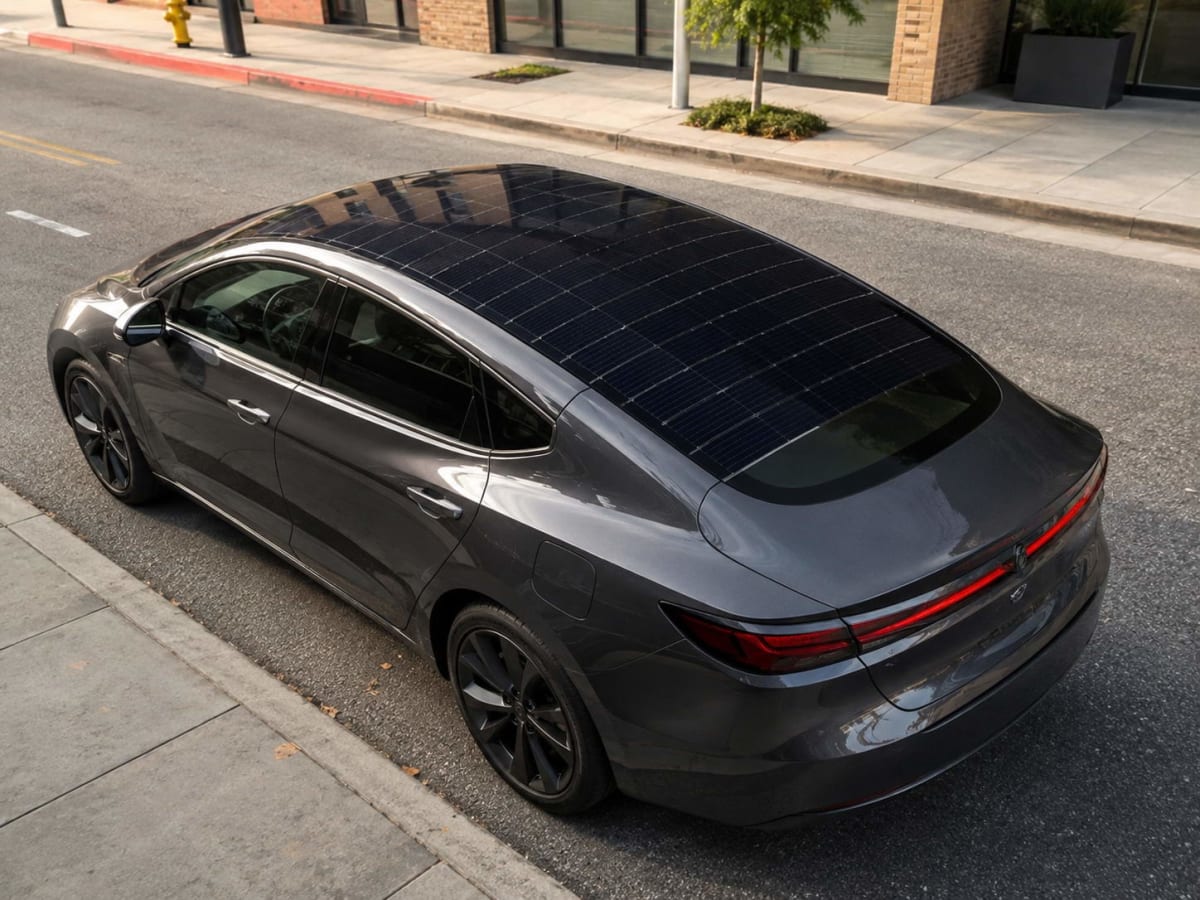
Fuyao Group, which supplies glass for roughly one in every three vehicles on the planet, has confirmed it can now produce solar-powered sunroofs at scale. The technology embeds working solar cells directly into the laminated glass that already sits on top of millions of cars.
The innovation transforms a car's sunroof from a passive piece of glass into an active power generator. While the vehicle sits in a parking lot or driveway, sunlight converts into electricity that powers auxiliary systems like ventilation, entertainment systems, and safety features.
Fuyao first achieved mass production capability in May 2024 and has been quietly supplying automakers who requested the technology. The recent announcement signals the company is ready to move from limited production to widespread commercial availability.
Chinese media reports suggest the solar sunroofs will debut on BYD's Han and Tang models for around $1,190, though neither company has officially confirmed pricing or technical specifications. Circulating figures point to a peak output of 720 watts and conversion efficiency above 23 percent using advanced solar cell technology.
The company's two major factories in Fuqing Yangxia and Hefei have each reached capacity to produce 3 million sets of automotive glass, with production ramping up through 2026. Fuyao hasn't disclosed what portion will be solar-equipped, but the infrastructure is ready.
The Ripple Effect
This technology won't eliminate the need for charging stations. The limited roof space on passenger cars simply can't capture enough sunlight to fully power an electric vehicle's driving needs.
But that's not the point. The real win comes during the 95 percent of time most cars spend parked. Solar sunroofs can reduce battery drain from standby systems, keep the cabin cool on hot days, and ensure your car maintains charge even during extended breaks from driving.
The shift from experimental prototype to factory-scale production marks a meaningful transition. What was once a novelty feature on concept cars is becoming a commercially viable product that everyday drivers can actually buy.
As more automakers adopt the technology, the cumulative impact could be substantial. Millions of parked vehicles across sunny regions could be generating small but steady amounts of clean energy instead of sitting idle.
The future of automotive innovation might not always be revolutionary, but sometimes progress looks like making every surface work a little bit harder for us.
More Images


Based on reporting by PV Magazine
This story was written by BrightWire based on verified news reports.
Spread the positivity!
Share this good news with someone who needs it