World's Rarest Seals Hide in Secret Underwater Air Pockets
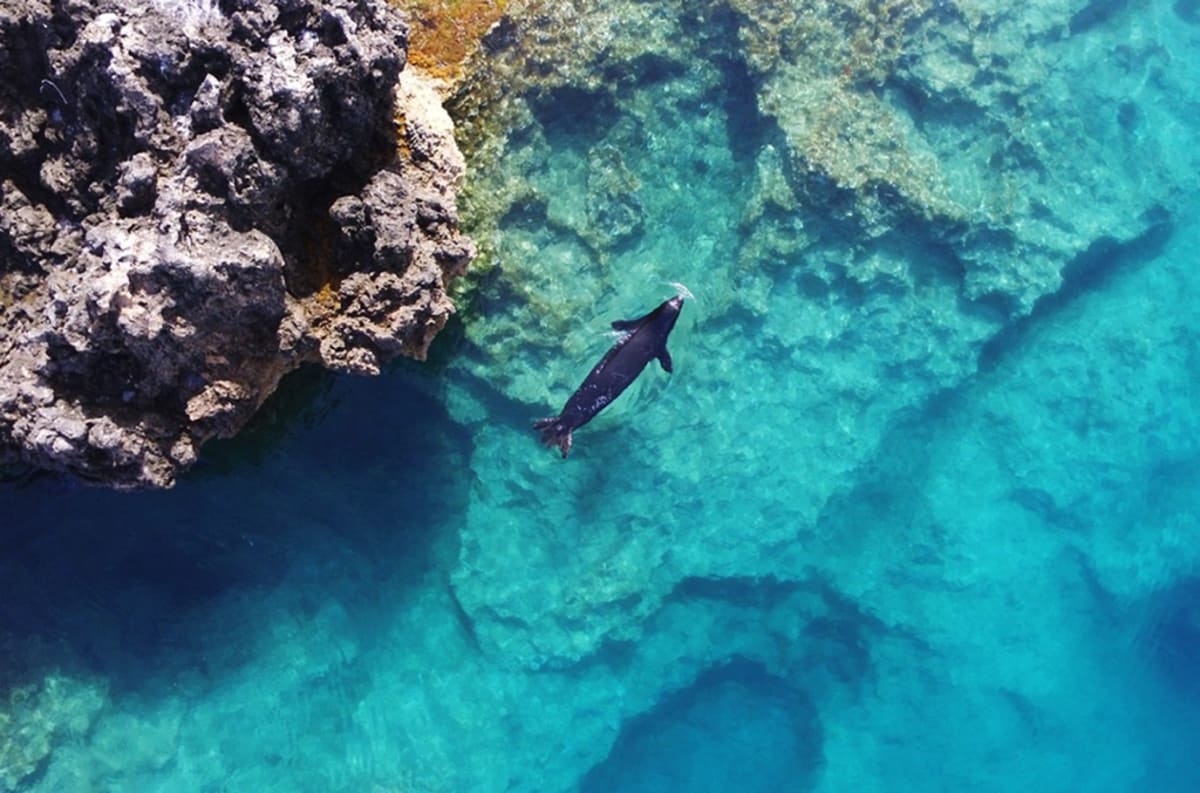
Scientists in Greece discovered Mediterranean monk seals using hidden "bubble caves" to escape summer tourists. The world's rarest seals prefer these underwater hideaways even without dry beaches, suggesting they're prioritizing privacy over comfort.
The world's rarest seals have found the ultimate hiding spot: secret air chambers you can only reach by swimming underwater.
Researchers studying Mediterranean monk seals near the Greek islet of Formicula stumbled upon something unexpected. While setting up cameras in a known seal cave, they discovered an underwater tunnel leading to a second chamber filled with nothing but water and a pocket of air above it.
These "bubble caves" have no dry beach for seals to rest on, just enough air to breathe. Yet when scientists monitored both spaces over 141 days, the seals chose the wet, cramped bubble cave on 119 days compared to just 30 days in the comfortable main cave with its dry platform.
Lead researcher Joan Gonzalvo from the Tethys Research Institute says the preference makes sense once you understand what these seals are running from. Summer tourists in the Ionian Sea sometimes chase seals for photos, even following them into their caves. The bubble caves offer something more valuable than comfort: invisibility.
Fewer than 1,000 Mediterranean monk seals remain in the wild, making them the rarest seal species on Earth. They once lounged openly on coastal beaches to rest and raise pups. Decades of tourism, fishing activity, and coastal development pushed them into marine caves along the Mediterranean coast.
The Bright Side
Greece recently established no entry zones around Formicula to protect the seals from disturbance. Gonzalvo recommends that future habitat assessments should include bubble caves as critical refuges, not just the traditional caves with dry platforms.
Marine biologist Jason Baker notes that while cataloging these hidden habitats helps, the real goal should be protecting enough open space so seals don't need to hide from humans in the first place. The discovery shows how adaptable these rare animals are, finding creative solutions to coexist with an increasingly crowded coastline.
Groups of up to three seals were spotted resting and even sleeping in the bubble caves, floating in the water to catch their breath. Their willingness to trade comfort for solitude reveals just how much human presence has reshaped their behavior over generations.
More Images


Based on reporting by Mongabay
This story was written by BrightWire based on verified news reports.
Spread the positivity!
Share this good news with someone who needs it