Writer Mahasweta Devi's Legacy Lives On in Bengal's Forests
A century after her birth, acclaimed Bengali writer Mahasweta Devi is remembered not just for her books, but for empowering marginalized communities to tell their own stories. Among Bengal's Kheria Sabar tribe, her legacy of activism continues transforming lives a decade after her death. #
When rickshaw-puller Manoranjan Byapari asked an elderly professor the meaning of "jijivisha" (will to live), he had no idea the encounter would change his life. The woman scribbled her address and name on a slip of paper: Mahasweta Devi.
"Just like Goddess Saraswati emerged in front of Kalidasa, Mahasweta appeared in front of this rickshaw-wallah," Byapari later recalled. She recognized the writer hiding within him and invited him to write for her working-class magazine.
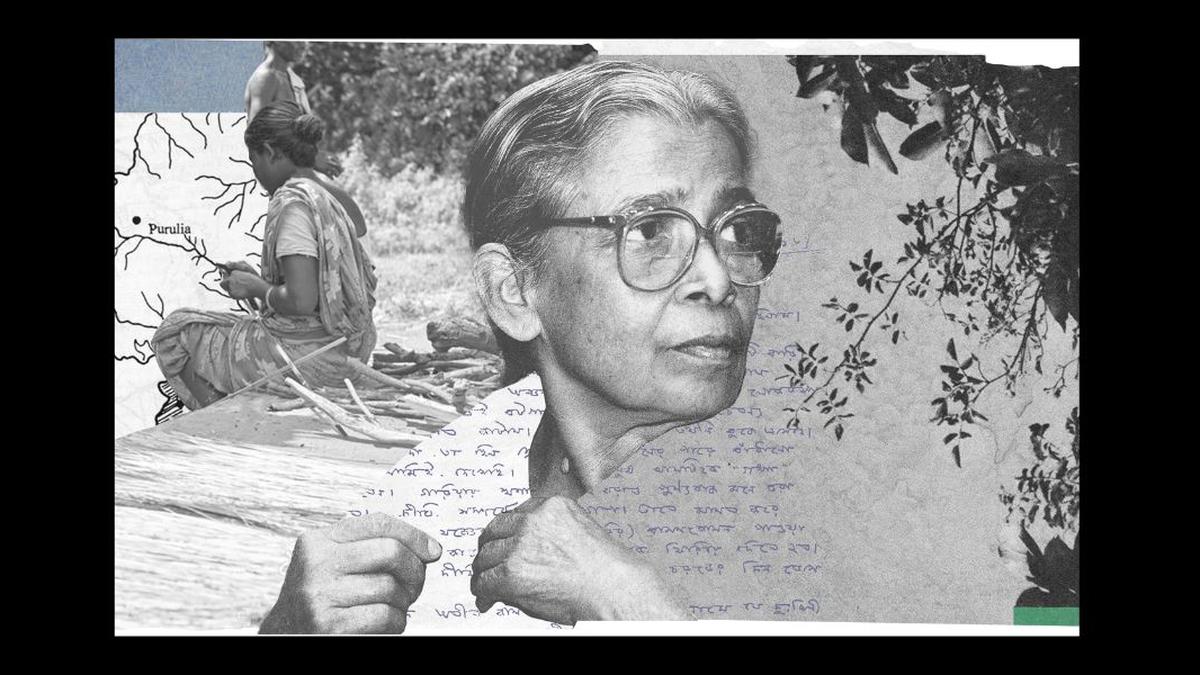
This year marks 100 years since Mahasweta Devi's birth on January 14, 1926. The celebrated Bengali writer penned over 100 books and 350 short stories during her six-decade career, but her greatest legacy wasn't written on pages.
In Bengal's forested Purulia region, the Kheria Sabar people still call her "Maa" (mother). These traditionally nomadic hunter-gatherers were branded "born criminals" under British colonial law in 1871, a stigma that followed them for generations.
Mahasweta first visited the community in 1983 after meeting tribal welfare leader Gopiballav Singdeo at a village fair. "We just wanted her pen," recalls Prasanta Rakshit, her close confidant who now directs the community welfare organization she helped support.
But Mahasweta gave them much more than words. She questioned government officials, navigated bureaucracies, and fought tirelessly for their dignity and rights.
Her resolve was tested in 1998 when Budhan Sabar, a disabled community member, died in police custody. Authorities called it suicide, but Mahasweta demanded answers.
She wrote directly to the Chief Justice seeking a second post-mortem. Journalists picked up the story, and the case eventually went to the Central Bureau of Investigation.
"Whenever there was a theft nearby, we were the easy targets," says 65-year-old Jaladhar Sabar, whose father was also detained on suspicion. "We were beaten because people believed we were 'born criminals'."
Budhan's death sparked the creation of Budhan Theatre in Ahmedabad, where members of Gujarat's denotified Chhara tribe staged plays about custodial torture and discrimination. His story became a rallying cry for justice.
The Ripple Effect
In Purulia's Rajnowagarh area, a two-room mud house called "Mahasweta Bhawan" preserves her bed, books, and photographs. Next door, Rakshit continues her work, helping families with land records, legal cases, and government paperwork while running a girls' hostel.
The Budhan Sabar case took over two decades, but a Purulia court finally convicted the accused in 2023. Mahasweta didn't live to see the verdict, having passed away in 2016.
She also never saw another victory: the removal of shackles from tribal freedom fighter Birsa Munda's sculpture in Ranchi, an issue she'd raised in the early 1980s. But her advocacy planted seeds that continued growing.
"She never asked anyone for a single favor for herself," Rakshit says. "That's why she never had any problem asking for the rights of others."
For Mahasweta Devi, writing was never just about telling stories but about empowering communities to change their own.
#
Based on reporting by The Hindu
This story was written by BrightWire based on verified news reports.
Spread the positivity!
Share this good news with someone who needs it