X-Ray Facility Gets 500x Brighter, Links to Supercomputers
Scientists at Argonne National Laboratory just upgraded their X-ray facility to shine 500 times brighter while connecting it to America's most powerful supercomputers for real-time discoveries. The breakthrough means researchers can now watch molecules change and adjust experiments instantly, instead of waiting hours to understand what happened.
Imagine trying to photograph a lightning strike but having to wait until tomorrow to see if you got the shot. That's been the frustrating reality for scientists studying how materials crack or cells divide at the atomic level.
Now, researchers at the U.S. Department of Energy's Argonne National Laboratory have solved that problem. They've connected their newly upgraded Advanced Photon Source, an X-ray facility that's 500 times brighter than before, directly to some of America's fastest supercomputers.
The timing couldn't be better. For over 30 years, the Advanced Photon Source has helped thousands of scientists worldwide peek inside materials at the molecular level. But the recent upgrade comes with a challenge: over the next decade, it will generate up to 100 times more data than ever before.
"You can't tell a material to stop cracking or a cell to stop dividing until the data are inspected and understood afterwards," said Nicholas Schwarz, who leads the computing team at Argonne. His team needed experiments and analysis to happen side by side, not hours apart.
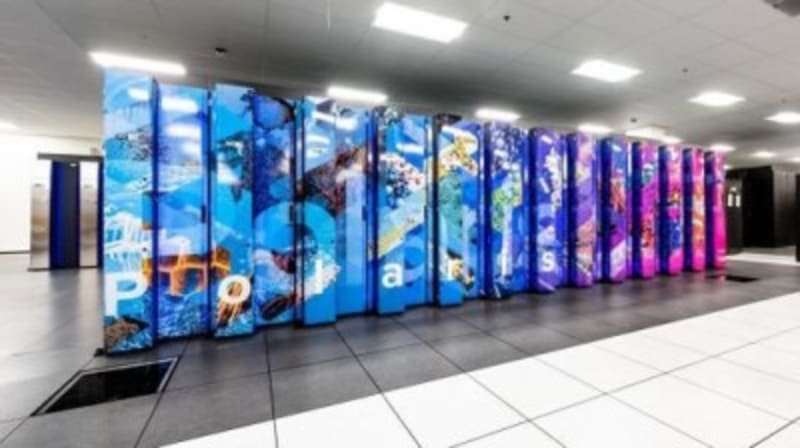
The solution involves three powerhouse supercomputers. Polaris at Argonne, Perlmutter at Lawrence Berkeley National Laboratory, and Frontier at Oak Ridge National Laboratory now work together through automated data workflows. They use a technology called Globus that securely transfers and processes information faster than ever.
Here's what that means in practice. When scientists shine X-rays through a sample to track nanoscale changes over time, the data now flows automatically from the beamline to the supercomputer and back with results in near real time. Artificial intelligence helps spot patterns and unusual changes that human eyes might miss.
The team tested everything using Polaris first, refining the software and data pipelines during live experiments. What they learned is now being expanded to work with the other supercomputers, creating what they call "smart instruments" that think while they measure.
The Ripple Effect
This integration touches nearly every field of science. Materials scientists studying stronger, lighter metals can now see exactly when stress causes microscopic cracks. Biologists watching proteins fold can catch the moment that matters. Environmental scientists, chemists, and physicists all gain the power to guide their experiments as they unfold.
The broader vision, called Integrated Research Infrastructure, aims to connect all of America's major research facilities into one seamless network. Instead of isolated tools working separately, scientists will tap into a unified system where experimental facilities and supercomputers work together automatically.
While Polaris handles today's breakthroughs, it's also preparing the way for Aurora, Argonne's next supercomputer. Aurora can perform over a billion billion calculations per second, opening even more possibilities for real-time scientific discovery.
What started as a data problem has become a new way of doing science, where watching and understanding happen at the same moment.
Based on reporting by Google: scientific discovery
This story was written by BrightWire based on verified news reports.
Spread the positivity!
Share this good news with someone who needs it