Young Clownfish Lose Stripes Faster Around Adult Role Models
Scientists discovered that baby clownfish change their appearance based on social pressure, losing their distinctive white stripes faster when adult fish are nearby. This remarkable ability helps young fish integrate into their underwater communities and survive.
Young clownfish are changing their looks to fit in with the grown-ups, and scientists just figured out how they do it.
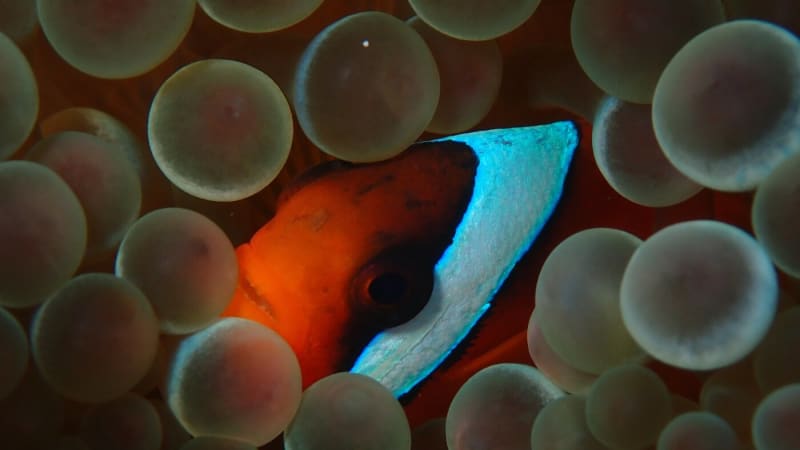
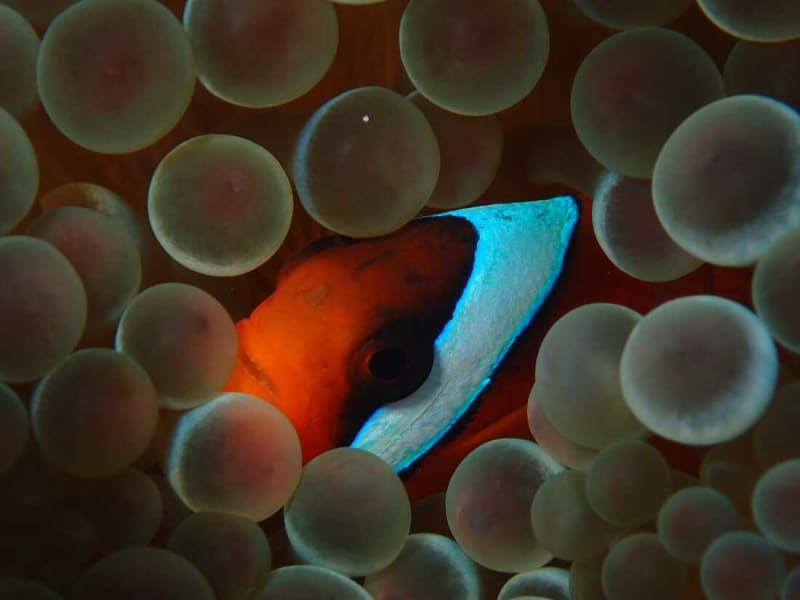
Researchers at the Okinawa Institute of Science and Technology studied tomato clownfish, a species that starts life with two to three white stripes but keeps only one as adults. They wanted to understand why some fish lost their stripes in just a month while others took up to a year.
The answer surprised them. It all comes down to peer pressure.
Marine biologist Laurie Mitchell and his team raised baby clownfish in four different tank setups. Some had nothing but water, others had plastic decorations, and one had a real sea anemone. But the fourth tank held the key: a live anemone with adult clownfish already living there.
The babies in that fourth tank lost their stripes almost completely in just 20 days. The fish in the other tanks kept their stripes much longer, with some showing barely any fading at all.
Mitchell discovered that young clownfish arriving at an anemone face a strict social hierarchy. If they don't integrate properly, adult fish will bite them or kick them out, which means certain death in the wild. The color change appears to be their survival strategy.
When juveniles first arrive, their small size and multiple stripes signal they're not a threat. Once they've found their place in the pecking order, those extra stripes disappear. The fish's thyroid releases hormones that trigger specific genes, causing the white stripe cells to break down and fade into the surrounding orange skin.
Why This Inspires
This discovery reveals something beautiful about adaptation in nature. These tiny fish aren't just passively growing up. They're actively reading their environment and adjusting their appearance to build relationships and find their place in the community.
The research shows that even creatures as small as clownfish possess remarkable flexibility. They can speed up or slow down their development based on social cues from others and the quality of their habitat. It's a sophisticated survival skill that helps them navigate an unpredictable ocean.
Mitchell's team identified the exact genetic changes responsible for the transformation, opening doors for understanding how animals adapt to social pressures. The cells producing white coloration literally fragment and shrivel up in response to hormonal signals.
The finding adds depth to our understanding of ocean life and reminds us that even the smallest creatures have complex social worlds. These fish are making calculated decisions about their appearance to improve their chances of acceptance and survival.
Young clownfish prove that fitting in isn't always shallow—sometimes it's the smartest way to find your place in the world.
More Images


Based on reporting by NPR Science
This story was written by BrightWire based on verified news reports.
Spread the positivity!
Share this good news with someone who needs it