Young Fossil Hunter Revealed Ancient Oceans to Science
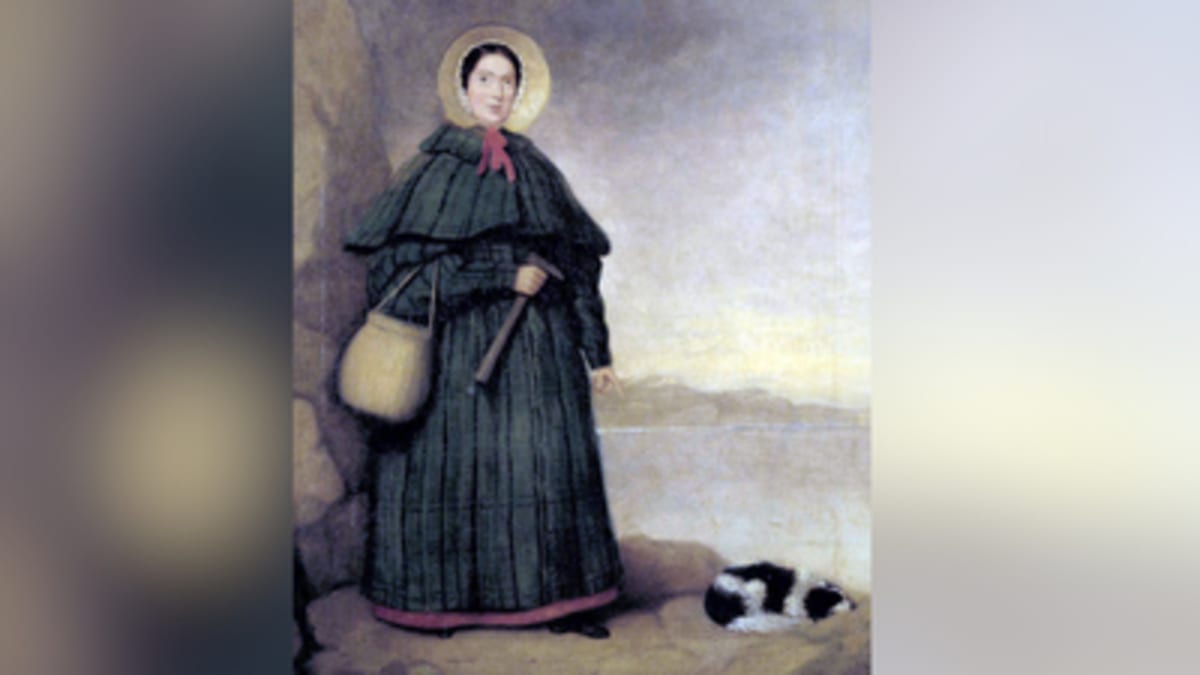
Mary Anning found "sea monsters" in England's cliffs with just a hammer and sharp eyes, reshaping what scientists knew about Earth's prehistoric past. Her discoveries in the 1800s proved that ancient oceans once covered the land, though she rarely received credit during her lifetime.
A young woman with no formal training discovered creatures that proved Earth was far older and stranger than most people imagined.
Mary Anning grew up poor on England's Jurassic Coast in the early 1800s. Her father taught her to hunt fossils along the dangerous cliffs of Lyme Regis before his death left the family struggling to survive.
Mary kept searching the beaches after every storm, selling fossils to visitors to keep her family fed. What started as desperation became something extraordinary.
When she was just 11, Mary and her brother found the skull of a creature no scientist had ever seen. She later uncovered the rest of its five-meter skeleton, which turned out to be an ichthyosaur, an extinct marine reptile from 200 million years ago.
In 1823, she discovered something even stranger: a complete skeleton of a plesiosaur, a long-necked sea creature that looked like something from mythology. Five years later, she found Britain's first pterosaur, a flying reptile preserved in stone.
Mary didn't just collect spectacular skeletons. She studied spiral-shaped rocks and realized they were fossilized animal droppings, which revealed what ancient creatures ate.
Her work helped scientists understand that entire species could go extinct and that Earth's history stretched back millions of years. These ideas were revolutionary at the time.
Why This Inspires
Mary Anning transformed science armed only with curiosity and determination. Male scientists bought her fossils and sought her expertise, but rarely credited her in their papers.
The Geological Society wouldn't admit women during her lifetime. She was working class in a field dominated by wealthy gentlemen.
Yet her discoveries couldn't be ignored. The creatures she pulled from those cliffs rewrote the story of life on Earth.
Today, her fossils fill major museums, including the Natural History Museum in London. Lyme Regis preserves the landscape where she made history with a hammer and an unstoppable spirit.
The cliffs along the Jurassic Coast still reveal ancient wonders after storms, just as they did when a young woman first learned to read the secrets buried in stone.
More Images



Based on reporting by Times of India - Good News
This story was written by BrightWire based on verified news reports.
Spread the positivity!
Share this good news with someone who needs it