Young Galaxies Grew Up Fast, JWST Reveals
New images from the James Webb Space Telescope show galaxies that are just 1 billion years old already packed with heavy elements and spinning like adults. Scientists are stunned by how these cosmic toddlers developed the chemistry and structure of teenagers in record time.
Scientists just got their clearest look yet at teenage galaxies, and these cosmic kids grew up way faster than anyone expected.
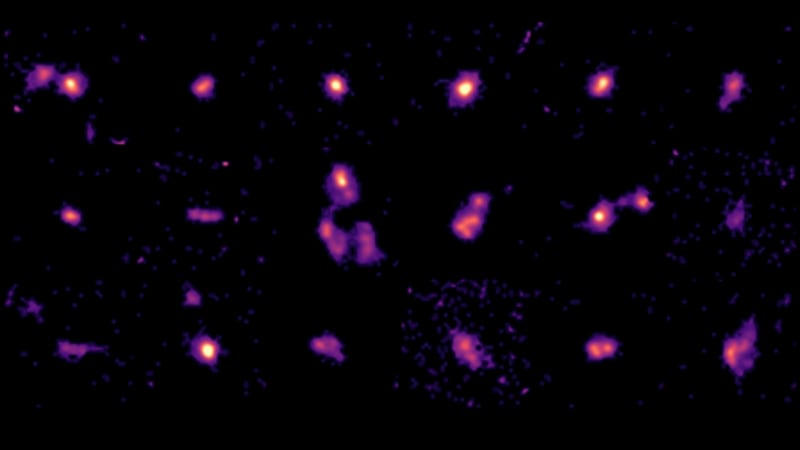
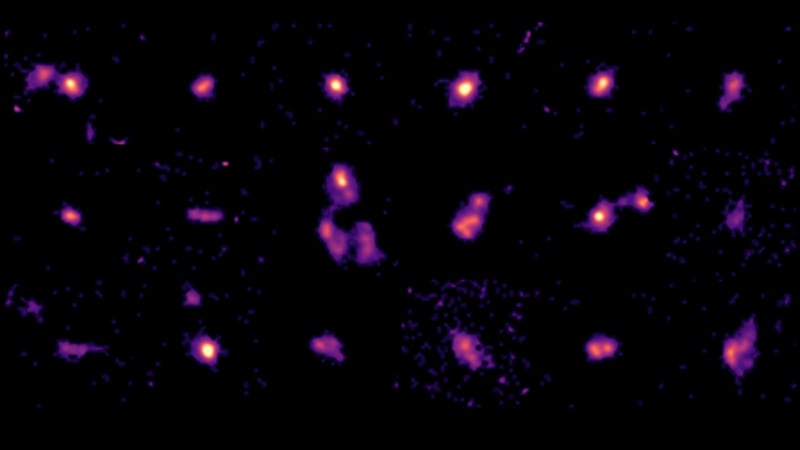
Using the James Webb Space Telescope alongside Hubble and ground-based observatories, astronomers studied 18 galaxies located 12.5 billion light-years away. These galaxies existed when the universe was less than a billion years old, barely out of cosmic infancy.
What they found surprised everyone. These young galaxies were already loaded with heavy elements like carbon and oxygen, materials that should take billions of years to accumulate.
"It's like seeing 2-year-old children act like teenagers," said Andreas Faisst of the California Institute of Technology, who led the research. "How do metals form in less than 1 billion years?"
Here's why this matters: when the universe first formed, only hydrogen and helium existed. The first stars created heavier elements during their lives, then scattered them across their galaxies when they exploded as supernovas. This enrichment process should be slow and gradual, like building up savings over decades.
But these galaxies skipped the slow part entirely. They're chemically mature in a fraction of the expected time.
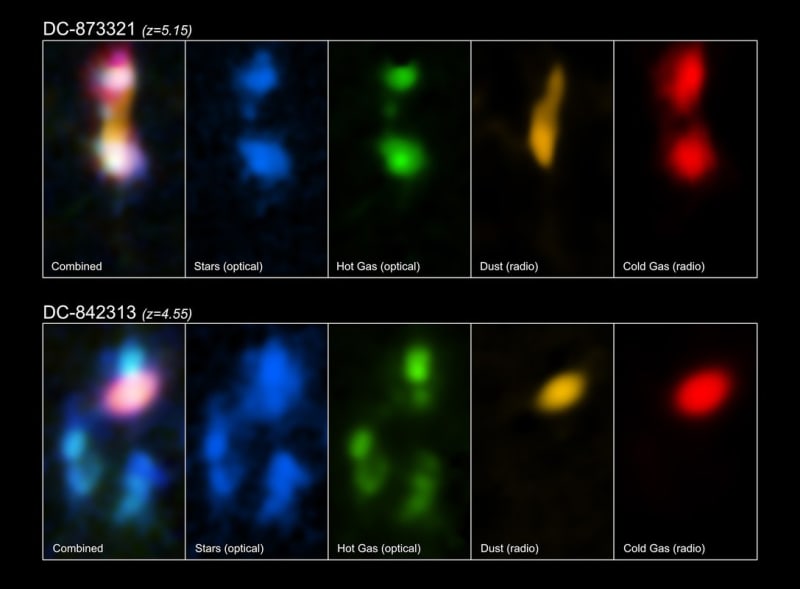
The surprises didn't stop there. Many of these young galaxies had already developed rotating spiral arms similar to our own Milky Way, structures that models predicted would take much longer to form. Their supermassive black holes were also feeding rapidly, growing at unexpected speeds.
Even the gas surrounding these galaxies showed the same chemical richness, extending more than 30,000 light-years outward.
Why This Inspires
This discovery reminds us how much we still have to learn about our cosmic origins. Every time we build better tools to look deeper into space, the universe surprises us with its complexity and beauty.
These findings challenge our understanding of how galaxies grow and evolve. The team now plans to create computer simulations to figure out what mechanisms could drive such rapid development in the early universe.
Understanding these fast-growing galaxies will ultimately help scientists piece together how our own Milky Way formed and how the conditions for life emerged across the cosmos.
The research was presented this week at the American Astronomical Society meeting and gives us a window into a critical period of cosmic history that was impossible to observe until now.
More Images

Based on reporting by Space.com
This story was written by BrightWire based on verified news reports.
Spread the positivity!
Share this good news with someone who needs it