%2Ffile%2Fattachments%2Forphans%2FIMG_6399_134346.jpg)
Young South Africans Build Hemp Textile Industry From Scratch
Three university friends are turning hemp into sustainable fabrics in South Africa, creating jobs while helping local textile mills compete against cheap imports. Their startup Green Route is proving cannabis plants can rebuild communities, not just get you high.
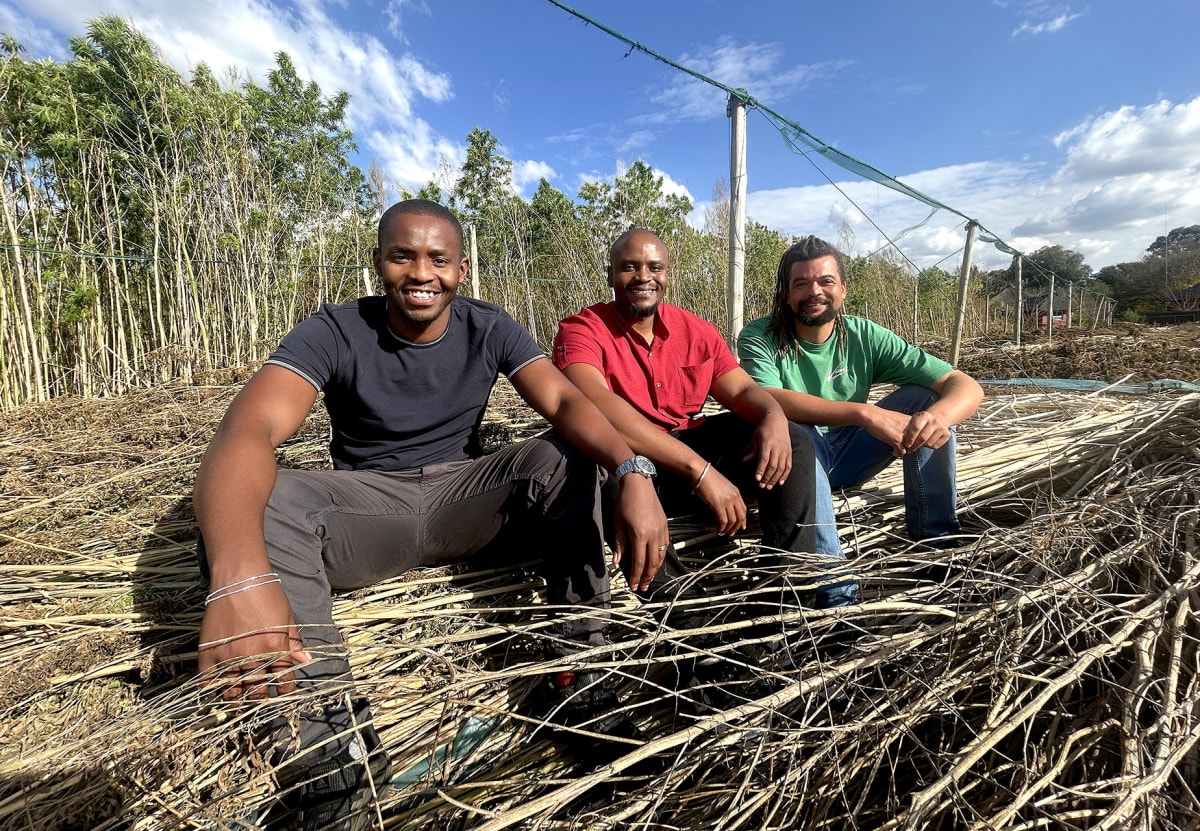
On a small farm outside Johannesburg, thousands of birds have made their homes in a sea of cannabis plants that won't get anyone high.
Instead, these hemp crops are becoming jobs, textiles, and hope for South Africa's struggling manufacturing sector. Mahlatse Mohlala and his friends from Stellenbosch University are building what they hope will transform into a homegrown textile industry.
Green Route Hemp Industries launched less than three years ago with a simple idea: use hemp fiber to give South African textile mills a fighting chance. The country's textile industry has been hemorrhaging jobs to cheap imports, especially after COVID-19 hit.
"We have some of the best textile mills and best weavers on the continent," said Mohlola, who studied Geography and Environmental Studies. "Introducing a local fiber like hemp that's sustainable gives local mills an opportunity to bump up their capacity and maintain those jobs."
Hemp and marijuana come from the same plant species, but hemp contains almost no THC, the chemical that causes a high. For over a century, hemp got caught in the war on drugs despite being one of humanity's oldest crops.
That started changing in 2018 when South Africa decriminalized personal cannabis use. Thousands of farmers have since applied for licenses to grow both hemp and medicinal cannabis.
On their Walkerville farm, agriculturist Chad Ferlito grows hemp without pesticides, herbicides, or even fertilizer. The plants thrive naturally while creating habitat for cranes, loeries, and countless other birds.
The company now produces durable fabrics from hemp stalks while buying biomass from other local farmers. Seasonal workers have become skilled at processing the fibers after just two harvests.
The Ripple Effect
Green Route's impact extends far beyond their own farm. They're creating a blueprint for how hemp manufacturing can revive rural communities hit hard by mine closures and factory shutdowns.
"That mine that your uncle used to work at? We grow hemp on that farm," Mohlola explains. "We processed it for fabrics that your auntie made. It's a completely different story."
The environmental benefits add another layer of hope. Hemp grows fast without chemicals, improves soil health, and sequesters carbon from the atmosphere. Its woody core can replace harmful construction materials, while its seeds provide protein-dense nutrition.
Local textile mills now have access to sustainable, locally-grown fiber instead of relying on imports or synthetic materials. Each new partnership means more stable jobs and stronger communities.
Three friends who met at university are proving that South Africa's next industrial success story might just grow from the ground up.
More Images

%2Ffile%2Fattachments%2Forphans%2FIMG_6407_326632.jpg)
%2Ffile%2Fattachments%2Forphans%2FIMG_6417_816045.jpg)
Based on reporting by Daily Maverick
This story was written by BrightWire based on verified news reports.
Spread the positivity!
Share this good news with someone who needs it
%2Ffile%2Fattachments%2F2996%2FGroundUp-NIH-funding_260278.jpeg)
%2Ffile%2Fauthors%2F1610682923998940344.jpg)