Your Cells Can Self-Repair During Division, Study Shows
Scientists discovered that cells can fix themselves while dividing, replacing weak links with stronger ones to prevent cancer and birth defects. This breakthrough reveals how our bodies perfectly split DNA millions of times every second.
Right now, millions of cells in your body are performing an extraordinary feat: dividing perfectly in two without breaking. Scientists at UC San Francisco just discovered how they pull it off.
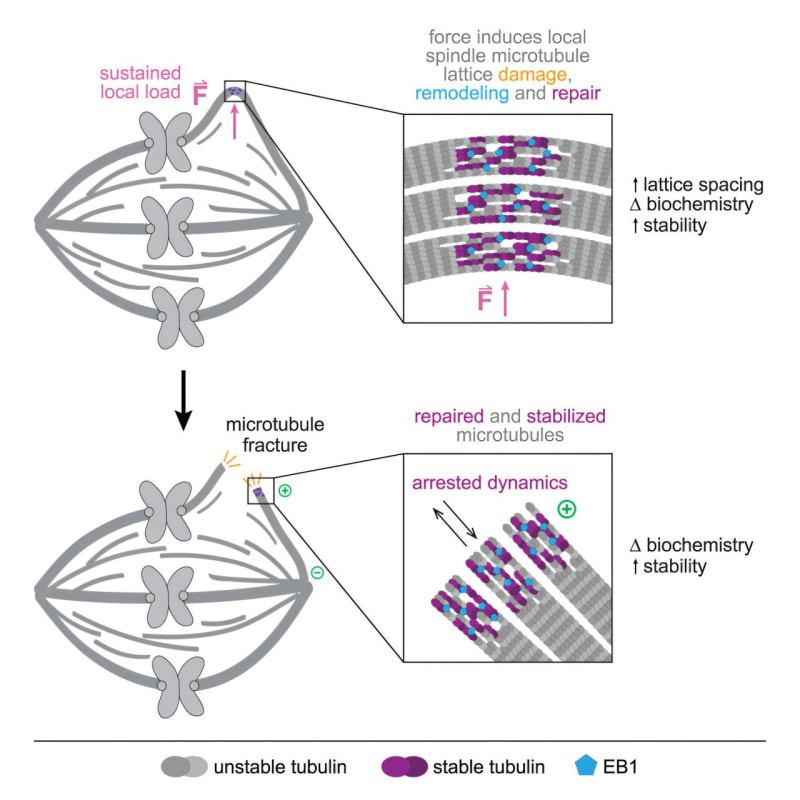
Every time a cell divides, it builds a microscopic web of protein fibers called a spindle that pulls DNA apart with incredible force. For decades, researchers wondered how this delicate machine could generate so much power without tearing itself to pieces.
The answer turns out to be surprisingly elegant: the spindle repairs itself while it's working.
Graduate student Caleb Rux tested this by using a microneedle thinner than a human hair to pull on spindle fibers until they snapped. What he saw amazed the team.
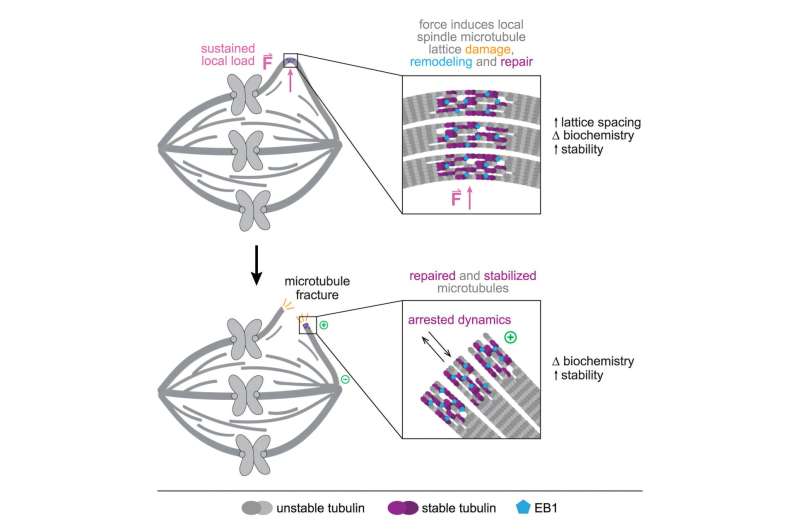
When the fiber first stretched against the needle, some protein links fell out. But the spindle immediately replaced them with even stronger links floating nearby, bracing itself against the stress. By the time it finally broke, the fiber was actually stronger than before.
"We expected the spindle fiber to break at its ends, but instead, it snapped where the needle was pulling," Rux said. Even more surprising, the broken end kept its shape instead of falling apart like it did when zapped with a laser in earlier experiments.
This constant self-reinforcement explains how cells divide DNA exactly in two every single time. Getting it wrong by even one chromosome could lead to cancer or birth defects.
Why This Inspires
The discovery published in Current Biology reveals something profound about the living world. Our cells have built-in quality control that works at lightning speed, fixing problems before they become disasters.
Senior author Sophie Dumont sees lessons beyond biology. "If you're a structural engineer, you want buildings to survive earthquakes, roads to survive many winters," she said. "Maybe there's something more we could learn from the self-repairing materials of the living world."
Imagine roads that patch their own potholes or bridges that strengthen themselves under heavy traffic. The spindle stabilizes itself wherever force is greatest, creating a model for human-made materials that could repair damage automatically.
This research reminds us that our bodies are performing miracles every moment, solving engineering problems that human designers are only beginning to understand.
More Images

Based on reporting by Phys.org
This story was written by BrightWire based on verified news reports.
Spread the positivity!
Share this good news with someone who needs it