Your Lungs Can Regrow Themselves, Scientists Discover
A woman's lung nearly doubled in size after cancer surgery, proving organs scientists thought were fixed can actually regenerate. The discovery could reverse incurable diseases affecting millions worldwide.
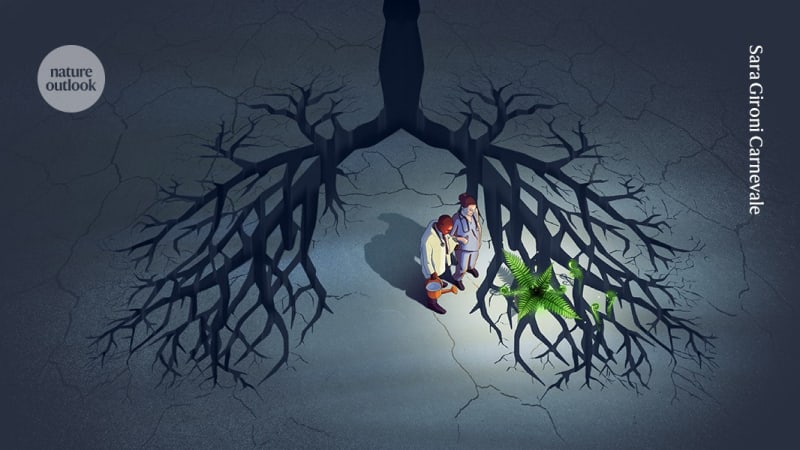
When doctors removed half of a 33-year-old woman's lungs to treat her cancer in 1995, they expected her breathing capacity to plummet forever. Instead, her remaining lung pulled off what scientists believed was impossible: it grew back.
Over 15 years, her left lung nearly doubled in volume and grew millions of new air sacs to compensate for its missing partner. The discovery shattered everything researchers thought they knew about lung regeneration.
"Until then, the prevailing view was that lungs are not really regenerative," says Purushothama Rao Tata, a biologist at Duke University School of Medicine. He now believes lungs have tremendous regenerative capacity, similar to the liver's famous ability to regrow.
Scientists are racing to understand exactly how lungs rebuild themselves. They've discovered that lung cells are extraordinarily flexible, able to switch identities and serve as stem cells when needed.
The secret lies in specialized cells that morph from one type to another. When the delicate AT1 cells that handle gas exchange get damaged, neighboring AT2 cells can step up and transform to replace them.
This cellular shape-shifting happens through carefully coordinated communication between different cell types. Using advanced gene-tracking techniques, researchers can now watch these transformations happen in real time.
Why This Inspires
The implications extend far beyond one remarkable recovery. Chronic obstructive pulmonary disease (COPD) kills more people than any cause except heart disease and stroke, yet doctors have no cure.
Idiopathic pulmonary fibrosis, which progressively scars and stiffens the lungs, is equally devastating. Even lung transplant patients typically survive only five years.
Understanding the lung's hidden regenerative powers could change everything. If researchers can figure out what goes wrong when this natural repair process fails, they might be able to slow, stop, or even reverse these currently incurable conditions.
Young mice rapidly grow extra lung tissue when one lung is removed, though this ability fades with age. Young children show similar regenerative capacity, possibly because human lungs continue developing into the teenage years.
Scientists developed cell atlases identifying about 70 different lung cell types and linked specific cells to genes involved in COPD and fibrosis. Advanced techniques like growing 3D mini-lungs from stem cells are accelerating discoveries.
The breakthroughs keep multiplying as researchers develop better tools to study how lungs heal. What once seemed like isolated medical anomalies now appear to be glimpses of an organ's remarkable untapped potential.
Millions of people struggling to breathe may one day benefit from therapies that help their lungs do what that cancer patient's lung did naturally.
More Images

Based on reporting by Nature News
This story was written by BrightWire based on verified news reports.
Spread the positivity!
Share this good news with someone who needs it