Zimbabwe's 2.5-Billion-Year-Old Rock Wonder Seen From Space
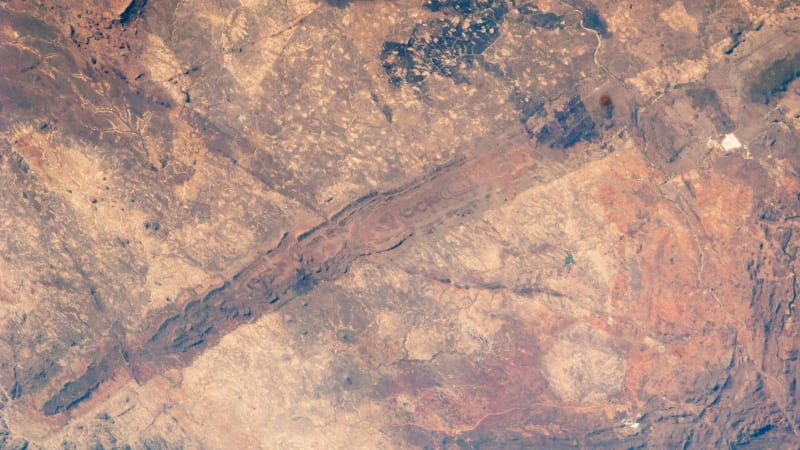
An astronaut captured a stunning photo of Zimbabwe's Great Dyke, a massive ancient rock formation that's been feeding the economy for decades. This geological marvel has existed for more than half of Earth's entire history.
A breathtaking photo from space reveals one of Earth's oldest and most valuable geological treasures, still powering progress in Zimbabwe today.
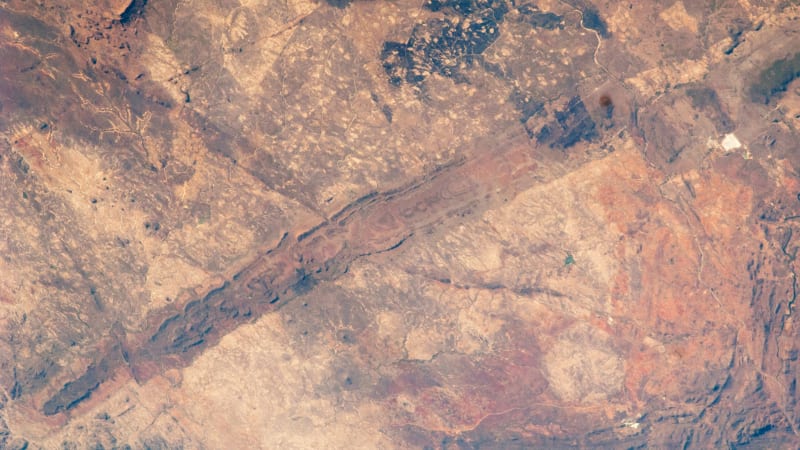
An astronaut aboard the International Space Station photographed the southern tip of the Great Dyke of Zimbabwe in 2010, capturing the hidden beauty of this 2.5 billion year old rock formation. The massive structure stretches 342 miles across central Zimbabwe, making it the longest continuous igneous rock formation on Earth.
Despite its name, the Great Dyke isn't actually a vertical rock sheet cutting through layers. It's a lopolith, a flatter, saucer shaped formation that runs parallel to existing rock and rises up to 1,500 feet above the surrounding plateaus.
The formation tells an incredible story of perseverance. Geologists believe it formed when mineral rich magma gradually seeped upward from Earth's mantle through tectonic plate faults. The structure has shifted and moved over billions of years, yet it remains intact and valuable.
Today, the ancient rock serves as an economic lifeline for Zimbabwe. The magma that formed the Great Dyke carried precious metals usually locked deep below Earth's crust, including gold, nickel, copper, titanium, iron, and tin.
The formation holds the third largest platinum deposits on Earth and contains unusually pure chromite, essential for producing stainless steel. At least six major mining operations currently work along its length, providing jobs and economic opportunity.
The Ripple Effect
The Great Dyke's impact extends beyond mining economics. Local sculptors have discovered the rock is perfect for creating art, transforming parts of the formation into what artist Michael Nyakusvora calls "an artist's paradise akin to the Greek marble quarries."
The formation continues revealing its secrets to scientists studying Earth's ancient history. Satellite images from NASA's Terra spacecraft in 2003 and earlier photos from the space shuttle Challenger in 1983 help researchers understand how our planet evolved over billions of years.
Mining Zimbabwe magazine captured it perfectly: "The Great Dyke of Zimbabwe is more than a line on a map. It's a lifeline of economic opportunity and a geological marvel."
This ancient wonder proves that Earth's oldest features can still create new opportunities and inspire wonder across generations.
More Images



Based on reporting by Live Science
This story was written by BrightWire based on verified news reports.
Spread the positivity!
Share this good news with someone who needs it