Zipline Drones Now Deliver Burritos to Your Backyard
After a decade delivering blood and vaccines in Africa, Zipline's quiet drones are now lowering food and packages from 260 feet up into American backyards. The tech that cut vaccine stockouts by 60% in Ghana is bringing the future of delivery to Texas and Arkansas.
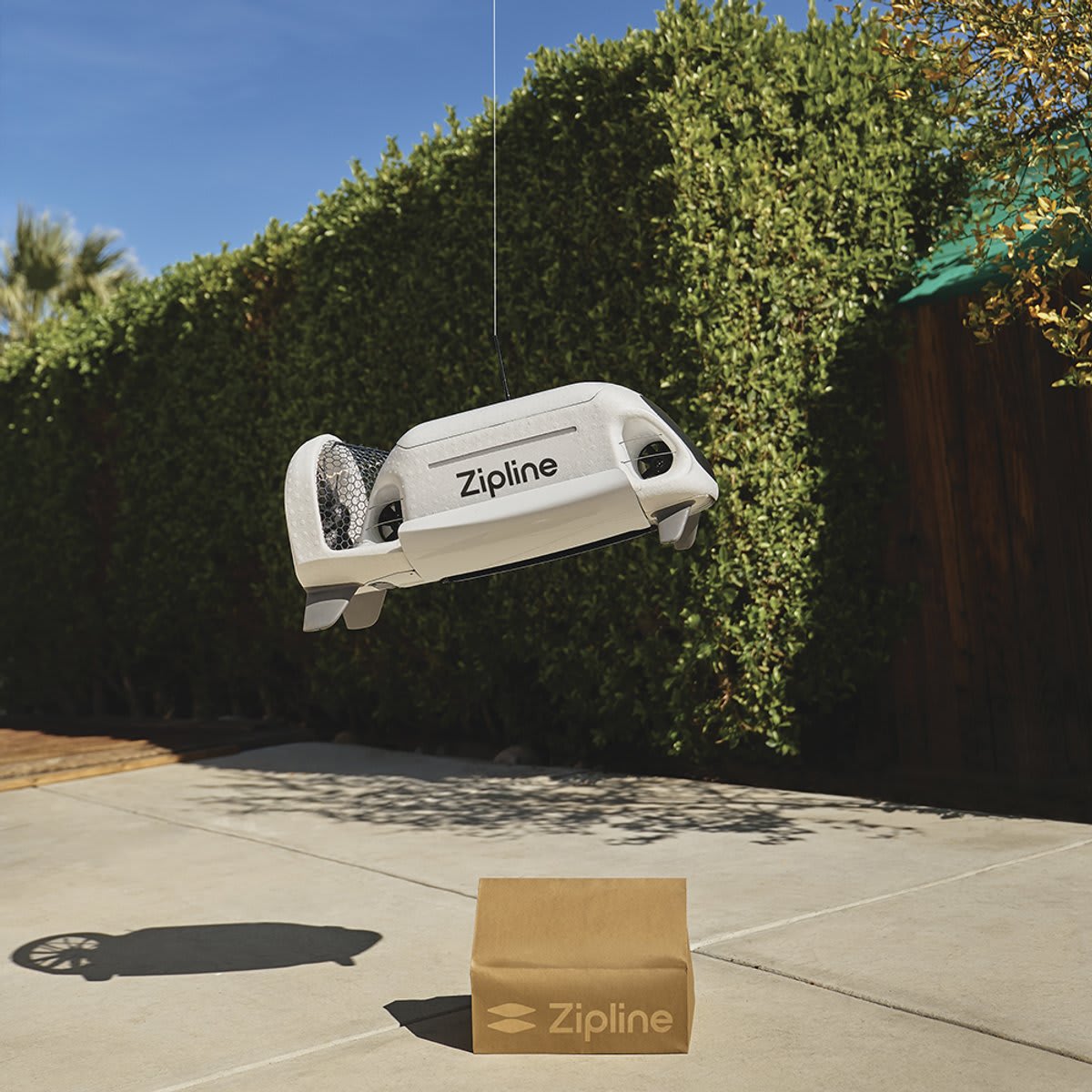
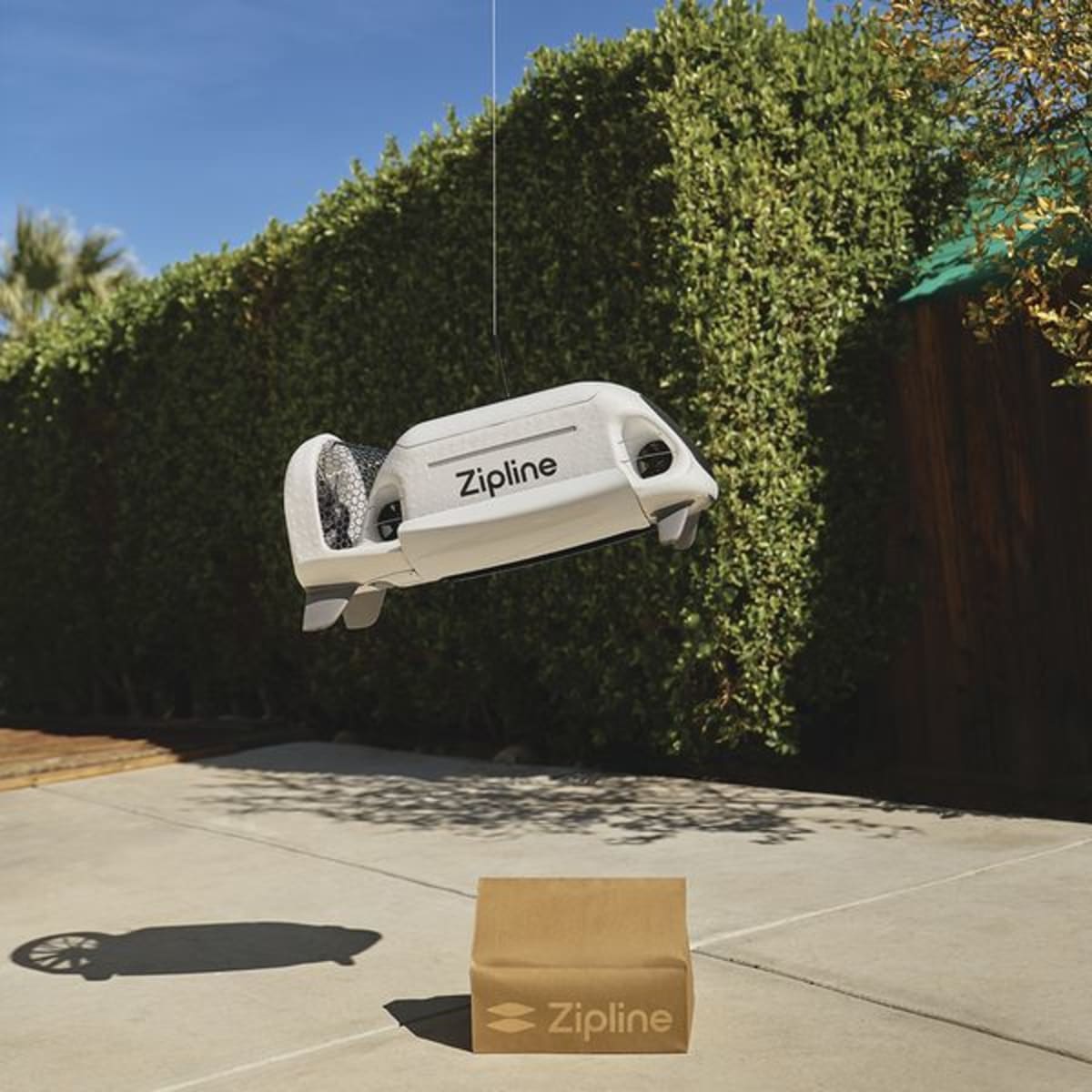
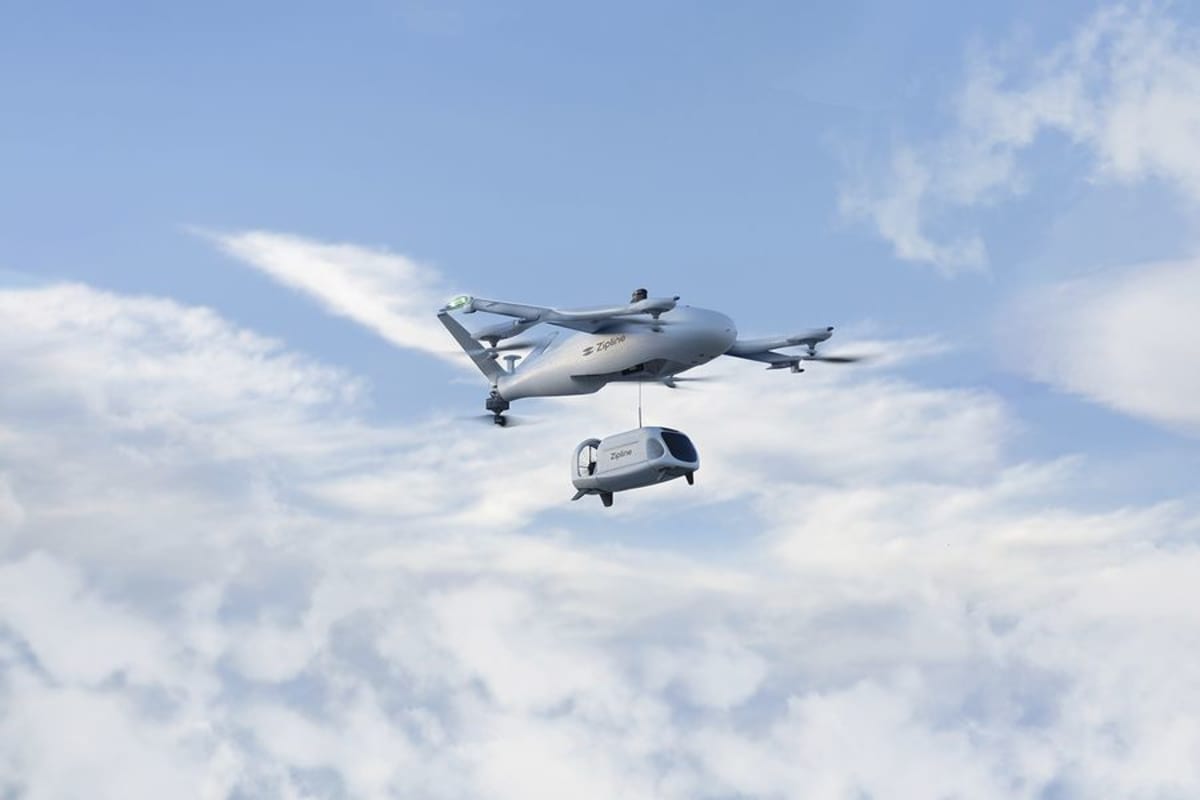
A white box the size of a gym bag drops silently from the sky, guided by a tether to a drone hovering 260 feet overhead. This isn't science fiction. It's happening thousands of times a day in Arkansas and Texas, where Zipline drones deliver everything from Chipotle bowls to cat food.
The company spent a decade perfecting drone delivery in Rwanda and Ghana, moving blood and vaccines between cities and remote clinics. Those missions used fixed-wing aircraft launched by magnetic slingshot, dropping cargo by parachute like tiny aircraft carriers.
The results were remarkable. Clinics using Zipline in Ghana cut vaccine stockouts by 60%. In mountainous Rwanda, blood products arrived an hour and a half faster than trucks could manage, reducing expiration losses by 67%.
But delivering to American suburbs required completely new technology. Instead of hitting a target the size of two parking spaces, the drones needed precision down to the size of a lounge chair. And they had to be quiet enough that neighbors wouldn't complain.
Zipline's solution was unconventional. They put propellers on both the drone and the delivery pod. The drone provides lift while the pod navigates itself down using infrared cameras for depth perception and a color camera to find its target. The pod can even tell the difference between concrete and a swimming pool.
The system works with barely a whisper. Users load packages into the insulated carbon fiber pod, doors slide open at ground level, and items drop just an inch to their destination. Then the pod rises back up and flies away.
The Ripple Effect
Zipline has now flown more than 130 million autonomous miles and made 2.5 million commercial deliveries worldwide. The technology that saved lives in African villages is proving it can work in American neighborhoods too.
A proposed FAA rule called Part 108 could soon give drone delivery companies clearer permission to fly beyond operators' sight lines. That means this service could expand to more communities across the country.
The testing phase is proving whether the drones are quiet enough, precise enough, and safe enough to share neighborhood airspace at scale. So far, thousands of daily deliveries suggest the answer is yes.
For Zipline CEO Keller Rinaudo Cliffton, it required solving problems at the edge of physics. Every gram of weight removed from the drone meant another gram of cargo it could carry. Special electric motors were designed from scratch to be incredibly light while staying powerful.
The future that's been promised for years is finally arriving, one backyard at a time.
More Images


Based on reporting by Scientific American
This story was written by BrightWire based on verified news reports.
Spread the positivity!
Share this good news with someone who needs it