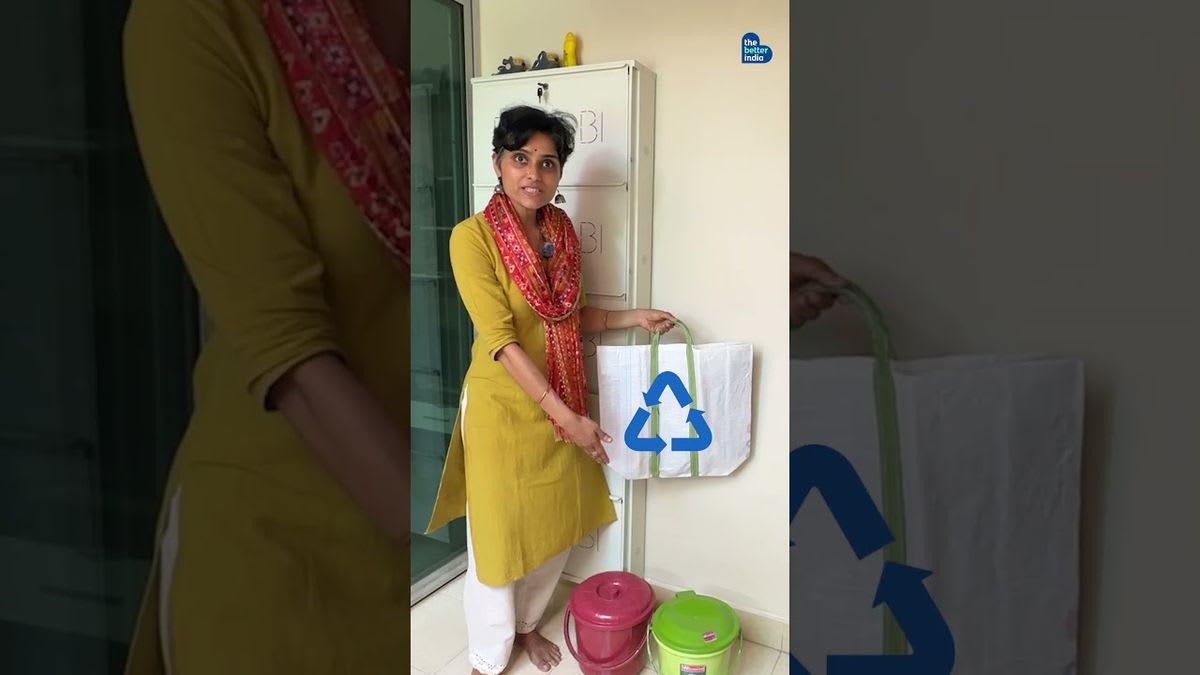
7,000 Residents Keep 100,000 Tonnes From Landfills
A housing society in India with over 7,000 residents has diverted more than 100,000 tonnes of waste from landfills through a homegrown zero-waste system. Their success proves large-scale waste management isn't just possible—it's replicable.
📺 Watch the full story above
Imagine living in a community of 7,000 people that sends almost zero waste to landfills. One Indian housing society turned that dream into reality, and their model could change how the entire country handles trash.
Every single day, this community generates 800 kilograms of waste. That's roughly the weight of a small car, produced daily by thousands of residents going about their normal lives.
Instead of watching garbage trucks haul it away to landfills, residents built something different. They created a complete system around waste segregation, recycling, and sustainable processing that handles every piece of trash their community produces.
The system works through careful sorting at the source. Residents separate wet waste from dry waste right in their homes, making it possible to process each type properly.
What can't be recycled gets composted. What can be recycled gets sent to appropriate facilities. What can be reused finds new life in the community.
The numbers tell the real story. This housing society has reportedly kept over 100,000 tonnes of waste away from landfills since starting their program.
To put that in perspective, 100,000 tonnes equals the weight of roughly 14,000 elephants. That's an enormous amount of trash that didn't end up polluting soil, water, or air.
The Ripple Effect
The success of this single community raises an important question for the rest of India. If 7,000 people can manage 800 kilograms of daily waste without landfills, why can't other housing societies do the same?
The model isn't built on expensive technology or government mandates. It runs on resident participation, clear systems, and daily commitment to sorting waste correctly.
Other communities across India could adopt similar approaches. The blueprint exists, tested at scale with thousands of people proving it works in real-world conditions.
India generates over 150,000 tonnes of municipal solid waste every day, with much of it ending up in overflowing landfills. If even a fraction of housing societies followed this zero-waste model, the country could see a dramatic reduction in landfill waste.
This housing society didn't wait for perfect conditions or outside help—they simply decided to handle their waste responsibly and built the system to make it happen.
More Images

%2Fenglish-betterindia%2Fmedia%2Fyoutube_thumbnails%2Fvi%2FCOSt1Ddw0WM%2Fmaxresdefault.jpg)
%2Fenglish-betterindia%2Fmedia%2Fyoutube_thumbnails%2Fvi%2FjpEwd1HyMdQ%2Fmaxresdefault.jpg)
%2Fenglish-betterindia%2Fmedia%2Fyoutube_thumbnails%2Fvi%2FiihLWFjvgxs%2Fmaxresdefault.jpg)
Based on reporting by The Better India
This story was written by BrightWire based on verified news reports.
Spread the positivity!
Share this good news with someone who needs it