AI Tool Helps Scientists Breed Climate-Fighting Crops
Scientists at the Salk Institute developed an AI system that measures plant roots 100 times faster than old methods, unlocking a way to breed crops that could pull 10 gigatons of CO2 from the air each year. The free software is already helping researchers identify genes for deeper, stronger roots that lock carbon underground for centuries.
📺 Watch the full story above
The biggest carbon vault on Earth isn't in the sky or the ocean. It's in the soil beneath our feet, and scientists just found a much faster way to make it bigger.
Researchers at California's Salk Institute created an AI tool that speeds up the search for crop plants with superpowered roots. These roots could pull massive amounts of carbon dioxide from the air and store it underground for hundreds of years.
The world's plants already remove about 64 gigatons of carbon dioxide annually. Most of that carbon returns to the atmosphere within months as plants decay. But carbon that travels deep into the soil through roots can stay locked away for centuries, making soil the most obvious place to store more.
The Intergovernmental Panel on Climate Change says removing carbon from the atmosphere isn't optional anymore. The Salk team set an ambitious target: engineer crops that sequester 10 gigatons of CO2 per year by 2050, the amount scientists say we must remove to limit warming to 2.7°F.
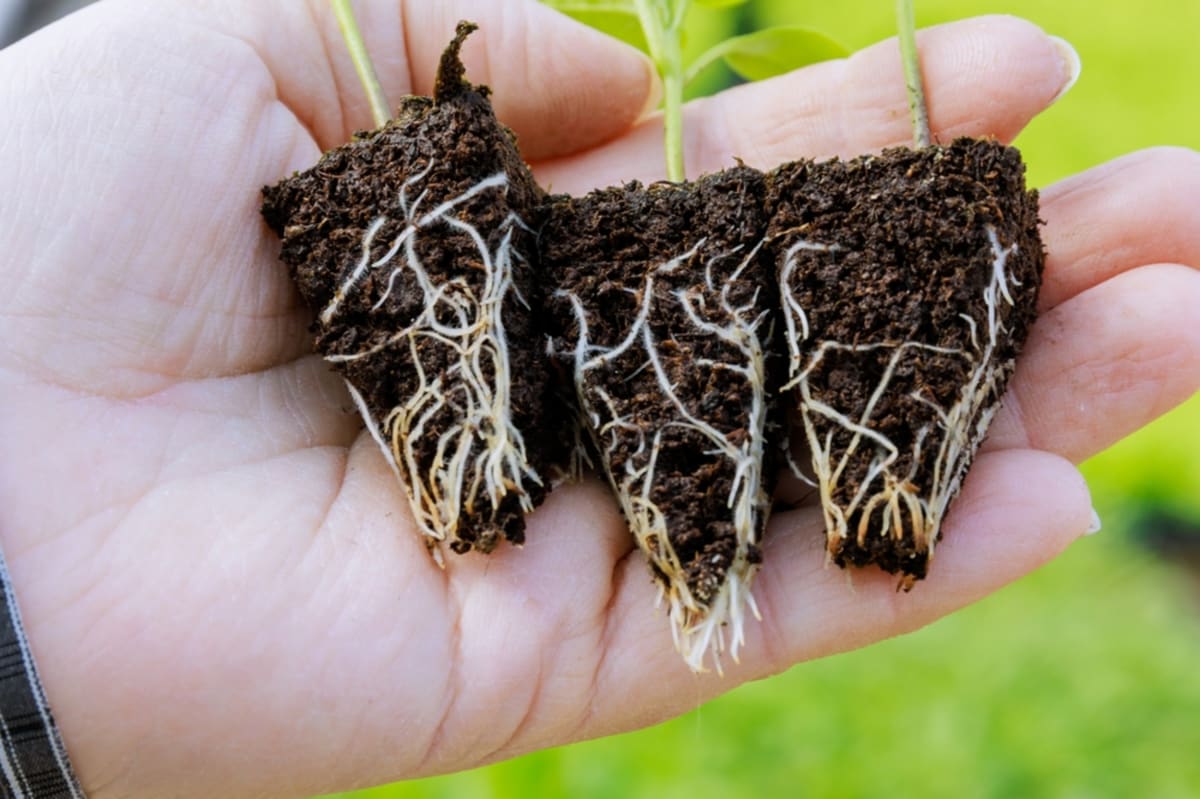
The secret lies in three root traits. Scientists want crops with roots that grow deeper, accumulate more mass, and carry more suberin, a waxy polymer that resists decay like a stable deposit in the soil's carbon bank.
The problem was measuring these traits across thousands of plants. Old methods required scientists to mark images by hand, pixel by pixel, before computers could analyze them. The process was painfully slow and prone to errors that could distort results.
Then Talmo Pereira, a researcher who built an AI system called SLEAP to track animal movements, teamed up with plant scientist Wolfgang Busch. They applied the same technology to roots, creating a free toolkit called sleap-roots that measures root depth, mass, and growth angle automatically.
The team tested it on soybeans, rice, canola, and Arabidopsis, a common lab plant. The software worked beautifully across all of them.
The Ripple Effect
Speed alone doesn't fight climate change, but connecting root traits to specific genes does. The AI system helped create the most extensive catalog of plant root characteristics ever assembled.
By pairing that catalog with genome data, researchers can now pinpoint exactly which genes create deeper, sturdier roots. The initiative has identified hundreds of candidate genes and developed dozens of optimized crop lines across rice, canola, soybean, and other staples.
Because the software is free, scientists anywhere can apply it to their local crops and conditions. That matters for a problem spanning every farm and climate zone on the planet.
The reach now extends beyond Earth. Salk scientists are talking with NASA about using the technology to guide carbon-capturing plants on our planet and study how roots grow in space for long missions.
The strategy still depends on getting these engineered crops into real fields, where measured carbon gains will take years to confirm. But a quiet partnership between artificial intelligence and plant biology just cleared one of the biggest obstacles in breeding plants that hold carbon longer and fight climate change from the ground up.
Based on reporting by Google: climate solution
This story was written by BrightWire based on verified news reports.
Spread the positivity!
Share this good news with someone who needs it