Ancient Planet Found Inside Earth 4.5 Billion Years Later
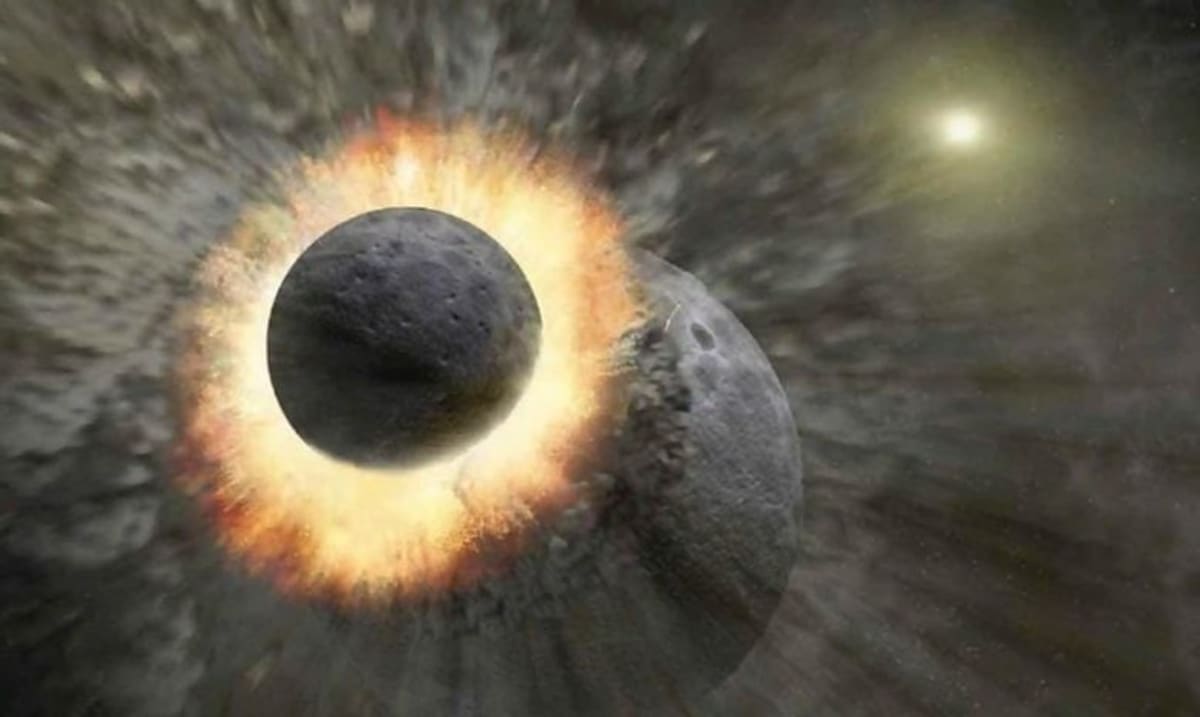
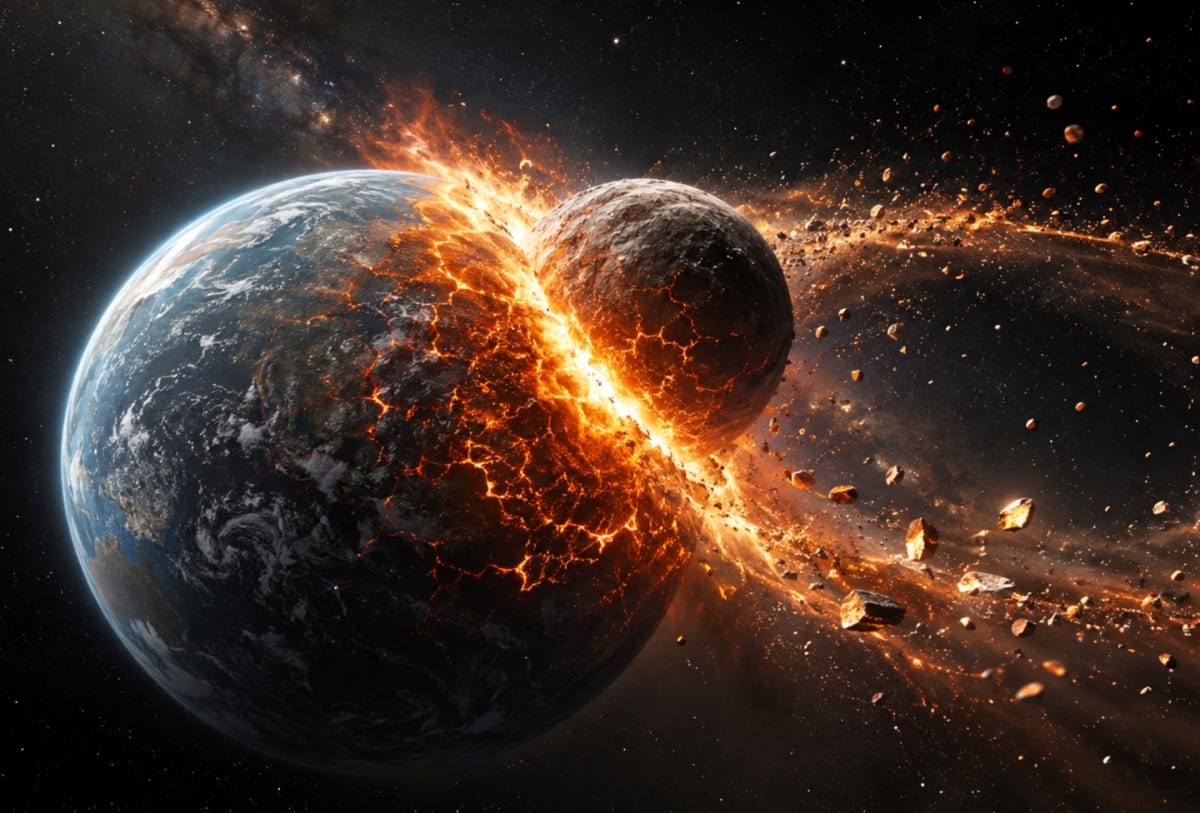
Scientists believe two massive structures deep inside Earth may be remnants of Theia, the planet that crashed into our world and created the Moon billions of years ago. This discovery could solve two ancient mysteries at once.
📺 Watch the full story above
Deep beneath Africa and the Pacific Ocean, scientists may have found pieces of a lost planet that's been hiding inside Earth for 4.5 billion years.
Two continent-sized masses near Earth's core have puzzled geophysicists since the 1980s. Each blob is roughly twice the size of the Moon, and seismic waves slow down dramatically when passing through them.
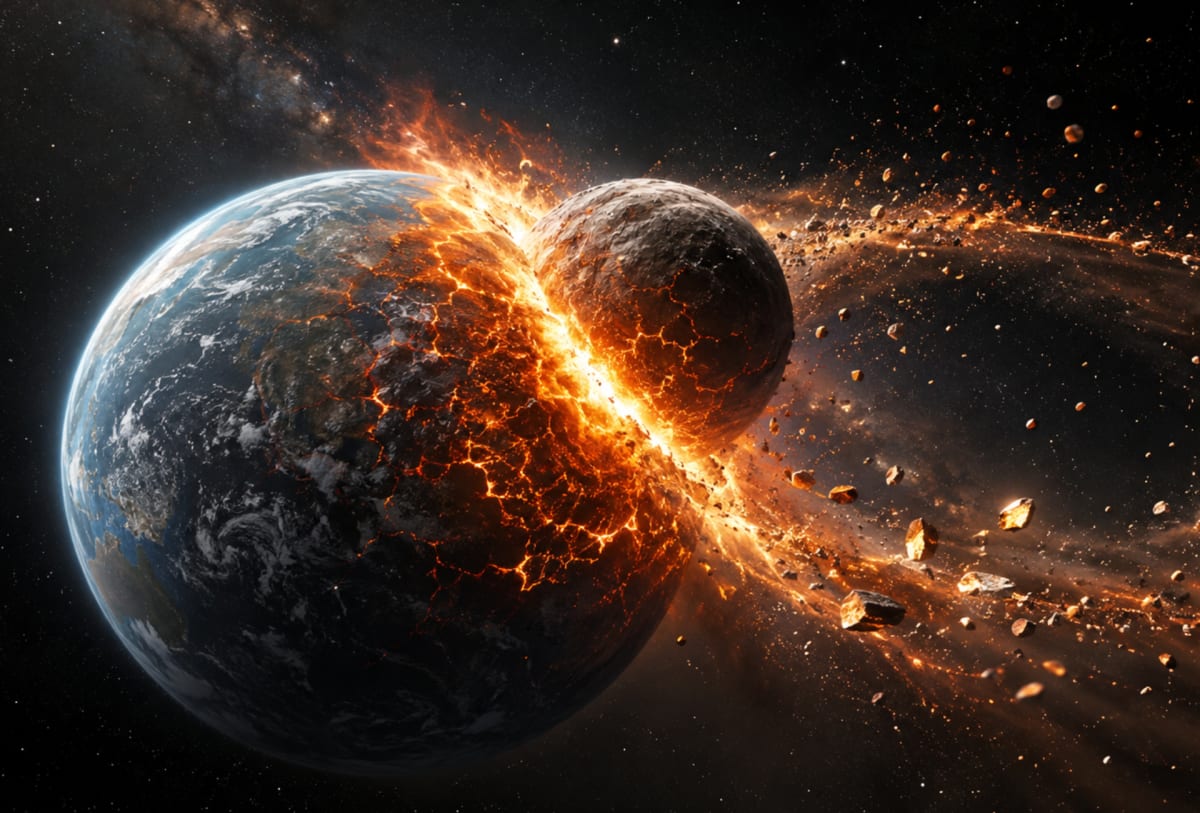
Now, researchers at Caltech believe these mysterious structures could be remnants of Theia, the ancient protoplanet that collided with young Earth and created our Moon. The discovery would solve two cosmic puzzles that have stumped scientists for decades.
The breakthrough came during a 2019 seminar when geophysicist Qian Yuan heard a professor mention that nobody knew what happened to the impactor after the collision. "I had a eureka moment and realized that the iron-rich impactor could have transformed into mantle blobs," Yuan explains.
The team used computer simulations to test whether Theia's material could survive inside Earth. Their models suggest the Moon-forming impact didn't melt the entire mantle as previously thought. Instead, the collision created strong layers, with the upper region becoming molten while the lower mantle stayed relatively cool and solid.
This layering mattered enormously. Dense, iron-rich material from Theia could have sunk toward Earth's core without mixing completely into the surrounding rock. The simulations estimate roughly 0.01 to 0.026 Earth masses of Theia material survived, matching the estimated mass of the mysterious deep structures.
The research team compared the process to a lava lamp after turning off the heat. Dense material from Theia descended and solidified rather than dispersing completely through the cooler lower mantle.
Over 4.5 billion years, this material shaped itself into two isolated piles that closely resemble the structures geophysicists observe today. The modeled formations occupy about 3.4 percent of the mantle, while modern observations suggest the actual structures fill roughly 4 percent.
Why This Inspires
This discovery reminds us that Earth carries its history deep within, preserving evidence of cosmic events from billions of years ago. The collision that created our Moon also left a lasting signature at the center of our planet.
Scientists can now test the hypothesis by analyzing volcanic rocks and lunar material for matching chemical signatures. If confirmed, it means we've been walking on a planet that still holds pieces of the world that gave us our Moon.
The find demonstrates how patient scientific investigation can solve ancient mysteries. What seemed like two separate puzzles, the Moon's formation and Earth's mysterious deep structures, may share a single elegant answer that's been waiting beneath our feet for billions of years.
More Images


Based on reporting by Google News - Scientists Discover
This story was written by BrightWire based on verified news reports.
Spread the positivity!
Share this good news with someone who needs it