Australian Team Boosts Hydrogen Fuel Cell Power by 75%
Engineers at UNSW have cracked a major problem holding back hydrogen fuel cells, potentially unlocking clean energy for planes and trucks. Their simple redesign makes the cells 75% more powerful without adding cost.
📺 Watch the full story above
Scientists in Australia just solved a puzzle that's been blocking one of our cleanest energy dreams for decades.
Researchers at the University of New South Wales have redesigned hydrogen fuel cells to fix a critical flaw that's prevented them from powering everything from cargo planes to freight trucks. The breakthrough could finally make emissions-free aviation and heavy transport a reality.
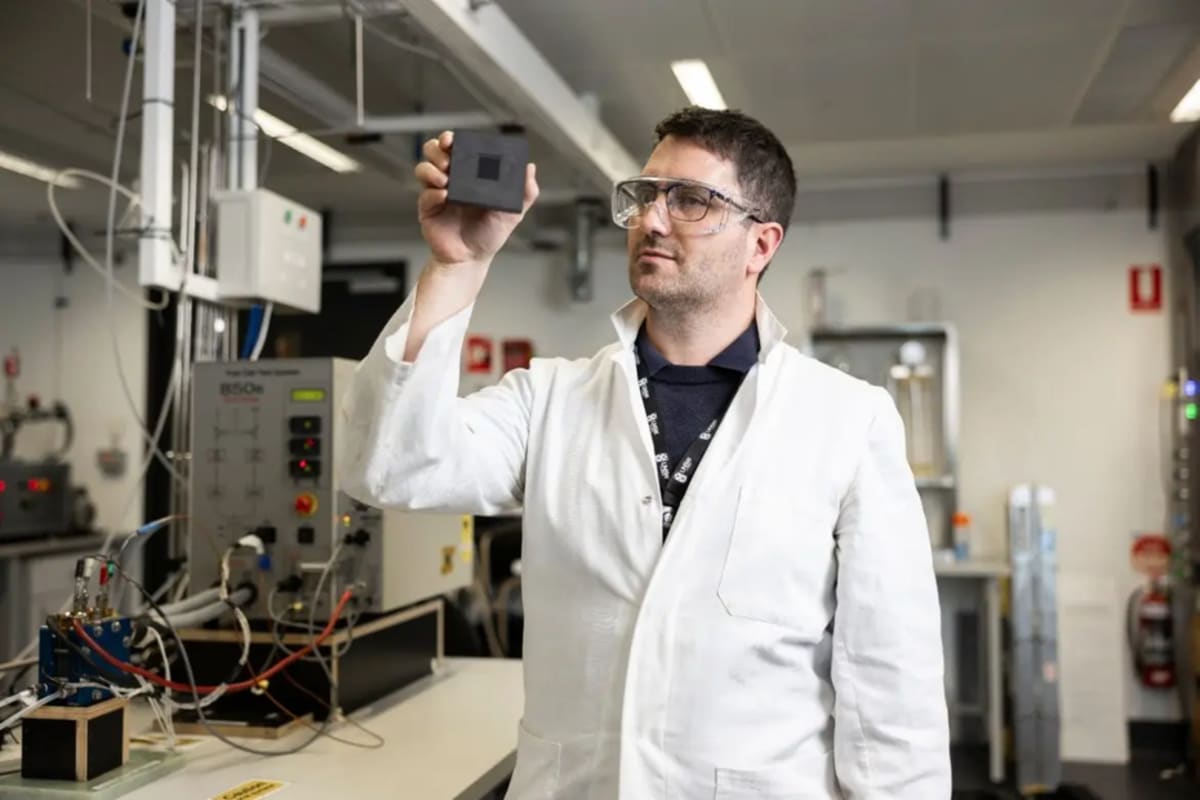
Dr. Quentin Meyer and Professor Chuan Zhao led a team that tackled a surprisingly simple problem. Hydrogen fuel cells produce only water as waste, making them incredibly clean. But that water was becoming their downfall.
The water produced inside traditional fuel cells gets trapped, blocking oxygen flow and choking the cell's performance. Previous solutions required heavy, expensive systems that made the technology impractical for real-world use.
The UNSW team took a different approach. They used precision micro-engineering to drill tiny channels into the fuel cell's internal structure. These channels are just 100 micrometers wide, about the width of a human hair.
"These lateral bypasses act as escape routes, meaning water no longer accumulates and stops the cell working," Dr. Meyer explains. The redesigned cells achieve 75% more power than traditional designs.
The team combined advanced imaging, fluid flow simulations, and precision engineering to rethink how fuel cells should work. The result is a system that's not only more powerful but also lighter, cheaper, and less dependent on expensive metals like platinum.
The breakthrough couldn't come at a better time. Batteries work well for cars but struggle to power heavy transport and aircraft. Hydrogen fuel cells using locally produced green hydrogen could fill that gap perfectly.
The Ripple Effect
The implications reach far beyond lab results. Aviation produces about 2-3% of global carbon emissions, and that number keeps climbing as more people fly. Heavy freight trucks face similar challenges since batteries add too much weight for long hauls.
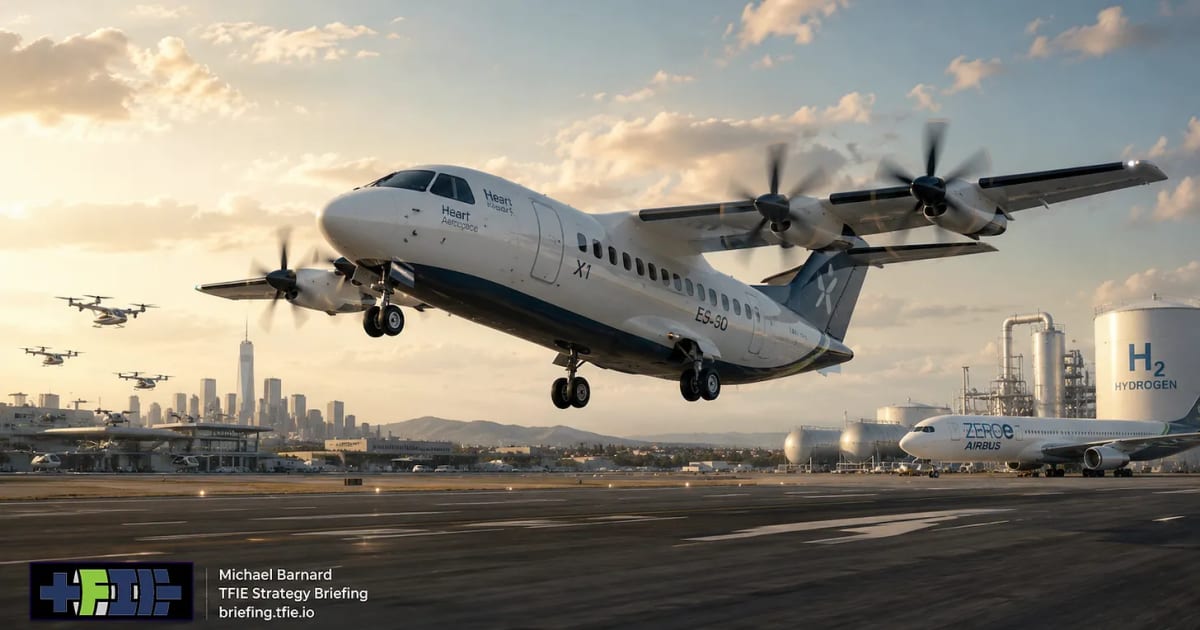
Dr. Meyer believes hydrogen-powered planes will fly in the very near future. The team is starting with low-altitude aircraft, where their fuel cells already deliver significantly longer flight times than battery alternatives.
The technology has been patented, and the researchers are now working to scale it up for commercial production. Their design requires only minor structural changes to existing fuel cell architecture, making adoption more feasible.
Professor Zhao sees potential across multiple industries. "This breakthrough could be used in a range of different settings and brings cheap, clean, and abundant hydrogen energy within our reach," she says.
The fuel cell redesign represents the kind of practical innovation that turns theoretical clean energy into actual emissions cuts, bringing us one step closer to truly sustainable transport.
More Images

Based on reporting by Google News - Renewable Energy Breakthrough
This story was written by BrightWire based on verified news reports.
Spread the positivity!
Share this good news with someone who needs it