BMW Robots Work 10-Hour Shifts Building 30,000 Cars
Humanoid robots at BMW's plants are now working full shifts alongside human employees, marking a major milestone in manufacturing. The German automaker reports real results: one robot helped build over 30,000 vehicles in just 10 months.
📺 Watch the full story above
Robots with human-like features are no longer science fiction at BMW factories. They're clocking in for regular shifts and building real cars.
BMW just announced plans to expand its humanoid robot program to its Leipzig plant in Germany, following a breakthrough year at its South Carolina facility. The company tested Figure AI's humanoid robot for 10 months, and the results surprised even the engineers involved.
The Figure 02 robot worked Monday through Friday, pulling 10-hour shifts in BMW's Spartanburg plant. During that time, it helped produce more than 30,000 BMW X3 vehicles by handling sheet metal parts in the welding process. The task requires precision and speed while being physically demanding for human workers.
The numbers tell an impressive story. The robot moved over 90,000 components and took approximately 1.2 million steps across 1,250 operating hours. BMW says the robot delivered measurable value under real world conditions, not just in controlled lab tests.
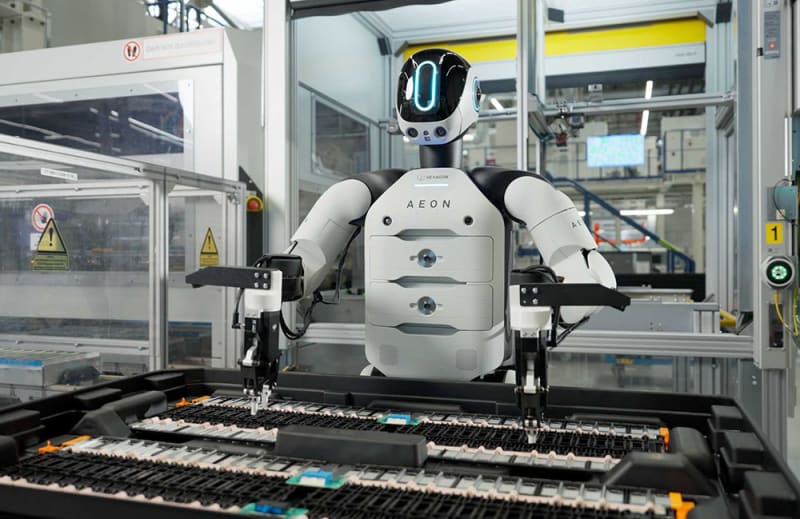
Now BMW is testing a different approach in Germany with Hexagon Robotics' AEON robot. This design features wheels instead of feet, allowing it to roll quickly across smooth surfaces while still being able to step when needed. The company plans to use AEON in battery assembly and component manufacturing starting summer 2026.
The Ripple Effect
BMW's success is creating waves across the automotive industry. The company integrated its robots into existing workflows faster than expected because it involved safety teams, logistics, and IT infrastructure from day one. Employees adapted quickly too, with the robots becoming a natural part of daily operations.
Other major manufacturers are taking notice. Hyundai plans to purchase thousands of humanoid robots from Boston Dynamics in coming years. Toyota recently signed an agreement to deploy humanoid robots after a successful pilot program. Even logistics companies like GXO are putting humanoid robots to work in warehouses.
What makes this different from typical factory automation is adaptability. These robots use the same tools and workspaces designed for humans, meaning factories don't need massive overhauls to integrate them. They can switch between tasks by changing their hand attachments, making them genuinely multifunctional.
BMW chose its body shop for initial deployment specifically because employees there already had experience adopting new technologies. The company treated the robots as teammates, not replacements, focusing on tasks that are physically exhausting or repetitive for human workers.
The technology is moving from experimental to practical, and BMW's real world results prove these robots can handle the demands of modern manufacturing.
More Images

Based on reporting by The Robot Report
This story was written by BrightWire based on verified news reports.
Spread the positivity!
Share this good news with someone who needs it