British Inventor Creates Floating Skateboard With Magnets
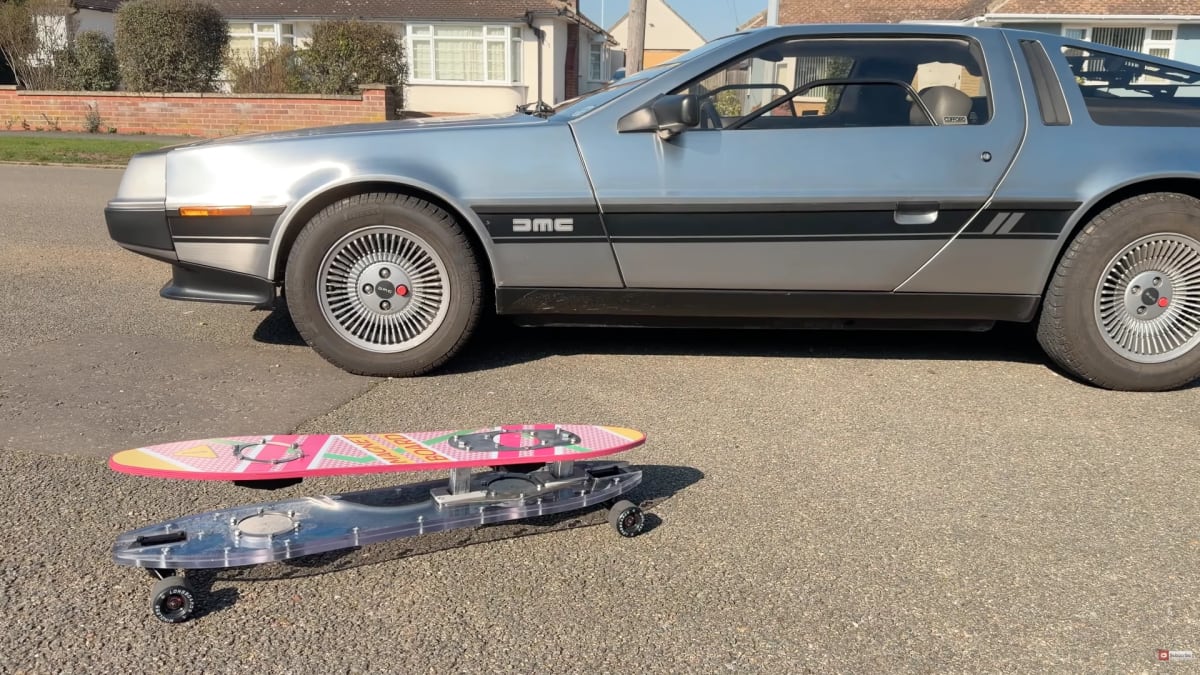
YouTube inventor Colin Furze built a skateboard where the rider platform actually floats above the wheels using powerful magnets. While he set out to create a Back to the Future hoverboard and technically failed, what he made instead could change how we think about suspension systems.
📺 Watch the full story above
A mad scientist in a backyard workshop just solved a problem that's been stumping engineers for years, and it started with a YouTube comment.
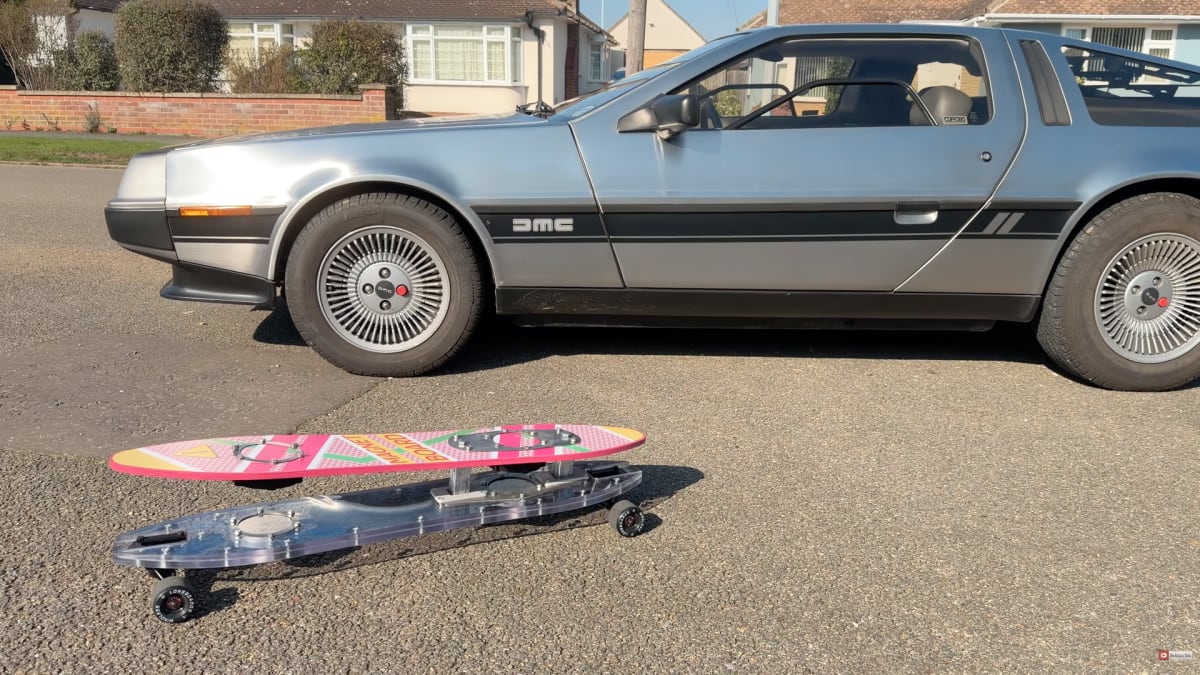
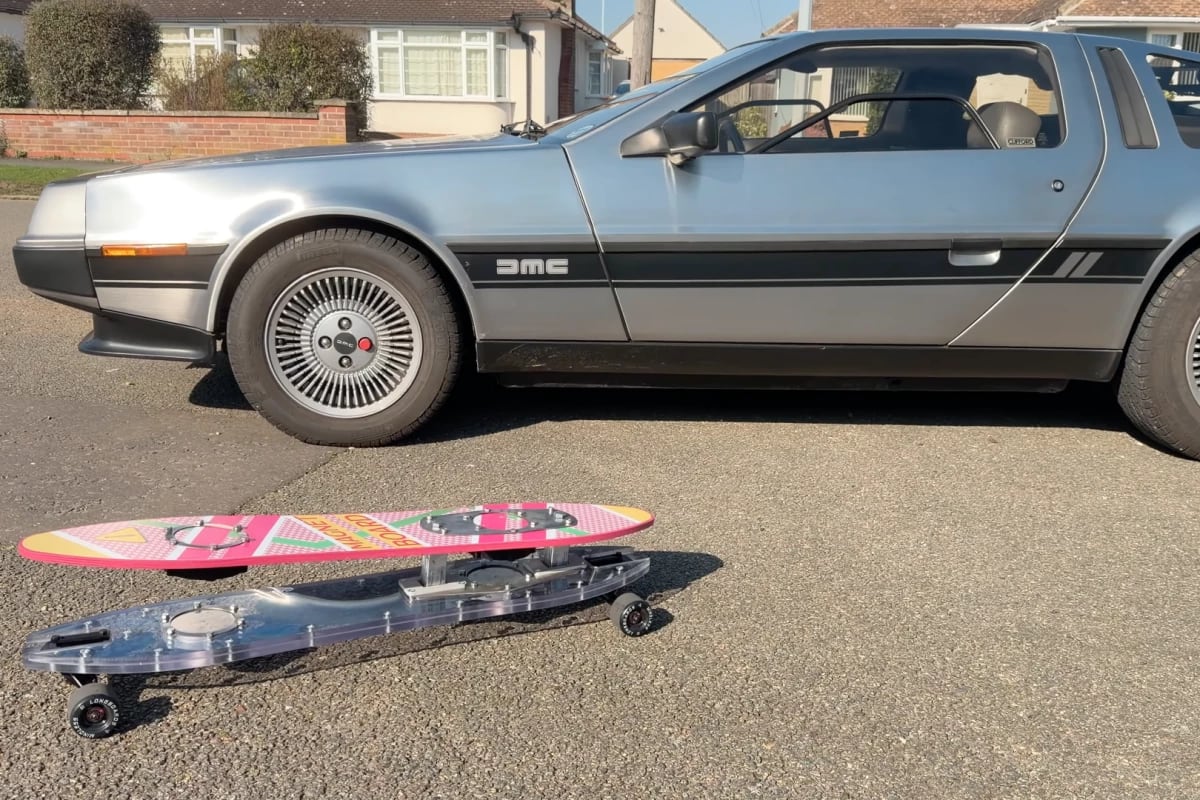
British inventor Colin Furze set out to build a real hoverboard from Back to the Future II. He didn't quite get there, but his "Magboard" might be even more interesting: a skateboard where the top deck literally floats above the bottom one using nothing but magnetic force.
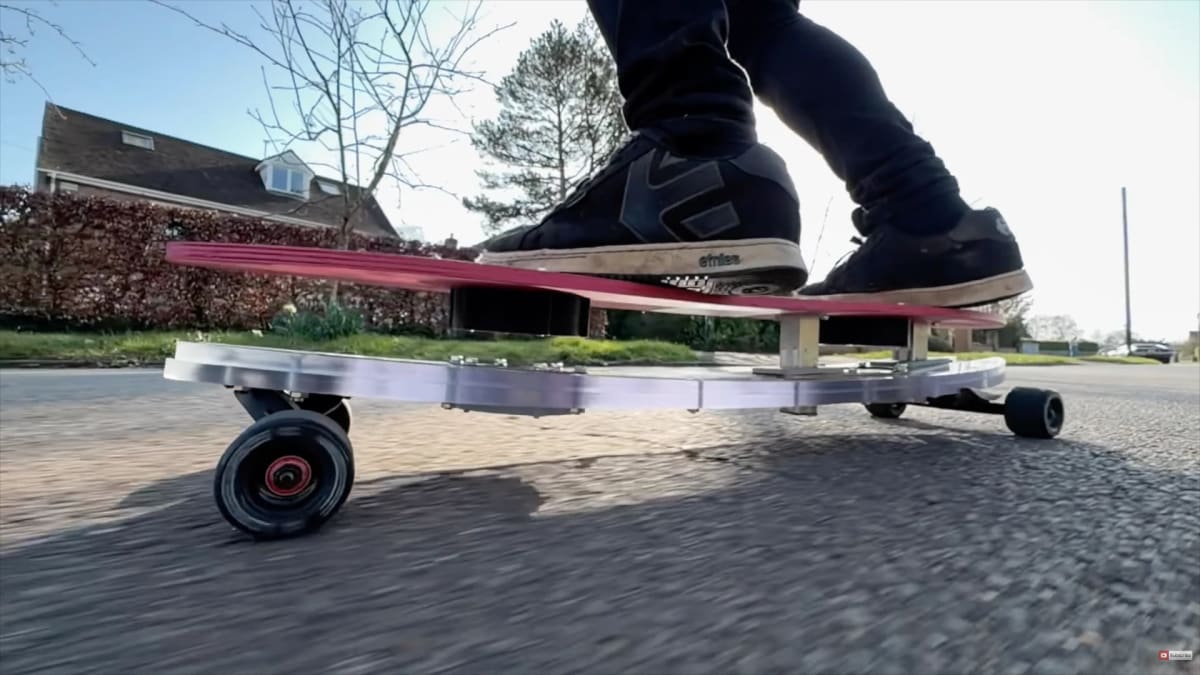
The principle sounds simple. Furze stacked two decks with powerful neodymium magnets arranged between them so they repel each other, creating an air gap with zero mechanical contact. The lower deck holds the wheels and trucks, while the upper deck is where you stand and ride.
Getting it to float took just three minutes. Getting it to actually work like a skateboard took at least seven or eight prototypes.
The challenge was making the floating top deck steerable and stable without wobbling uncontrollably. Furze tried linear pins, bearings, hinges, cross brake cables, and every combination he could think of. His final design uses square tubes with bearings in 3D printed sleeves that allow vertical movement while transmitting the rider's foot movements to the wheels below.
Each magnet has more than 500 kg (1,102 pounds) of pull force. The base deck needed two layers of polycarbonate just to handle the stress without flexing too much.
To prove the magnetic suspension actually works, Furze strapped a glass of water to both his Magboard and a regular longboard, then rode them over grooved concrete. The water barely moved on the magnetic version but visibly sloshed on the standard board.
The Ripple Effect
This backyard experiment might have serious implications beyond skateboarding. A suspension system with no touching mechanical parts means zero friction wear on the damping mechanism. That could be huge for urban electric scooters navigating cobblestones and cracked pavement, where traditional suspension components wear out quickly.
Previous levitating board designs worked but only over copper plates or superconducting rails, tethering riders to specific surfaces. Furze's Magboard goes wherever a regular skateboard goes while still providing that floating, frictionless ride.
The design has limitations. It weighs considerably more than a standard skateboard, performs best on smooth surfaces, and the added height raises the center of gravity. You can't do ollies or any tricks that require lifting the board off the ground.
But Furze has asked his YouTube community for ideas to eliminate the remaining mechanical connections, and he's already proven the core concept works in real world conditions. He previously used the same magnetic principle to create a mountain bike with magnetic suspension that survived actual trail riding.
Sometimes the most interesting engineering breakthroughs start with someone paying attention to an idea everyone else scrolled past.
More Images
Based on reporting by New Atlas
This story was written by BrightWire based on verified news reports.
Spread the positivity!
Share this good news with someone who needs it