Cable Cars Carry 520M Riders in 10 Years Across 15 Cities
Gondola transit systems are quietly solving commuter challenges in hilly cities worldwide, moving millions daily for as little as 43 cents per ride. From Bolivia to France, these sky-high solutions are transforming how people get to work while cutting costs and pollution.
📺 Watch the full story above
Imagine cruising above traffic jams in a gondola, getting to work faster than a bus could navigate winding mountain roads. That's the daily reality for hundreds of thousands of commuters in cities from La Paz to Paris.
Over the past few decades, more than 15 cities worldwide have installed gondola cable car systems to tackle a simple problem: traditional buses and subways struggle on steep terrain. What started as ski resort technology has become an affordable transit solution connecting hilltop neighborhoods to city centers below.
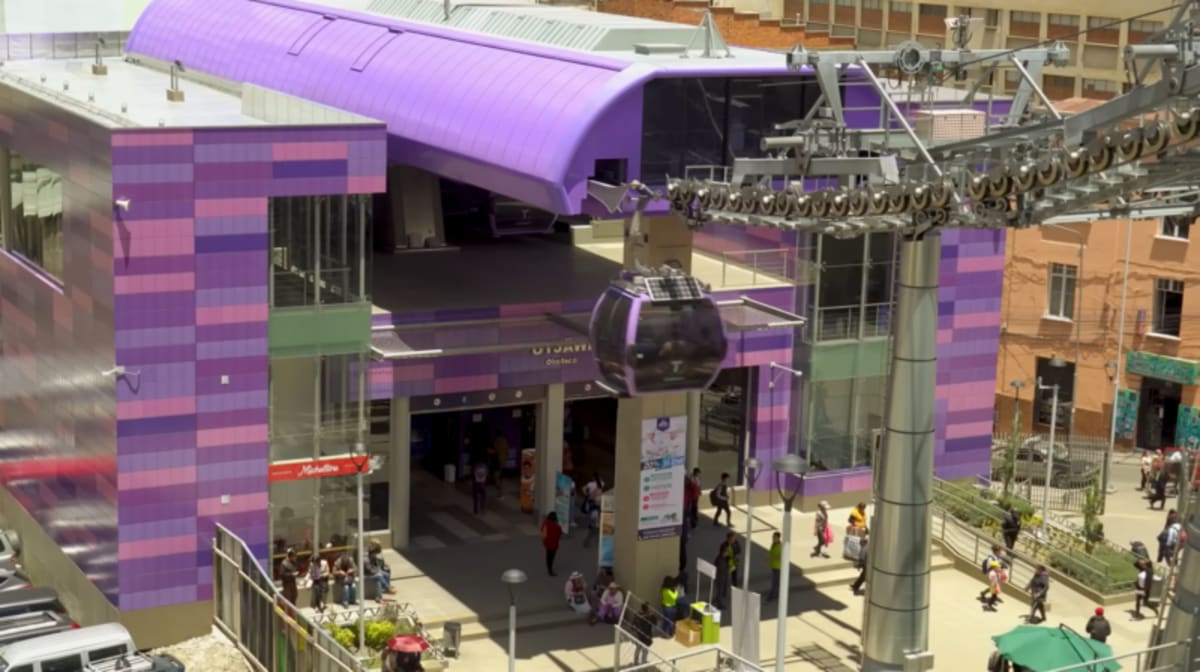
Bolivia's Mi Teleférico stands out as the biggest success story. Operating at a breathtaking 13,000 feet above sea level, the system served 520 million passengers in its first ten years through 2024. Today, about 160,000 people ride its ten lines daily, paying roughly 43 cents per trip.
In Medellín, Colombia, five gondola lines spanning 7.5 miles carry 40,000 passengers each day. The system has done more than speed up commutes. It's connected poor hillside neighborhoods to job centers downtown, helping reduce both unemployment and crime rates.
The appeal is spreading beyond Latin America. Cities including Amsterdam, Salt Lake City, and Los Angeles are planning their own aerial transit lines. LA's system will whisk baseball fans from Union Station to Dodger Stadium in just seven minutes, cutting what's often a frustrating car journey.
The math makes sense for city planners. Gondola systems cost between $19 million and $32 million per kilometer, far less than subways. They're faster to build, require minimal ground space (just pylons and stations), and have low maintenance costs. Plus, they slash CO2 emissions compared to cars climbing steep hills.
The systems aren't perfect. London's Thames cable car struggles to compete with nearby subway routes, functioning mostly as an expensive tourist attraction. High winds can shut down operations, and critics note that gondolas move fewer people per hour than trains during rush periods.
The Ripple Effect
The impact reaches beyond transportation. Small businesses have sprouted near gondola stations, from street food vendors to shops serving new foot traffic. Neighborhoods once isolated by geography now buzz with economic activity. Residents who couldn't easily reach job interviews or healthcare appointments suddenly have access. Children get to school faster and safer than walking dangerous hillside paths.
Even tourists benefit, enjoying panoramic city views during regular commuter rides. What solves a practical problem also creates an experience that brings joy to daily travel.
Gondola transit proves that thinking vertically can solve horizontal problems. Millions of commuters worldwide now glide above their cities, getting where they need to go faster, cheaper, and with a much better view.
Based on reporting by CleanTechnica
This story was written by BrightWire based on verified news reports.
Spread the positivity!
Share this good news with someone who needs it