Canada's Mass Timber Buildings Lock Carbon Out of the Sky
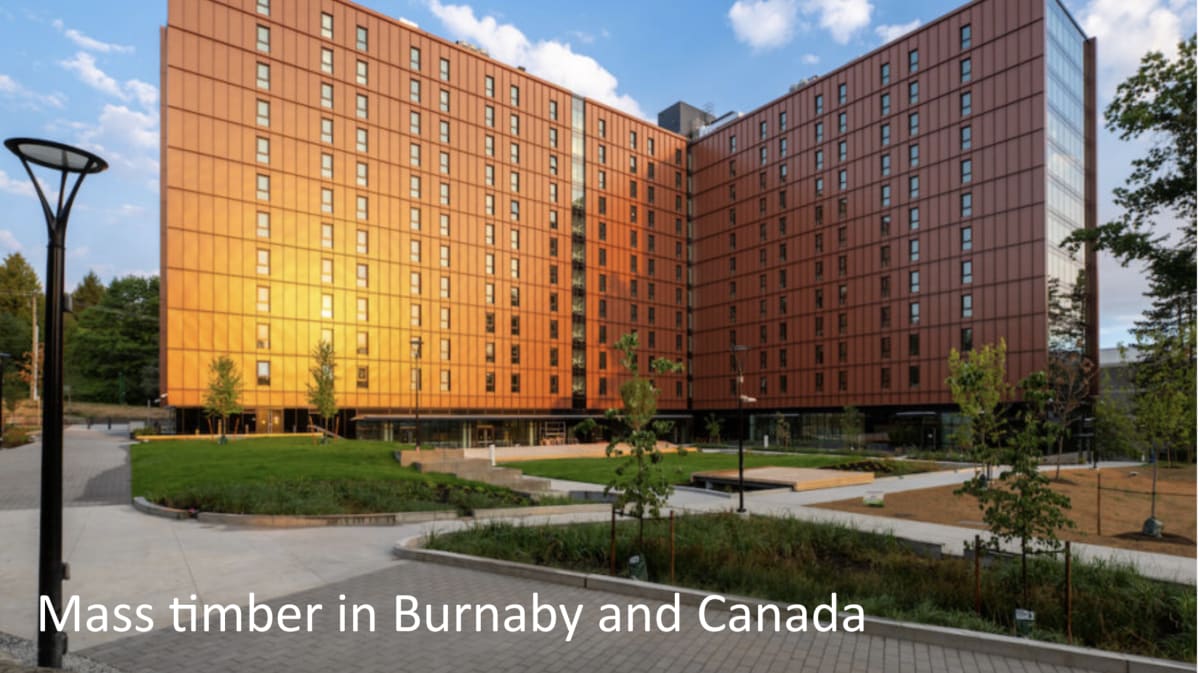
A new 12-story student residence in British Columbia is made almost entirely of wood that captured carbon while growing. Canada leads the world with 700 of these climate-friendly buildings, and a new national housing program is scaling production to drive costs down.
📺 Watch the full story above
Imagine building a skyscraper that actually fights climate change instead of fueling it.
That's exactly what's happening in Canada, where engineers are constructing entire buildings from mass timber, essentially plywood engineered to hold up multi-story structures. A brand-new 12-story student residence at BCIT near Vancouver houses 500 students in a building that weighs one-fifth as much as a traditional concrete structure while locking away tons of carbon from the atmosphere.
Mass timber works like Lego blocks for buildings. Factories cut windows, route electrical wiring, and prepare plumbing before shipping sections to construction sites. The wood has five times the structural strength of reinforced concrete by weight, meaning less foundation work and lower costs.
Here's the climate twist: every ton of mass timber contains a ton of carbon dioxide that trees pulled from the air while growing. Traditional concrete and steel buildings, by contrast, release massive amounts of carbon during production. A mass timber building needs only 30% of the foundation concrete because the structure weighs so much less.
Canada now has 700 mass timber buildings across the country, more than any other nation. The technology has been tested and proven at scale, but most buildings so far have been expensive one-off projects.
That's about to change. A new national housing program is investing $7 billion to build social housing for Canada's lowest-income residents using prefabricated mass timber. This guaranteed factory income creates regional manufacturing hubs that will supply mass timber to other builders at much lower prices.
The current 20% cost premium for mass timber construction should disappear as production scales up. Meanwhile, Canada is implementing embodied carbon limits that measure how much CO2 goes into every cubic meter of building materials.
The Ripple Effect
The transformation extends beyond the buildings themselves. Electric logging trucks are already hauling timber in British Columbia. Sawmills and construction equipment are electrifying too. As the entire supply chain shifts to clean energy, the carbon footprint of a new mass timber building approaches zero, aside from the small concrete foundation.
The approach offers a blueprint for other nations with forest resources. You can even add mass timber floors on top of existing downtown buildings where traditional concrete would be too heavy, creating affordable housing without sprawling into green space.
Trees grow back, capturing more carbon for the next generation of climate-friendly buildings.
More Images

Based on reporting by CleanTechnica
This story was written by BrightWire based on verified news reports.
Spread the positivity!
Share this good news with someone who needs it