China Proves Gravity Storage Works at Massive Scale
China just built the world's largest gravity battery—a 148-meter tower that stores energy by lifting 12,000 concrete blocks. The engineering achievement shows this sci-fi solution actually works, even if batteries still win on cost.
📺 Watch the full story above
A tower taller than a 40-story building is now storing clean energy in China by stacking concrete blocks, proving that one of the most ambitious energy storage ideas can actually work at scale.
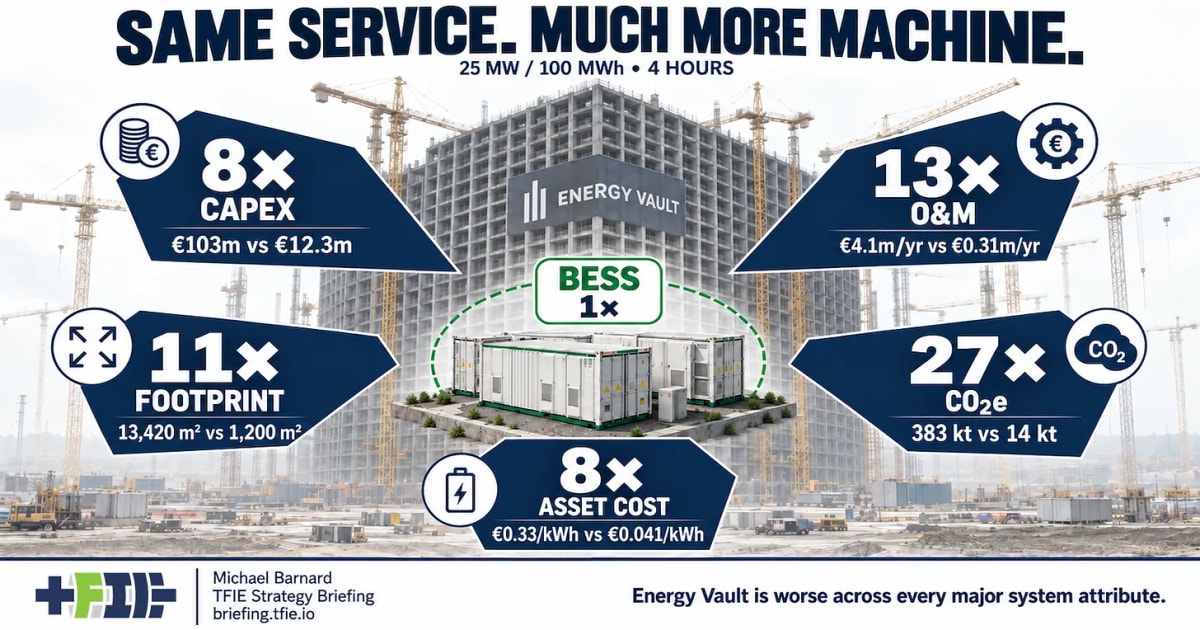
Energy Vault's Rudong facility uses 12,000 blocks weighing 25 tons each, lifting them with 96 elevator systems when electricity is cheap and lowering them to generate power when it's needed. The system can deliver 25 megawatts for four hours straight, enough to power thousands of homes.
The real story isn't just that it works. It's that China built it in one of the best possible environments to test whether gravity storage can compete with batteries. The country has massive supply chains for concrete and steel, government support for clean energy projects, and experienced construction partners who know how to build at scale.
Getting a structure this complex to actually function is a serious engineering win. Coordinating thousands of heavy blocks moving up and down on command, all while feeding power to the grid reliably, required solving problems that had never been tackled before.
The blocks themselves offer some genuine advantages over batteries. They're made from low-value minerals and waste materials, they don't degrade chemically, and they can potentially last for decades without losing capacity. There's no risk of the thermal issues that occasionally affect battery installations.
The Bright Side
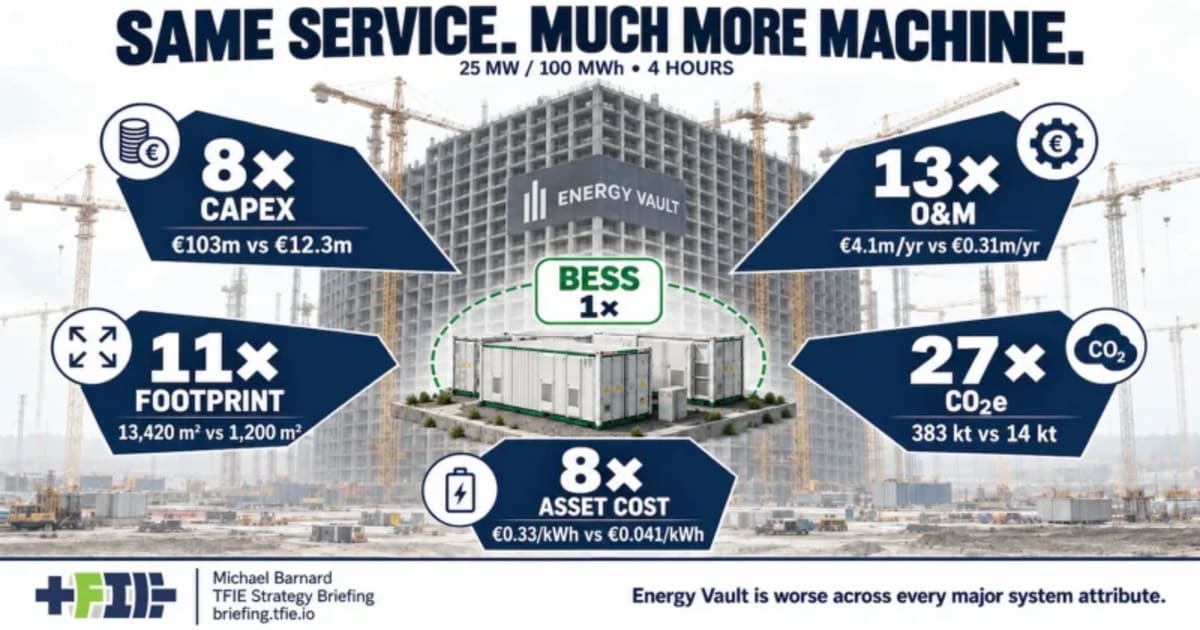
While batteries currently beat gravity storage on cost and space for this type of four-hour energy storage, Rudong proves the concept works at utility scale. That matters because the world needs multiple solutions for storing renewable energy as we move away from fossil fuels.
The facility removes the "it's just a theory" objection that often stalls new clean energy technologies. Engineers now have real-world data on how gravity storage performs, what it costs to build and operate, and where it might make sense compared to other options.
Energy Vault has already expanded beyond just gravity systems, now integrating conventional battery projects too. The company is testing different approaches to solve the same crucial problem: how to store clean energy reliably.
China's willingness to build and test ambitious energy storage projects at scale gives the world valuable data on what works and what doesn't. Every technology doesn't have to win every comparison to move clean energy forward.
The Rudong tower stands as proof that creative engineering can turn simple physics into grid-scale solutions, even when the path forward isn't always obvious.
More Images
Based on reporting by CleanTechnica
This story was written by BrightWire based on verified news reports.
Spread the positivity!
Share this good news with someone who needs it