Europe's Green Jet Fuel Could Create 4,000 New Jobs by 2030
A new report shows Europe could create thousands of jobs and slash its dangerous reliance on imported jet fuel by producing clean aviation fuel at home. Nine new plants could keep €20 billion in economic value within Europe while cutting emissions.
📺 Watch the full story above
Europe is poised to transform its aviation industry while creating thousands of good jobs and breaking free from its dependence on Middle Eastern oil imports.
A new report commissioned by Transport & Environment reveals that building just nine electric sustainable aviation fuel (e-SAF) plants across Europe could support 4,000 jobs by 2030. These facilities would produce clean jet fuel using renewable electricity instead of fossil fuels, slashing both carbon emissions and Europe's vulnerability to global oil price shocks.
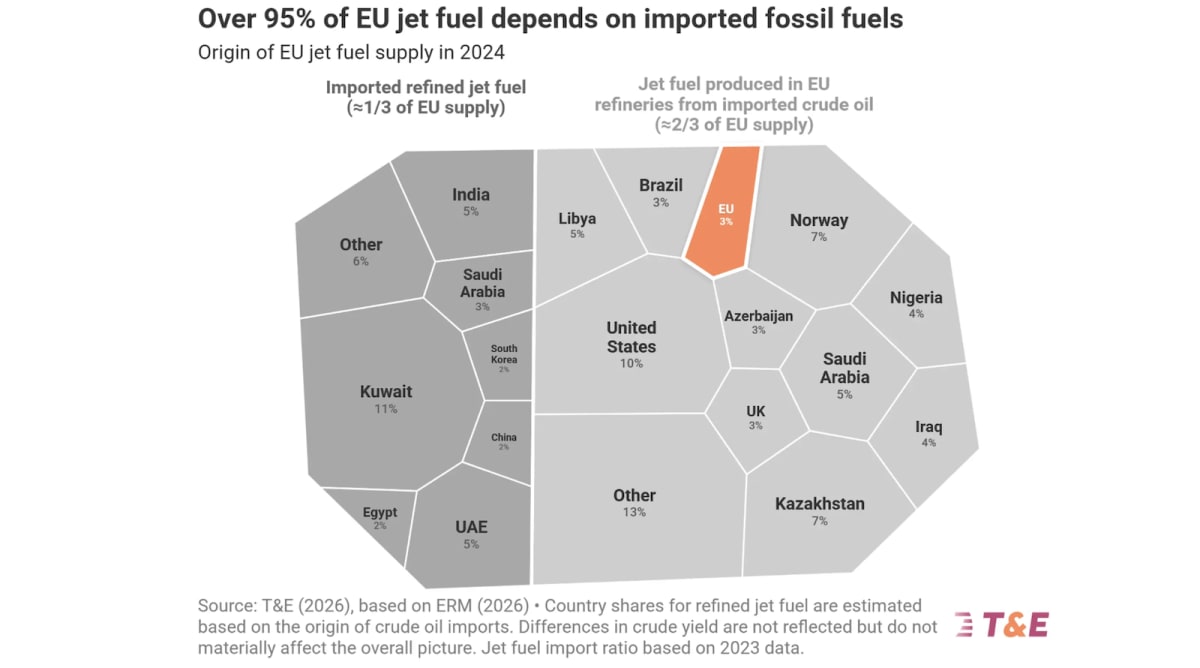
The timing couldn't be better. Right now, Europe imports over 95% of its jet fuel, mostly from the Middle East. Recent turmoil in that region sent European jet fuel prices soaring, a painful reminder of what dependence costs ordinary travelers and businesses.
The new plants would each produce 75,000 tons of e-SAF annually, enough to meet Europe's ReFuelEU 2030 targets through domestic production. Building these facilities would generate €20 billion in economic value, with up to 85% of that investment staying in Europe rather than flowing overseas.
Unlike traditional fossil fuel infrastructure, e-SAF plants represent a double win. They cut aviation emissions while building Europe's energy independence, creating skilled manufacturing and operations jobs in the process.
The Ripple Effect
The benefits extend far beyond the factory gates. When Europe produces its own clean aviation fuel, the entire supply chain grows stronger. Equipment manufacturers, construction companies, renewable energy providers, and technology developers all gain new opportunities.
This shift also protects European economies from the kind of price volatility that recently hit travelers' wallets. Energy sovereignty means more stable prices and more predictable costs for airlines and passengers alike.
The economic opportunity is real, but it requires action now. Transport & Environment recommends that European governments preserve e-SAF targets in current aviation regulations and prioritize homegrown production over imports through smart policy design.
Member states can accelerate progress by funding pilot auctions that help the first plants get built. Once operational, these facilities prove the technology works and pave the way for rapid expansion.
The technology is ready, the economic case is solid, and the climate benefits are clear. What's needed now is the political will to choose European production over continued import dependence.
Four thousand jobs by 2030 is just the beginning, as the industry could scale rapidly once the first plants prove successful.
More Images
Based on reporting by CleanTechnica
This story was written by BrightWire based on verified news reports.
Spread the positivity!
Share this good news with someone who needs it