Father-Son Team Breaks Drone Speed Record at 408 mph
A father-son duo from Australia just reclaimed the world's fastest drone record, hitting a stunning 408 mph with their handmade quadcopter. Their friendly rivalry with other teams is pushing the boundaries of what small flying machines can achieve.
📺 Watch the full story above
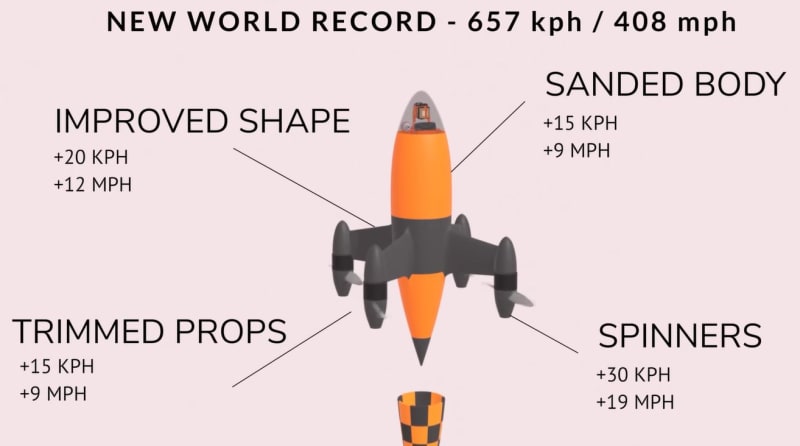
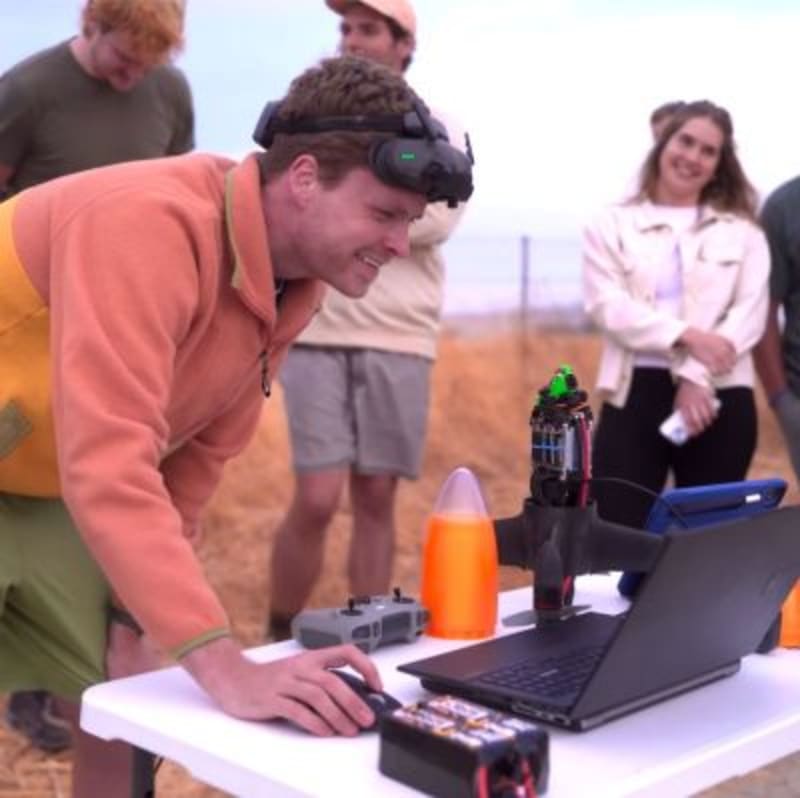
Luke Maximo Bell and his dad just proved that garage engineering can break world records, flying their custom drone at an average speed of 657 kilometers per hour (408 mph).
The pair had previously held the drone speed record before an Australian team smashed it with a flight reaching 626 km/h. That loss lit a fire under the Bells, who went back to the drawing board to design their V4 quadcopter from scratch.
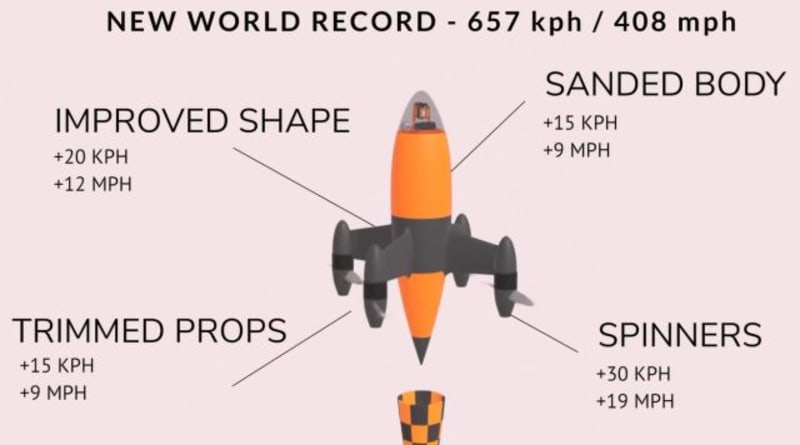
The improvements were all about squeezing out every bit of performance. They installed new engines, redesigned the propellers, and completely rebuilt the body. Computer simulations showed them something unexpected: the new design actually needed to be bigger to cut through the air more efficiently.
Building the larger body required a bigger 3D printer, which they got from sponsor Bambu Lab. The team used the printer's dual extruder feature to create hybrid parts combining rigid PETG plastic with flexible TPU material in a single print.
They even tried mounting a 360-degree camera on a second drone to capture follow footage during the record attempt. That proved too complicated for now, but they plan to retry it in future flights.
When test day arrived, the V4 screamed through the air at an average of 657 km/h, officially setting a new world record. The achievement puts them back on top, but likely not for long given the friendly competition heating up in the drone racing community.
The Ripple Effect
This back-and-forth competition is driving real innovation in small-scale flight technology. Each team learns from the others, shares their designs openly, and pushes the limits higher. The advances they're making with lightweight materials, efficient motors, and aerodynamic designs could eventually influence everything from delivery drones to emergency response aircraft.
There's still plenty of room to grow, too. Propeller-driven airplanes have reached speeds over 800 km/h, meaning drone teams have another 140 km/h to chase before they even approach theoretical limits. The sound barrier won't become an issue for quite a while.
What makes this story special isn't just the speed. It's watching everyday engineers and tinkerers achieve what once seemed impossible, armed with 3D printers, determination, and a lot of trial and error. They're proving that world records aren't just for big companies with massive budgets.
The stage is now set for the next team to take their shot at the crown, and you can bet Luke and his dad are already planning V5.
More Images


Based on reporting by Google News - World Record
This story was written by BrightWire based on verified news reports.
Spread the positivity!
Share this good news with someone who needs it