Fire Tornadoes Clean Oil Spills 40% Cleaner Than Before
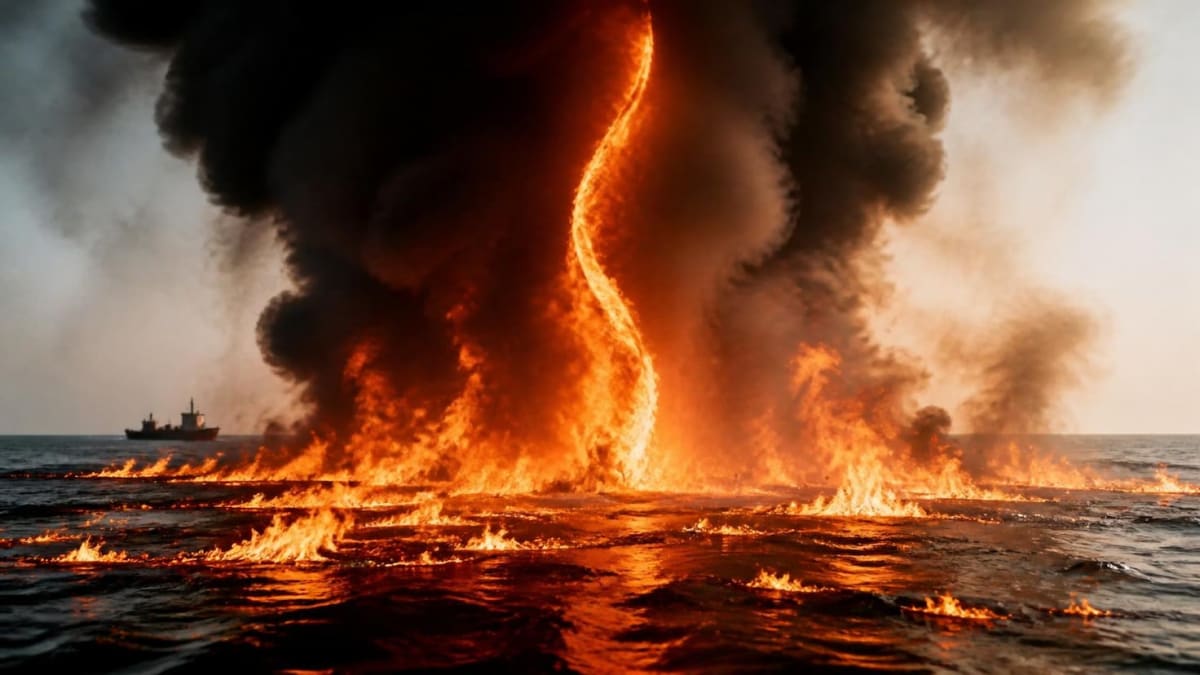
Scientists just turned one of nature's most destructive forces into a powerful cleanup tool that could save marine life after oil disasters. Fire tornadoes now burn oil spills twice as fast while cutting toxic smoke by 40 percent.
📺 Watch the full story above
Researchers at Texas A&M University and UC Berkeley just solved one of the ocean's messiest problems using an unexpected hero: fire tornadoes.
Oil spills have plagued our oceans for decades, leaving devastating damage that can last for years. The 2010 Deepwater Horizon disaster alone dumped 134 million gallons of crude oil into the Gulf of Mexico, destroying ecosystems and wildlife.
Until now, cleanup crews faced an impossible choice. They could either let the oil spread and damage coastlines, or burn it using a method that creates massive clouds of toxic smoke and leaves unburnt sludge floating on the water. Neither option was good for the environment.
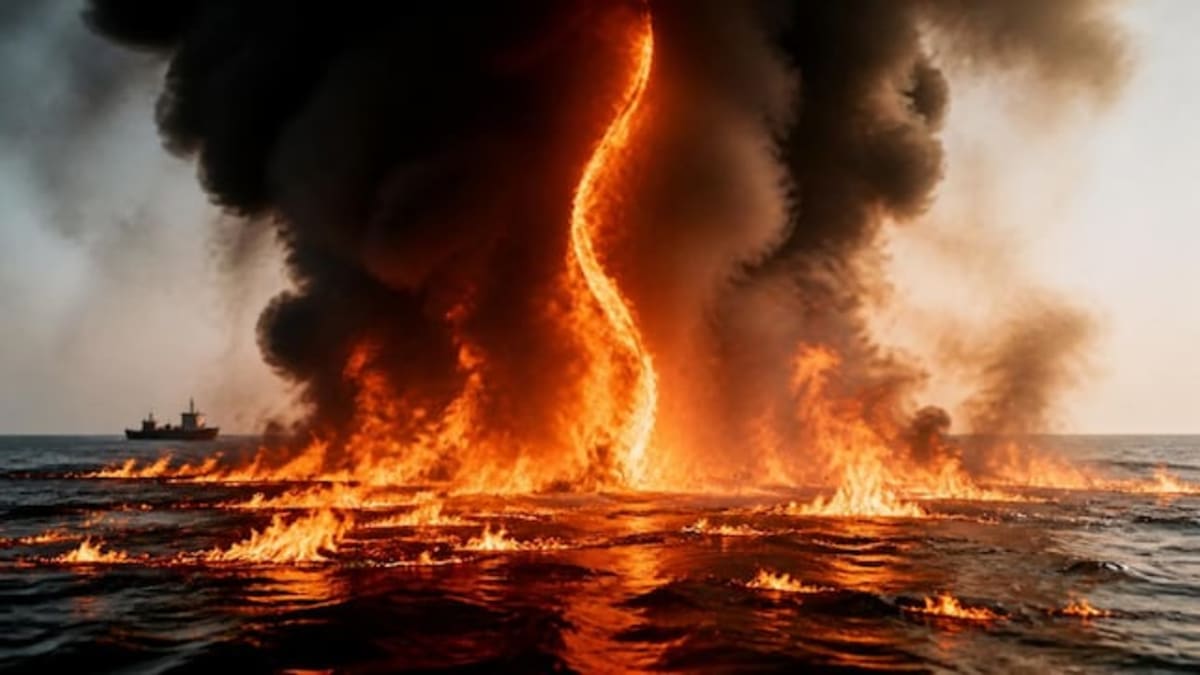
Dr. Elaine Oran, Dr. Qingsheng Wang, and Dr. Michael Gollner changed everything with their groundbreaking experiment. They discovered that controlled fire whirls, the technical term for fire tornadoes, could clean oil spills with remarkable efficiency.
The team built a special three-walled triangular structure with 16-foot sections. Strategic gaps between the walls direct airflow precisely over the oil, creating a powerful spinning vortex of flames that devours the crude.
The results stunned even the researchers. Fire whirls work almost twice as fast as traditional burning methods, potentially cutting response times in half when every minute counts. They also slash soot emissions by 40 percent, meaning cleaner air during cleanup operations.
Most impressively, the fire tornadoes achieved up to 95 percent fuel consumption efficiency. That means almost no oil gets left behind to poison marine ecosystems or wash up on beaches.
The Bright Side
The Bureau of Safety and Environmental Enforcement supported this first-of-its-kind large-scale experiment, recognizing its potential to transform disaster response. This isn't just theory anymore. It's proven science ready to protect real coastlines and real wildlife.
The researchers envision mobile structures that could be deployed on demand and dropped over burning oil spills anywhere in the world. Future technology could make these fire tornado generators standard equipment on emergency response vessels.
Dr. Oran sees even broader applications beyond ocean cleanup. Understanding the physics of fire whirls could unlock new ways to harness their power for environmental protection across different scenarios.
The innovation represents a fundamental shift in how we think about disaster response. Instead of choosing between bad options, cleanup crews could soon deploy a tool that's faster, cleaner, and dramatically more effective at protecting marine life.
What was once a symbol of destruction is becoming a precise restoration tool, proving that even nature's most chaotic forces can be turned toward hope.
More Images


Based on reporting by Google News - Researchers Find
This story was written by BrightWire based on verified news reports.
Spread the positivity!
Share this good news with someone who needs it