Five Galaxies Crash Together 800M Years After Big Bang
The James Webb Space Telescope caught five galaxies colliding when the universe was barely 800 million years old, rewriting what we thought about how galaxies form. The discovery could finally explain one of Webb's biggest mysteries.
📺 Watch the full story above
Scientists thought the early universe was a peaceful place where galaxies grew slowly and alone. The James Webb Space Telescope just proved them spectacularly wrong.
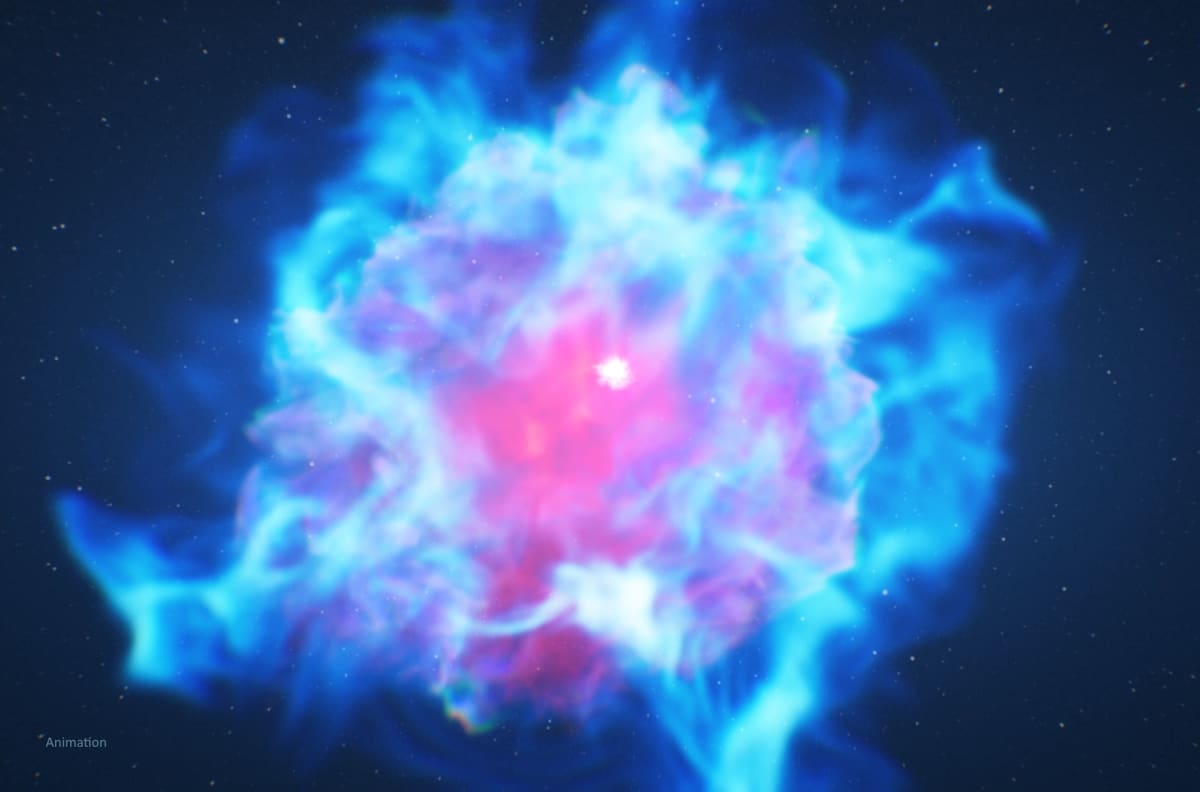
Researchers at Texas A&M University spotted five galaxies crashing into each other just 800 million years after the Big Bang. The entire cosmic pileup fits inside a space roughly as wide as the Milky Way, which means these galaxies are practically on top of each other by space standards.
The system holds about 10 billion stars and is churning out new ones at 10 times the normal rate for that era. Dr. Weida Hu, who led the study, said a merger this crowded "was not expected so early in the universe's history."
The galaxies showed up in deep images of a region called GOODS-South. The Hubble Space Telescope had photographed some of them years ago, but only Webb could prove all five sit at the same distance from Earth, confirming they're actually colliding rather than just appearing close together.
Here's where it gets really interesting. Webb detected a huge halo of glowing oxygen gas surrounding and connecting four of the five galaxies. Oxygen only forms inside stars, so finding it scattered between galaxies means something violent ripped it out.
The team's analysis points to gravity as the culprit. Tidal forces from the collision stripped gas right out of the galaxies, a process astronomers didn't expect to see until at least a billion years after the Big Bang.
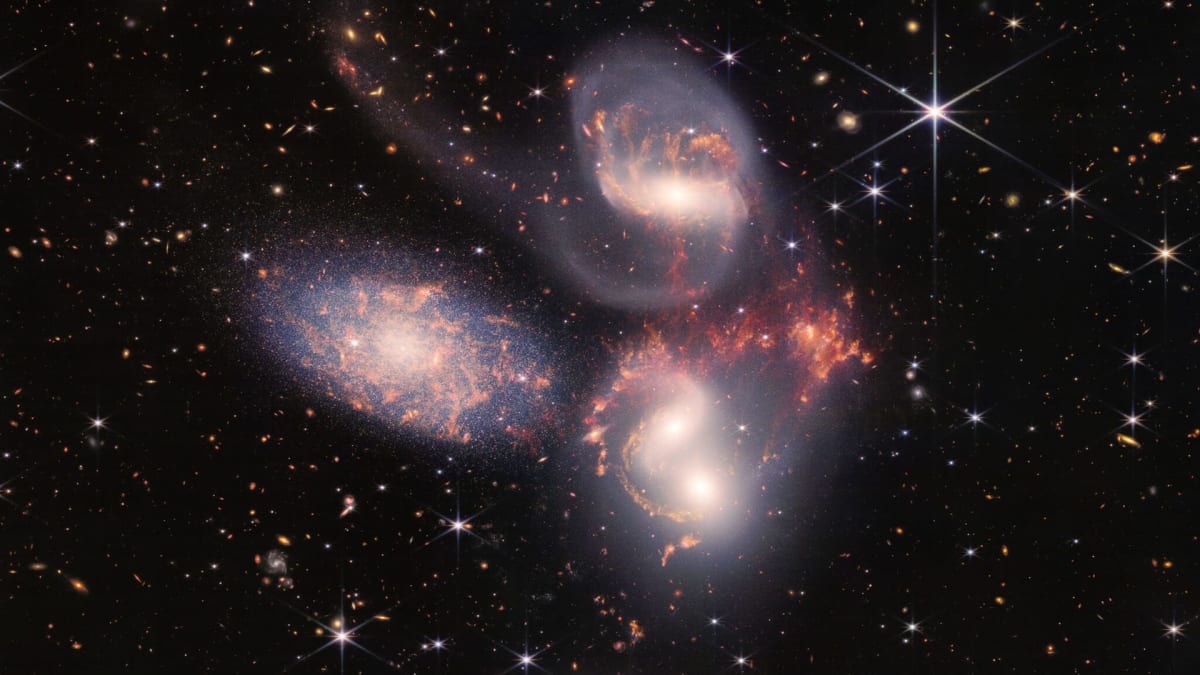
The discovery looks a lot like Stephan's Quintet, a famous group of colliding galaxies much closer to Earth. Both systems show bridges of gas and stars connecting their members, the classic signature of galaxies tearing each other apart through gravity.
The Bright Side
This cosmic crash might solve a puzzle that's been bugging astronomers since Webb launched. The telescope keeps finding massive galaxies that already stopped forming stars when the universe was young, something that shouldn't be possible under our old models.
Those dead galaxies needed to build enormous mass fast and then burn through all their gas in a hurry. Quiet, steady growth can't do both, but violent multi-galaxy collisions can.
The quintet's mass and star formation rate match exactly what those mysterious dead galaxies would have looked like before they ran out of fuel. This could be the missing link scientists needed.
Dr. Casey Papovich, who co-authored the study published in Nature Astronomy, put it simply: theories of how galaxies come together "need to be updated to match reality."
Follow-up observations will track how the galaxies move to see if they're truly headed for a single giant merger. One discovery doesn't make a pattern, but it opens a door to understanding how the universe grew up faster and more violently than anyone imagined.
Based on reporting by Google: James Webb telescope
This story was written by BrightWire based on verified news reports.
Spread the positivity!
Share this good news with someone who needs it