Floating Wind Farms Unlock 80% of Ocean Energy Potential
Seven countries are racing to harness deeper ocean winds with floating turbines that can access energy reserves impossible for traditional platforms. New marine coating technology is making these massive floating power stations cheaper and more durable than ever.
📺 Watch the full story above
Eighty percent of the world's offshore wind energy sits in waters too deep for conventional wind turbines, but floating platforms are finally unlocking this vast untapped resource.
Japan just powered up its groundbreaking 16.8-megawatt Goto Floating Wind Farm earlier this year, marking a major step toward the country's ambitious goal of 15 gigawatts of floating wind by 2040. France followed in May when its pilot project began feeding electricity to the grid with three 10-megawatt turbines bobbing in the Mediterranean Sea.
Twenty-seven countries have now set offshore wind targets, with at least seven specifically focused on floating turbines. The reason is simple: traditional wind platforms become impossibly expensive in waters deeper than 200 feet, but that's exactly where the strongest, most consistent winds blow.
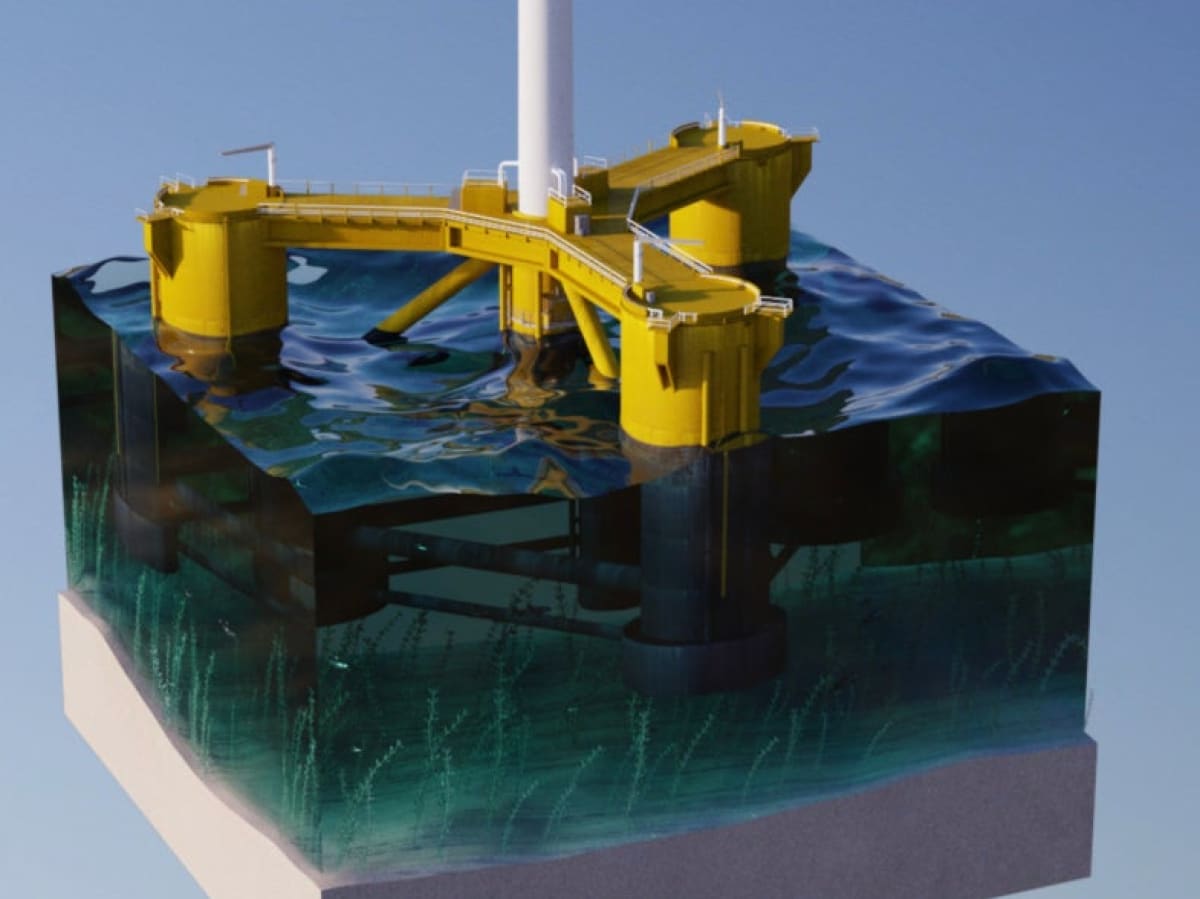
These floating giants face unique challenges that engineers are solving by borrowing technology from an unexpected source: the shipping industry. Unlike fixed towers anchored to the ocean floor, floating platforms must stay stable while waves rock the structure and massive blades spin overhead.
The breakthrough comes from specialized marine coatings originally designed for ship hulls and oil platforms. These protective layers prevent barnacles and algae from attaching during the weeks or months turbines spend in staging ports waiting for installation, then keep working once they're towed out to sea.
The Ripple Effect
The impact extends beyond just protecting equipment. Anti-fouling coatings reduce drag when vessels tow floating turbines to their ocean sites, cutting fuel consumption and greenhouse gas emissions during installation.
New solvent-free epoxy formulations are pushing durability even further. These coatings last longer between maintenance visits, which matters enormously when your power station is floating miles offshore in harsh ocean conditions.
The United Kingdom, Portugal, Norway, and South Korea have all set floating wind targets for the coming decade. As production costs drop and coating technology improves, these floating farms are becoming commercially viable at scale, not just experimental pilots.
Ballast tanks that stabilize the platforms now use the same protective systems required for commercial ships, ensuring decades of reliable operation without constant repairs. Engineers are even designing platforms with multiple floating columns and underwater braces that spread wave forces across the structure.
The technology is moving fast enough that floating wind prototypes expected online in 2026 will already feature the latest low-emission coating systems. What started as borrowing ideas from offshore oil rigs has evolved into a unique blend of marine vessel technology and renewable energy innovation, creating power stations that can finally reach the planet's richest wind resources.
More Images

Based on reporting by Google News - Wind Energy
This story was written by BrightWire based on verified news reports.
Spread the positivity!
Share this good news with someone who needs it