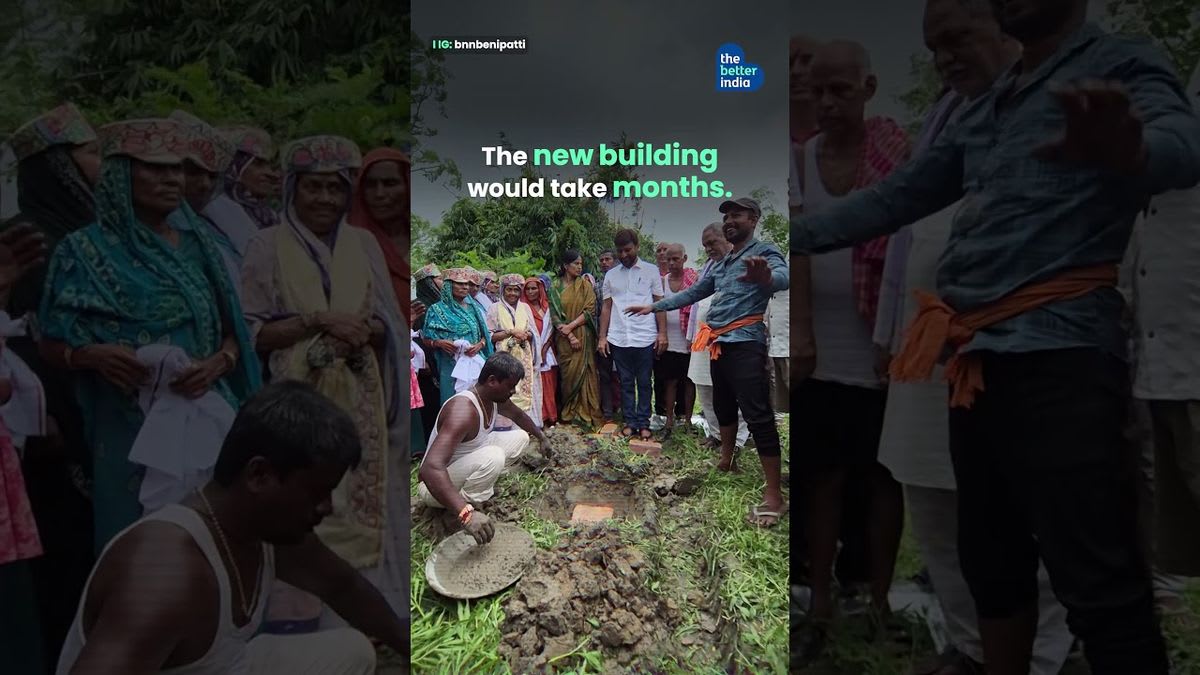
IAS Officer's Visit Transforms 63 Schools for 10,000 Kids
When IAS officer Anand Sharma found children studying on a dirt floor in Madhubani, Bihar, he didn't file a report and move on. He took action that same day, and now 63 schools are being revamped for over 10,000 students.
📺 Watch the full story above
Sometimes the most powerful tool in government isn't a budget or policy. It's showing up and seeing what's really happening.
IAS officer Anand Sharma walked into a makeshift classroom in Madhubani, Bihar, expecting a routine inspection. Instead, he found dozens of children sitting on the bare floor of a hut, learning without desks, proper walls, or basic facilities.
Most officials would have documented the problem and moved it through the system. Sharma did something different.
He discovered that a nearby school building sat empty because of a local dispute blocking students from using it. Rather than waiting months for bureaucratic channels to resolve the issue, Sharma stepped in immediately and settled the conflict himself.
Within days, children had access to a proper classroom. But Sharma didn't stop there.
His intervention sparked a comprehensive review of education infrastructure across the district. The result? A proposal to revamp 63 government schools, potentially transforming education for more than 10,000 children in one of India's poorest states.
The Ripple Effect
Sharma's actions show what happens when officials bridge the gap between policy and reality. Bihar has long struggled with education infrastructure, with many rural schools lacking basic amenities that urban students take for granted.
This wasn't about throwing money at a problem. It was about removing bureaucratic roadblocks and acting with urgency when children's futures hung in the balance.
The 63-school revamp represents more than new buildings. It means thousands of kids who might have dropped out will stay in school. It means parents in rural Bihar can trust that their children's education matters to someone in power.
Other districts in Bihar are now studying Sharma's approach. When one officer's willingness to get hands-on creates systemic change, it proves that good governance isn't just possible—it's contagious.
Those children studying on a dirt floor now sit at desks in a real classroom, learning that someone cared enough to act.
More Images
%2Fenglish-betterindia%2Fmedia%2Fyoutube_thumbnails%2Fvi%2FoG3jjdf7dzU%2Fmaxresdefault.jpg)
%2Fenglish-betterindia%2Fmedia%2Fyoutube_thumbnails%2Fvi%2FR6cZ6I90y_M%2Fmaxresdefault.jpg)
%2Fenglish-betterindia%2Fmedia%2Fyoutube_thumbnails%2Fvi%2FpjsRNlxJt9w%2Fmaxresdefault.jpg)
Based on reporting by The Better India
This story was written by BrightWire based on verified news reports.
Spread the positivity!
Share this good news with someone who needs it