Indian Physicist Rejected Saddam's Blank Check for India
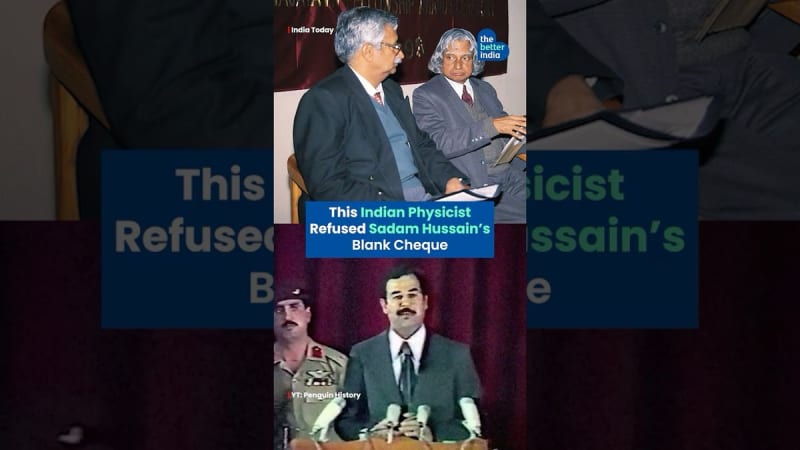
When Saddam Hussein reportedly offered nuclear physicist Raja Ramanna unlimited money to lead Iraq's nuclear program, he chose his country instead. His decision helped shape India's scientific future and inspired generations of researchers.
📺 Watch the full story above
Raja Ramanna faced a choice that would define his legacy: accept a dictator's blank check or stay loyal to India.
The pioneering nuclear physicist reportedly turned down Saddam Hussein's offer to lead Iraq's nuclear program in the 1980s. Instead, he stayed home to build India's scientific strength from the ground up.
Ramanna had already made history in 1974 when he led India's first successful nuclear test at Pokhran Test Range in Rajasthan. The test marked a turning point for India's strategic independence and showcased the country's growing scientific capabilities to the world.
But his impact went far beyond that single achievement. As a mentor to future President A.P.J. Abdul Kalam, Ramanna helped shape the vision that would guide India's nuclear and defense programs for decades. He didn't just conduct experiments. He built institutions and inspired leaders.
His leadership style combined rigorous science with deep patriotism. While other countries tried to recruit India's best minds with money and prestige, Ramanna demonstrated that some commitments matter more than personal gain.
The Ripple Effect
Ramanna's decision to stay in India created ripples that still touch the nation today. The nuclear program he helped build now powers millions of homes through clean energy. The scientists he mentored went on to lead major defense and space initiatives.
His example showed young Indian scientists that they didn't need to leave home to do world-class work. That message helped retain talent during a period when brain drain threatened India's scientific growth.
The foundations he laid in atomic energy research continue to drive India's energy independence goals. His work proved that developing nations could achieve technological breakthroughs without compromising their sovereignty.
Today, India stands as one of the world's leading nuclear powers, with both energy and defense capabilities that trace back to Ramanna's early vision. His refusal of foreign money helped ensure that India's nuclear program remained under Indian control and aligned with Indian values.
One man's choice to stay became a nation's gain for generations.
More Images

%2Fenglish-betterindia%2Fmedia%2Fyoutube_thumbnails%2Fvi%2FK-uG4w8vWLY%2Fmaxresdefault.jpg)
%2Fenglish-betterindia%2Fmedia%2Fyoutube_thumbnails%2Fvi%2FicAPtd3fbOE%2Fmaxresdefault.jpg)
%2Fenglish-betterindia%2Fmedia%2Fyoutube_thumbnails%2Fvi%2FV5DBHiCCj9M%2Fmaxresdefault.jpg)
Based on reporting by The Better India
This story was written by BrightWire based on verified news reports.
Spread the positivity!
Share this good news with someone who needs it