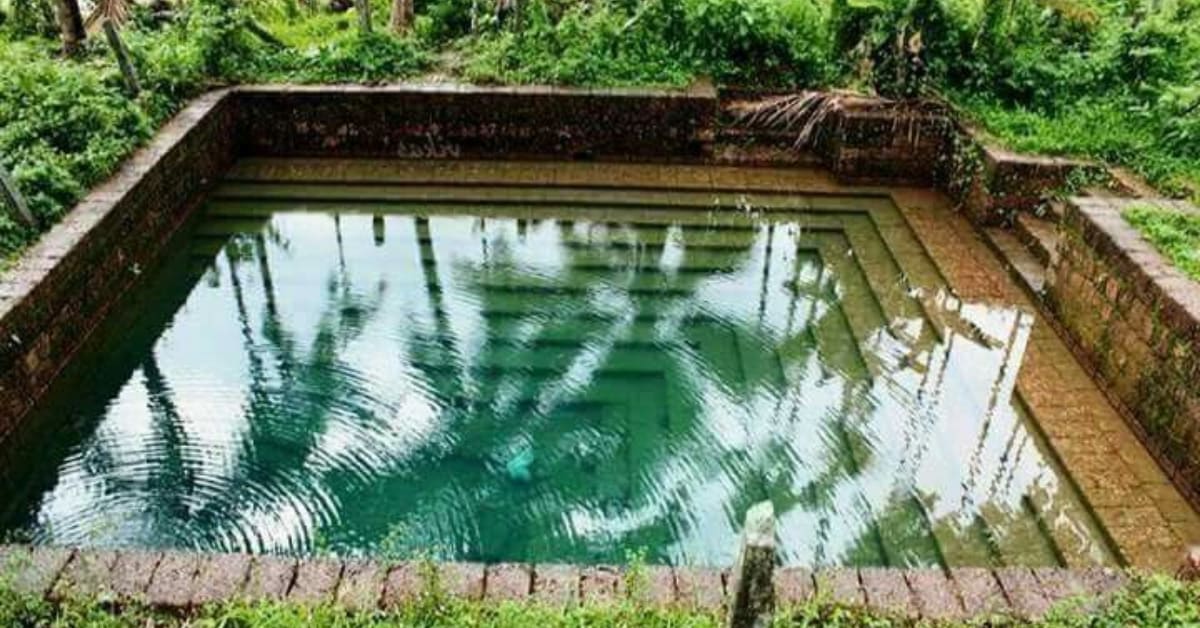
Kerala's Ancient Temple Ponds Are Solving Water Crises
For centuries, Kerala's temple ponds naturally cooled neighborhoods, stored rainwater, and recharged groundwater. Now communities are restoring these forgotten climate solutions as cities face heat and water stress.
📺 Watch the full story above
A dragonfly skims across still water while temple bells echo through banyan trees. This scene has played out for centuries around Kerala's ambalakulams, and now these ancient temple ponds are making a comeback as modern climate solutions.
Long before luxury resorts advertised natural pools, Kerala's temple ponds quietly performed essential work. They absorbed monsoon rains, recharged wells during dry months, cooled surrounding areas during scorching summers, and supported thriving ecosystems of fish, birds, and aquatic plants.
These ponds weren't designed as climate infrastructure. They were built for community life around temples, with granite steps descending into deep green water where people gathered for morning baths, evening prayers, and festival celebrations.
But their design revealed deep environmental wisdom. During Kerala's intense monsoons, the ponds captured excess rainfall and slowly released it into the ground, maintaining groundwater levels for nearby wells. The surrounding trees created microclimates where the air felt noticeably cooler than on concrete streets just steps away.
Places like the Peralassery Subramania Temple pond in Kannur featured multi-layered stone steps that provided access even as water levels changed with the seasons. The Ambalappuzha temple pond in Alappuzha and Sree Ramaswami Temple pond in Thalassery became beloved landmarks that defined their regions.
Then urbanization arrived. As towns expanded and land values soared, many temple ponds were filled in for parking lots and roads. Others became dumping grounds or were slowly encroached upon as the community systems that maintained them weakened.
The environmental consequences appeared quickly. Kerala's cities now struggle with flash floods, erratic rainfall, and falling groundwater levels as the traditional water bodies that once absorbed excess rain disappeared under concrete.
The Ripple Effect
Today, local communities and temple committees across Kerala are bringing these ponds back to life. Volunteers remove accumulated silt, repair ancient stone steps, and replant native vegetation along pond edges. Regular cleaning drives have resumed after years of neglect.
The timing matters. Indian cities are desperately searching for solutions to heat stress and water scarcity as urban lakes shrink and wetlands vanish. Kerala's restored ambalakulams demonstrate that effective climate solutions don't require cutting-edge technology or massive budgets.
The Peralassery pond now hosts migratory birds again. Lotus flowers bloom in waters that were choked with garbage just years ago. Nearby residents report cooler temperatures and improved well water levels.
These revivals carry a simple but powerful lesson: sometimes the best answers to modern problems already exist, built into the landscape by generations who understood that water and community were inseparable.
More Images
%2Fenglish-betterindia%2Fmedia%2Fmedia_files%2F2026%2F06%2F17%2Fkeralam-kulam-2026-06-17-13-03-56.png)

%2Fenglish-betterindia%2Fmedia%2Fmedia_files%2F2026%2F06%2F16%2Ftamil-nadu-farmer-1-2026-06-16-16-35-00.png)
%2Fenglish-betterindia%2Fmedia%2Fmedia_files%2F2026%2F06%2F15%2Fschool-bag-reuse-2026-06-15-14-16-27.jpg)
Based on reporting by The Better India
This story was written by BrightWire based on verified news reports.
Spread the positivity!
Share this good news with someone who needs it